
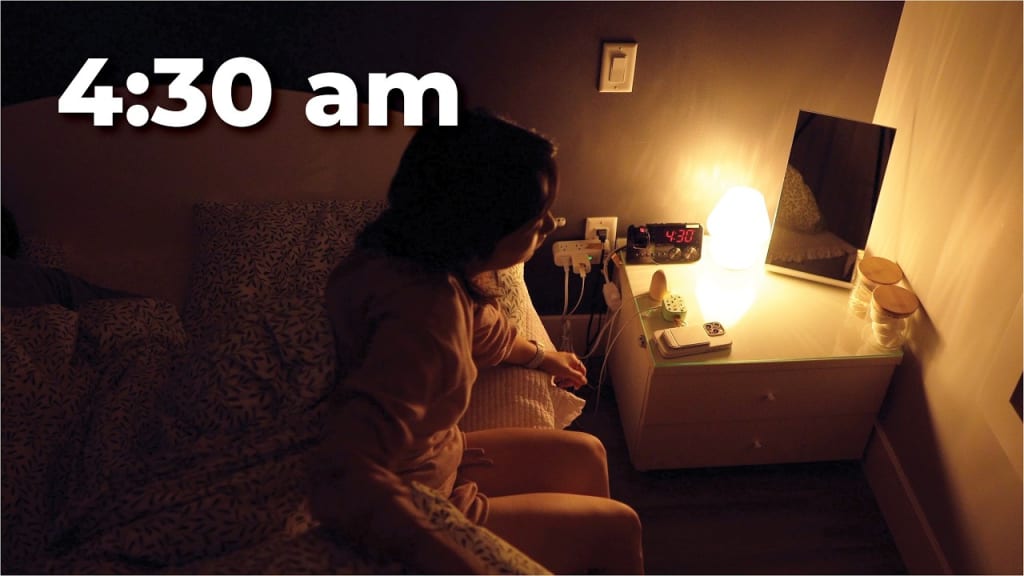
I woke with a headache in the middle of the night in 1981, the kind that seemed to have hands and knew exactly where to press. It was a hot summer, the kind that made the curtains hang like tired flags and the air taste faintly of metal. For four weeks the thermometer had refused to sink below thirty-five degrees Celsius, even in the shade. The sky had been a relentless blue bowl without cracks.
At 4:30 a.m., the clock glowed weakly on my bedside table. The sun was already rehearsing its entrance, brushing the horizon with pale light. My sheets were soaked; the small fan on my desk pushed warm air from one side of the room to the other, as if it were pretending to help.
I walked slowly to the bathroom, feeling the floorboards warm beneath my feet. I swallowed two tablets without checking what they were and went to the kitchen for water. My father was there, tying the laces of his worn canvas shoes, preparing for his morning swim—the ritual he had performed for thirty-five years without interruption. He listened to the radio news, though usually he preferred silence at that hour.
He nodded at me, not in greeting but in confirmation, as though we had agreed on something earlier.
The radio announcer’s voice was calm, almost cheerful. There were reports about harvests, traffic, a minor strike in the north. Nothing remarkable. My father adjusted the volume slightly higher.
“Early for news,” I said.
He looked at me as if I had made a joke. “It’s important to stay informed,” he replied, and that was all.
I drank my water, swallowed my pills, and returned to bed. The pillow felt like a brick, but exhaustion wrapped itself around my headache until both dissolved. I slept.
When I woke again, the house was bright and loud with movement. My mother moved from room to room, opening drawers, closing them, stacking things in small, neat piles. We were meant to leave for the Alps in a few days—hiking, wine, dinners with friends, the promise of forgetting the university and the part-time job that paid for it. But something about her rhythm felt off, as if she were rehearsing for a different journey.
I entered the kitchen. She sat at the table with a cigarette between her fingers and a cup of coffee gone cold. The newspaper lay open before her. She stared at it as if it might confess to something.
“Good morning,” I said.
She opened her mouth to answer, but no sound came. Her eyes—blue, gray, green depending on the light—were filled with water. The tears fell silently onto the paper, darkening the print.
“What’s wrong?”
“A war is coming,” she said.
Her voice was steady. That was what unsettled me most.
I leaned over the table and read the page she indicated. It was a small article about rising tensions somewhere far away, buried between advertisements for summer dresses and a recipe for apricot tart. There was no mention of war, no predictions, no alarms.
“Mom,” I said, laughing gently, “it says nothing. These are good times. Everyone says so.”
She looked at me, and her face changed—not dramatically, not theatrically. It simply emptied of light.
“Your father and I were born before the last war,” she said. “We were raised in it. We learned how lies sound before they become explosions. We learned how calm voices on the radio can smooth over the cracks.”
She folded the newspaper carefully, aligning its edges as if precision mattered.
“One lie after another,” she continued. “You grow used to them. They feel like furniture in a room—you stop seeing them. And then one morning, the furniture is gone, and so is the house.”
I wanted to interrupt, to tell her she was exaggerating, but her hands were shaking. Her shoulders were drawn forward, her muscles tight as wire.
“What does Dad say?” I asked quietly.
She smiled. It was a beautiful smile, full of love, and underneath it something harder.
“He knows,” she said. “He has prepared.”
“Prepared for what?”
“For what comes.”
The kitchen clock ticked, overly loud. Outside, a car drove past with its windows open, music spilling out—something light and optimistic. The world sounded normal.
“We’re leaving tonight,” she said.
“Tonight?” I laughed again, because laughter felt like the only tool I had. “I have an interview. For the job at the archive. It would help with my studies.”
“You may go to the interview,” she said calmly. “Accept the position if they offer it. And then you will come home. We leave at dusk. You will not stay behind.”
She stood and went to their bedroom. I heard the wardrobe doors open, the soft thud of suitcases hitting the bed.
“And speak to no one about this,” she called.
“I won’t,” I answered automatically.
I felt like a guest in my own life.
The town moved as it always had. By noon the streets shimmered in the heat. Children chased each other between parked cars; old men argued over chess in the shade of the bakery’s awning. At the university, students complained about exams and the broken vending machine. No one seemed to be preparing for anything.
At the archive office, the air was thick with dust and paper. The director, a small man with careful hair, shook my hand.
“We are very pleased,” he said. “We need young people. Stability. Continuity.”
He offered me lemonade in a glass so thin it looked temporary.
We discussed hours, salary, responsibilities. He spoke of long-term plans, of projects that would take decades.
“History,” he said with a smile, “moves slowly.”
I signed the contract.
On the way home, I noticed small things. The butcher’s shop window was empty except for a handwritten sign: Closed Early. The pharmacy door was locked, though it was not yet closing time. At the bank, a line stretched onto the sidewalk, people fanning themselves with withdrawal slips. No one spoke loudly. They stood in silence, patient, as if waiting for a bus.
When I entered our house, the hallway was filled with suitcases. My father sat at the kitchen table with a notebook. He was writing numbers in neat columns.
“You got the job,” he said without looking up.
“Yes.”
“Good.”
He closed the notebook and placed it inside a metal box I had never seen before. The box already contained documents, wrapped in plastic.
“Where are we going?” I asked.
“To the mountains first,” he replied. “Like every summer.”
“And then?”
“We’ll see.”
He stood and adjusted the radio antenna. The announcer’s voice was as smooth as ever. There was talk of cooperation, of progress, of international understanding. A new factory opening. A sports victory.
My father turned the volume down until it was barely audible.
“We leave at dusk,” he said. “Eat something.”
My mother moved through the house methodically, watering the plants as if she expected to return in the morning. She left the beds made, the dishes drying on the rack.
At six o’clock, the church bells rang. At seven, the sky began to soften from white to gold. Neighbors watered their gardens. Someone laughed.
At eight, my father loaded the car.
The trunk swallowed the suitcases, the metal box, two crates of canned food, a rolled-up carpet I did not recognize. My mother locked the front door and placed the key in her handbag.
Mrs. Adler from next door leaned over the hedge. “Going to the Alps already?” she called cheerfully.
“Yes,” my mother replied. “It will be a hot one.”
“Drive safely!”
“We always do.”
No one mentioned war.
We drove through town slowly, as if in a parade. At the traffic light near the post office, I saw my professor standing with two colleagues. They waved. I waved back.
On the highway, the traffic was heavier than usual for a Tuesday evening. Cars packed with families, bicycles strapped to roofs, mattresses tied down with rope. It looked like the beginning of a long holiday.
“Everyone had the same idea,” I said.
“Yes,” my father replied.
The radio continued its calm narration of an ordinary world. No sirens. No emergency broadcasts. Only music and advertisements for summer sales.
As we climbed into the hills, I looked back. The town lay flat and harmless beneath the fading light. Nothing burned. Nothing crumbled. It was almost insulting in its normality.
“Mom,” I said softly, “what if you’re wrong?”
She reached back from the passenger seat and touched my knee.
“Then we will have had a long vacation,” she said.
We did not stop at our usual guesthouse in the Alps. We drove past it, though the owner stood outside, waving as always. My father did not wave back.
Higher and higher we went, until the road narrowed and the trees pressed close. Finally, we turned onto a gravel path that led to a small wooden cabin I had never seen.
My father parked the car. The engine ticked as it cooled.
“This is it,” he said.
Inside, the cabin smelled of pine and dust. There were shelves lined with jars—beans, rice, preserved vegetables. Blankets folded with military precision. A battery-powered radio sat on the table.
“You’ve been here before,” I said.
“Many times,” he answered.
“For how long have you prepared this?”
He did not reply.
My mother opened the windows slightly, just enough to let air in without being visible from outside.
“Help me with the bedding,” she said.
We worked quietly. The rhythm of making beds, stacking supplies, lighting candles—everything felt rehearsed. My parents moved with the efficiency of people who had practiced in their minds for years.
That night, we ate bread and cheese by candlelight. The radio murmured softly. Still nothing unusual.
“See?” I said carefully. “Everything is fine.”
My father looked at me, and for a moment I saw the young man he must once have been—frightened, determined.
“Not yet,” he said.
Days passed.
We settled into a routine as strict as my father’s morning swims. We woke at dawn, listened to the radio, rationed our food though there was plenty, avoided lighting fires during the day. My parents scanned the horizon as if expecting smoke to rise from the valleys.
The radio remained calm. Governments spoke of stability. Leaders shook hands. Weather reports promised more sun.
I began to doubt myself instead of them. Perhaps I was the one who could not see the signs.
On the fifth day, I walked down the path alone. From a clearing, I could see the town far below. It looked unchanged. Tiny cars moved along the roads. A train slid like a silver thread through the fields.
I strained to hear something—sirens, distant thunder—but there was only wind in the trees.
When I returned, my mother was crying quietly over the radio.
“What happened?” I asked.
“Nothing,” she said.
“Then why—?”
“Exactly,” she whispered.
My father stood by the door, binoculars in hand.
“Silence can be preparation,” he said. “They always say everything is normal. That is how you know it is not.”
I wanted to argue, to shake them, to drag them back to town and point at the bakery, the chess players, the director at the archive planning for decades.
Instead, I set the table.
That evening, we heard distant fireworks. A festival in a neighboring village. Laughter carried faintly up the mountain.
My mother flinched at every burst of light.
“Artillery,” she murmured.
“It’s a celebration,” I said.
My father nodded slowly. “For now.”
We sat together on the cabin’s small porch, watching the sky flicker.
No one suggested going back.
No one suggested that perhaps nothing was coming.
We behaved as if the world were ending, and because we agreed on it, it felt almost true.
Below us, life continued—ordinary, persistent, unremarkable. Above us, the stars appeared one by one, indifferent and precise.
The radio announcer wished everyone a pleasant evening.
About the Creator
Keep reading
More stories from Dagmar Goeschick and writers in Fiction and other communities.
Winter Ritual
Winter arrives without asking. It comes quietly, often overnight, when the world has decided to slow down. Winter is cold. Winter is white. Winter lasts three long months—sometimes more—and sometimes it comes with snow, and sometimes only with the promise of it. Either way, it changes everything.
By Dagmar GoeschickExclusive • 2 months ago
The Map to Nowhere
Ethan Cole found the map hidden inside a secondhand book he had purchased from a quiet street market. The book itself was ordinary, a worn adventure novel with yellowed pages and a cracked spine, but when he flipped through it later that evening, a folded parchment slipped out and landed at his feet. At first glance, it looked hand-drawn, its edges frayed and stained as though it had survived years of travel. Strange symbols lined the borders, and in the center was a winding path leading to a place labeled only as “Nowhere.” There were no countries marked, no oceans or continents, just an intricate maze of forests, mountains, and a single star drawn at the final destination.
By Sudais Zakwan3 days ago in Fiction
'Till Death We Do Art
There would be nothing divine in this world without art. Nature may surpass the divine to all intents and purposes, but like everything it absorbs and is absorbed by, it remains here, stuck on the surface of this world, ever-present, physically bound to the universe.
By Avocado Nunzella BSc (Psych) -- M.A.P 4 days ago in Art


Comments (1)
Excellent story!