
The Forgotten Atlas — Part 10: The Shoreline That Breathes
Every erased map leaves behind something that refuses to forget.
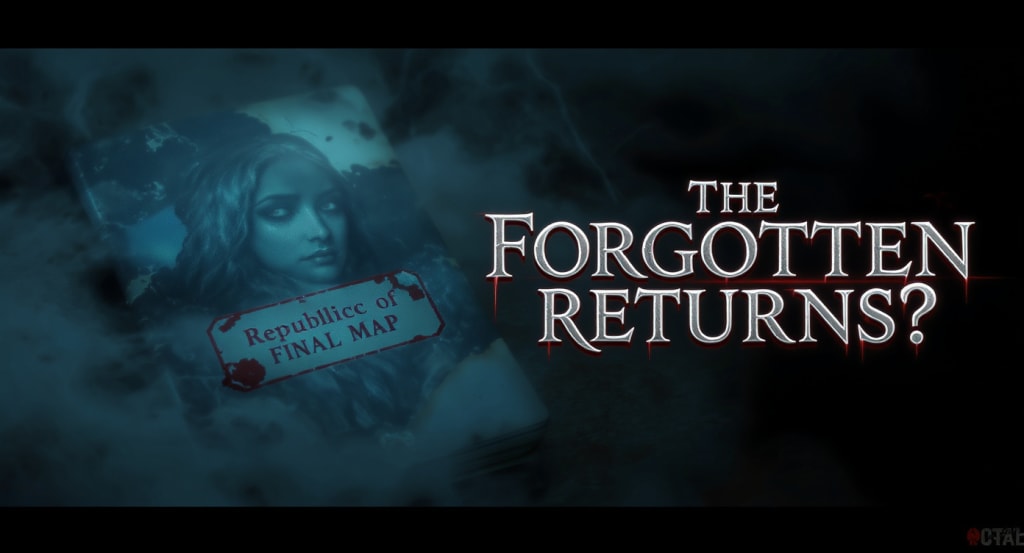
The world ended quietly—without fire, without judgment—only silence.
By the winter of 2026, every map server in the world began returning errors.
Google Earth stopped loading. Satellites showed coastlines that twisted and shifted each night.
Whole cities appeared misplaced by miles.
People joked it was a glitch, until airports began losing coordinates.
And then, the sea began to rise where no sea had ever been.
---
I. The Return of the Uncharted
At Torrento Airport, the same gate—Gate 12—was sealed permanently after a second appearance.
A passenger claimed to be “from Torenza,” carrying that same blue-green passport with the bisected circle sigil.
But this time, she wasn’t alone.
There were seven others.
Each held identical passports.
Each bore different names, all written in languages no translator could identify.
Security cameras captured the moment they looked toward the arrivals board —
and every digital display in the terminal flickered, showing coordinates instead of flights.
47° 21' N, 102° 17' E —
The coordinates of a mountain in Siberia known in Cold War archives as Gora Tarska.
A place that, officially, didn’t exist.
---
II. The Atlas Awakens
Beneath that mountain, the Atlas of Tartaria pulsed like a heart.
The book had not been burned or hidden — it had been buried, alive, beneath layers of permafrost and forgotten names.
Every century, it stirred — reshaping maps, rearranging coastlines, demanding to be remembered.
And this time, the awakening spread through every screen, every satellite, every GPS receiver.
Digital maps began rewriting themselves.
The Republic of Torenza reappeared — a shimmering island between the Black Sea and the Caspian —
and for the first time in recorded history, an entire nation re-entered existence.
Governments denied it.
Cartographers vanished.
And in Torrento, a storm that had no meteorological source began circling overhead, forming a perfect spiral.
---
III. The Last Cartographer
Elian Voss had been presumed dead for years.
But a grainy photograph surfaced online — a man matching his description standing in the ruins of the Torrento Observatory.
He was holding a torn page from the Atlas, now glowing faintly blue.
Behind him, a message scrawled on the wall read:
> “The maps are breathing. Stop following them.”
Researchers tried to trace the coordinates written beneath the graffiti.
The numbers led to a coastline that wasn’t there last year —
a narrow stretch of sand where the sea seemed to inhale and exhale like lungs.
People who walked too close were said to disappear “between seconds.”
---
IV. The Erosion of Reality
By February, the laws of physics began breaking near bodies of water.
Reflections no longer matched.
Some people’s shadows lagged behind them by half a second.
In the Baltic region, entire fishing villages vanished overnight — replaced by unfamiliar architecture built from black limestone.
Satellite footage confirmed it: the cities matched 19th-century Tartarian blueprints.
It was as if forgotten history was re-materializing — not metaphorically, but literally.
Time was folding back on itself.
Kira Lestov’s voice returned through intercepted radio waves —
the same historian who had vanished into the Atlas years earlier.
> “Elian, they’re not maps anymore,” her voice whispered through static.
“They’re blueprints for memory. And we are their cartography.”
---
V. The Chamber Beneath Gora Tarska
A Russian exploration unit sent to Gora Tarska transmitted a live feed before contact was lost.
The footage showed a vast underground chamber filled with suspended parchment membranes —
like lungs made of paper, expanding and contracting.
On each membrane, shifting coordinates glowed.
The Atlas was no longer a book — it had grown into an entire biome of living geography.
The last line of the transmission:
> “The mountain is hollow.
The Atlas is awake.”
Then — silence.
---
VI. The Inversion
On March 3rd, the International Time Registry reported a phenomenon now known as Temporal Inversion.
For seven minutes, all global clocks reversed.
During those minutes, surveillance footage captured impossible things —
people walking backward while shadows moved forward; ocean tides reversing mid-motion;
and a spectral shoreline appearing across Torrento’s coast.
Witnesses described seeing vast cities made of glass and brass rising from the water —
Tartaria reborn — its towers shimmering like heat over snow.
When time resumed, the cities vanished — leaving only mist and the echo of distant bells.
---
VII. The Last Entry
Elian Voss’s final journal was discovered in a derelict aircraft hangar near Torrento.
The ink was still wet, though no one had entered for decades.
> “Kira was right.
The Atlas is not a map of places — it’s a map of belief.
Every civilization that is forgotten demands to be redrawn.
We were never explorers. We were custodians of memory.”
He ended with one final line:
> “The tide is drawing north again.”
---
VIII. The Return
On the last day of 2026, a satellite image captured something extraordinary:
The entire Arctic Circle began to crack, revealing an enormous circular symbol beneath the ice —
the bisected circle of Tartaria, glowing faintly through the frozen ocean.
Experts argued it was a natural phenomenon.
But the image’s metadata showed something chilling — the timestamp read 1899.
As if the satellite had photographed the past.
---
IX. The World Without Maps
By 2027, maps no longer worked.
Compasses spun endlessly.
Governments stopped issuing borders, for there were none left to draw.
The world had folded back into a state of pure geography —
alive, breathing, and remembering itself.
A faint aurora hung permanently over Torrento.
Those who walked near the shore claimed to hear whispering waves —
voices asking, “Do you remember where the shore used to be?”
And sometimes, when the fog thinned, a faint light could be seen offshore —
an island that didn’t exist yesterday.
On its sand, a single passport lay open.
Stamped inside: Republic of Torenza.
Beneath it, a message in Elian’s hand:
> “The Atlas has found its reader.”
---
Epilogue
Years later, archivists would call it The Tartarian Revival.
But others — the few who remembered — called it by another name:
The Forgotten Atlas.
And somewhere, beyond the reach of time,
a woman’s voice whispered through the static one last time:
> “Some maps do not end where they are drawn…
they end where you begin to remember.”
---
✨ End of “The Forgotten Atlas — Part 10: The Shoreline That Breathes”
(Stay tuned for “The Forgotten Atlas: Origins” — coming soon.)
About the Creator
Wellova
I am [Wellova], a horror writer who finds fear in silence and shadows. My stories reveal unseen presences, whispers in the dark, and secrets buried deep—reminding readers that fear is never far, sometimes just behind a door left unopened.
The Midnight Delivery
Tariq worked the night shift at the courier office, delivering parcels to sleepy neighborhoods while the city slumbered. The office was quiet, filled only with the hum of fluorescent lights and the occasional beeping of scanners. He enjoyed the solitude; the rhythm of driving through empty streets allowed him to think, plan, and forget the noise of his day-to-day life. That night, he had finished the usual deliveries when a supervisor handed him one last package. It was small, wrapped in plain brown paper with no return address, and simply labeled: “Do Not Open Until Midnight.” Tariq frowned. The office clock read 11:45 PM, and curiosity stirred in him. He had been trained not to tamper with parcels, but the label felt strangely personal, almost like a warning.
By Sudais Zakwan6 days ago in Fiction



Comments
There are no comments for this story
Be the first to respond and start the conversation.