
The Girl Who Fell from the Sky: The Miracle of LANSA Flight 508 ? The Reall Story .
A Christmas Eve Journey Turns into Tragedy The Lightning Strike That Destroyed the Plane Falling 10,000 Feet from the Sky Alone in the Heart of the Amazon Rainforest Survival Skills Learned from Childhood Ten Days of Pain, Hunger, and Determination Finding Hope Along the River The Moment of Rescue The Sole Survivor of Flight 508 How the Tragedy Changed Aviation Safety Juliane Koepcke’s Life After the Miracle A Story of Courage, Luck, and the Will to Live

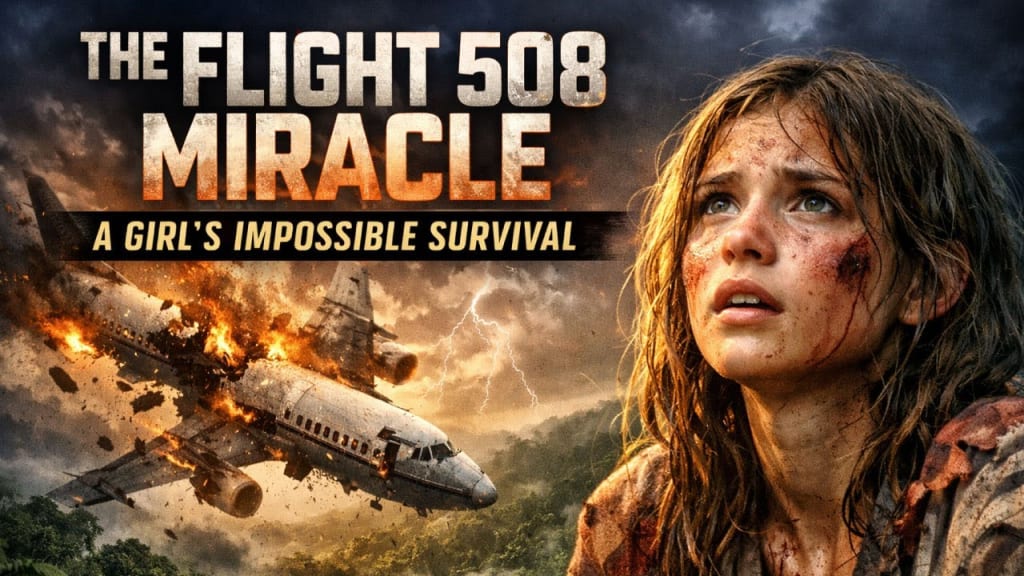
The Girl Who Fell from the Sky: The Miracle of LANSA Flight 508
On December 24, 1971, a commercial airplane flying over the Amazon rainforest was struck by lightning and broke apart in midair. What followed became one of the most astonishing survival stories in aviation history — the story of a teenage girl who fell from the sky and lived to tell the tale.
The aircraft was Líneas Aéreas Nacionales S.A. Flight 508, a domestic flight traveling from Lima to Pucallpa in Peru. On board were 92 passengers and crew members, many of them heading home for Christmas. Among them was 17-year-old Juliane Koepcke, traveling with her mother to visit her father, a zoologist working in the rainforest.
As the plane flew over the dense jungle, it encountered a severe thunderstorm. Lightning struck the aircraft, causing catastrophic structural failure. Witness accounts and later investigations revealed that the plane disintegrated in midair at an altitude of approximately 10,000 feet. Passengers were thrown into the open sky, still strapped to their seats.
Juliane was one of them.
Still buckled into her seat, she fell through the air, spinning helplessly as the jungle canopy rushed toward her. Miraculously, she survived the fall. Some experts believe that the seat she was strapped into may have functioned like a primitive parachute, slowing her descent. Others suggest that the thick canopy of the Amazon rainforest broke her fall, cushioning the impact.
When Juliane regained consciousness, she was lying on the forest floor. Her collarbone was broken, she had a deep cut in her arm, and she suffered from a concussion. But she was alive.
She soon realized she was alone.
All around her was the vast and unforgiving Amazon rainforest — one of the most dangerous environments on Earth. There were venomous snakes, insects, wild animals, and the constant threat of infection. She had no food, no shelter, and no clear direction. Yet she did have something invaluable: knowledge.
Juliane had grown up in Peru, where her parents conducted biological research in the jungle. From a young age, she had learned survival skills and basic rainforest navigation. She knew that if she could find a stream, it would eventually lead to human settlements.
So she began walking.
For ten days, Juliane wandered through the dense jungle. She drank water from streams and ate what little she could find, including some candies she had discovered from the wreckage. Her injuries made movement painful, and she was constantly exhausted. Swarms of insects bit her relentlessly, and her wounds began to fester.
At one point, she found several seats from the plane crash — and the lifeless bodies of other passengers, including her mother. The emotional trauma of that discovery could have broken her spirit, but she kept moving forward.
Her determination was extraordinary. Despite hunger, dehydration, and infection, she followed the sound of flowing water. She remembered her father telling her that settlements were often built near rivers. Step by painful step, she continued.
On the tenth day, weak and barely conscious, Juliane stumbled upon a small boat tied near a riverside hut. It belonged to local lumbermen. She waited there, unsure if anyone would return. When the men finally arrived, they were astonished to see a lone teenage girl emerging from the jungle.
At first, they thought she might be a forest spirit — her appearance was so unexpected and surreal. But soon they realized she was a survivor of the plane crash that had dominated national headlines.
The men treated her wounds as best they could and transported her to safety. She was eventually reunited with her father. Out of 92 people aboard Flight 508, Juliane Koepcke was the sole survivor.
The crash of LANSA Flight 508 remains one of the deadliest lightning-related aviation disasters in history. Investigations concluded that the airline had a poor safety record, and the storm conditions were extremely dangerous. The tragedy prompted improvements in aviation safety standards in Peru.
But beyond the disaster itself, the world remembers the miracle of survival.
Juliane later returned to the rainforest as a biologist, following in her parents’ footsteps. She wrote a memoir titled When I Fell from the Sky, sharing her experience with the world. Her story has been the subject of documentaries and films, inspiring millions.
Her survival challenges our understanding of chance, resilience, and human endurance. Falling from thousands of feet in the air without a parachute is almost certain death. Surviving ten days alone in the Amazon is equally unimaginable. Yet Juliane endured both.
The Girl Who Fell from the Sky is not just a story about luck. It is a story about preparation, courage, and the will to live. In the face of unimaginable horror, a teenage girl relied on knowledge, instinct, and hope.
More than five decades later, the miracle of Flight 508 continues to inspire awe. It reminds us that even in the darkest and most terrifying moments, survival is sometimes possible against all odds.
About the Creator
Discovery Channel
The channel is widely respected for its diverse content, covering topics such as wildlife, survival, space exploration, engineering, history, and groundbreaking technology. It brings audiences face-to-face with nature’s wonders,
Keep reading
More stories from Discovery Channel and writers in Fiction and other communities.
Are Ghosts Real? Do They Exist? The Reall Truth ? Ghost Mystery Solved?
Are Ghosts Real? Do They Exist? For centuries, people around the world have shared stories of ghosts—spirits of the dead appearing to the living, mysterious shadows moving in empty rooms, unexplained footsteps in the dark, or cold chills without reason. From ancient folklore to modern horror movies, belief in ghosts continues to fascinate humanity. But the big question remains: Are ghosts real? Do they truly exist?
By Discovery Channel a day ago in Fiction
There's A Hole in My Bucket
It’s a well-known fact that Liza Dufresne was always the brains in the family. She was the one who always came up with the brilliant schemes the Dufresne kids carried out when they were younger. Like when they tricked Mrs. Claybourn into paying for a trip to Disney World. Liza convinced her that their parents had been kidnapped and were being held for ransom for the total price of three tickets. In reality, they were away on a weekend getaway for their anniversary. When they returned, Liza told the Claybourns that they did not like to talk about the ordeal. Their parents never found out how they got the money. Mrs. Claybourn never found out that the Dufresne parents were never really in any danger.
By David E. Perry5 days ago in Fiction



Comments
There are no comments for this story
Be the first to respond and start the conversation.