
The Halazia Chronicles
A Song of Hours - Part One: A Universe Divided, Chapter 5

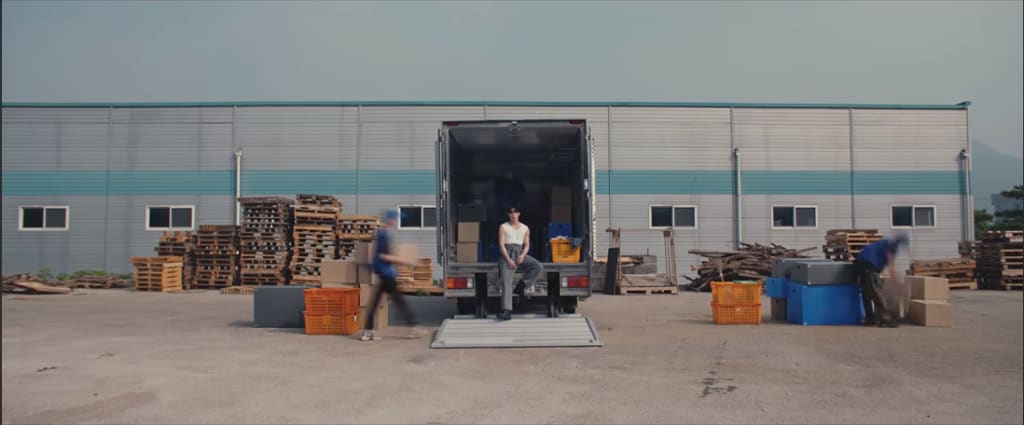
Those dreamy days of summer flew by like a bird on the wing, and the boys felt as though they were the sole inhabitants of a pocket universe.
They sang. They danced. And years of loneliness faded away.
A band name was born: Ateez.
It meant A TEEnager Z, a name meant to commemorate and catalogue the time they spent together during those precious years. While the memories and bond they built together during that time would remain evergreen, like all good things, it would eventually end.
It didn’t end all at once.
It began slowly with San.
Two weeks, his mother told him. Then the boxes began to pile up.
He didn’t say anything right away.
A week passed.
They were at the warehouse, breathless and loud, the speaker crackling as they ran through new choreography again and again. Sweat slicked their necks. Someone laughed too hard. Someone else missed a count and blamed the floor.
San almost didn’t say anything.
But during a lull—when the music cut out and everyone was doubled over or sitting down, gulping air—he spoke as if it was an afterthought.
“Oh,” he said, flopping onto the couch. “I almost forgot to tell you.”
He twisted the cap off a water bottle and drank noisily. “We’re moving again.”
The words landed wrong. Too light. Too casual.
“I won’t be around much after this week,” he added, still not looking at them.
He screwed the cap back on with exaggerated care. Then he got up and picked up a crumpled snack wrapper. Then a stray bottle. Anything that gave his hands something to do.
The warehouse had gone very still.
San finally glanced around, brow creasing. “What?” He laughed, quick and bright. “It’s nothing. Don’t make it weird.”
Wooyoung stared at him.
“You’re joking,” he said, half a laugh already forming, ready to catch the moment and flip it into something survivable. “You’re always joking.”
San smiled wider. “Not this time.”
Mingi didn’t say anything at all. He just froze, fingers curled tight around the hem of his shirt, like the floor had dropped an inch beneath him and he was holding on to keep from tipping over.
Yunho stepped forward, voice steady but urgent. “When—how far?” he added, too quickly. “Can we—can we visit?”
“Of course!” San said immediately. “It’s not like I’m dying.”
Jongho’s jaw tightened. He looked away, eyes fixed on the cracked concrete, fists clenched at his sides.
“We can adjust the schedule,” Seonghwa said, words tumbling out, as he reached for his bag presumably to grab his planner. “We can practice earlier. Or later. Or—“
“I can send recordings,” Yeosang offered quietly. “Of practice. So you can keep up.”
San nodded at all of them, smiling the whole time.
“I’ve done this before,” he said. “I’ll be fine.”
No one replied.
Hongjoong hadn’t said a word. He stood near the speaker, watching San the way he watched a song fall apart—listening not only to what was being played, but to what was missing.
San’s smile didn’t falter.
That was the lie.
And this time, no one believed it.
-----
The doctor’s modest office smelled faintly of lavender. Besides the desk, there were four chairs, filing cabinets, a shelf crowded with books and framed photographs, and a coat rack by the door. The wall across from the desk was lined with diplomas and certifications.
Yunho’s parents sat in the blue woven vinyl armchairs directly across from the doctor, a petite woman with caramel-colored hair twisted neatly into a bun as she consulted a manila folder of paperwork. Yunho sat in another chair against the wall behind them.
With his elbows on his knees and his hands clasped, he was perfectly eye level with a stain on the back of his mother’s periwinkle-blue chair.
Muddled voices drifted in and out of his awareness. Snippets of conversation darted like minnows in a pond. No longer…unlikely…quality of life…support…decision.
His mother began to cry softly. A high-pitched keening filled his head, and all other sound receded.
The next time he lifted his head, he found himself in the hospital waiting room. When had they left the doctor’s office? Time didn’t seem to exist here. Minutes? Hours?
He glanced toward his brother’s room and noticed a narrow gap in the drawn blinds, a thin line of light he wished he hadn’t seen.
His parents sat beside his brother’s bed. His mother held his brother’s hand. His father had an arm around her shoulders. Yunho watched as his father suddenly stood and folded himself over his son’s body, sobbing into his neck.
Yunho felt a sudden, sharp embarrassment, as though he were witnessing something private, something he shouldn’t see. He couldn’t remember ever seeing his father cry.
It was his mother who comforted his father now. She was, oddly, the more composed of the two. The roles had reversed—because someone had to be strong. He found himself fixating on the stripes of her silk blouse—black on red? Or was it red on black?
When they exited the room, Yunho stood. He adjusted his shirt, as if preparing for an interview. He couldn’t look at his parents’ faces. He stepped carefully around them and entered the room alone.
For a moment, he stood awkwardly in the center, his hands still gripping the hem of his shirt. He looked everywhere but at his brother. Melting ice in a cup. A piece of paper with lyrics from the song he’d shared with his brother just yesterday. The ceiling light in the corner that always flickered, just slightly.
The machinery had been unhooked and turned off. The cables were neatly coiled. The room was too quiet. No beeping. No mechanical breath. Only the low hum of the fluorescent lights overhead.
With a deep breath, he finally looked at his brother. Not for the first time, he thought his brother was only sleeping.
He walked to the edge of the bed and adjusted the blanket. Then he sat beside it, hands folded on the mattress, and rested his cheek against them—close, but not touching.
He didn’t know how long he stayed there, his eyes never leaving his brother’s still face. Later, all he remembered was pausing at the threshold as he left the room and saying, “See you later, hyung,” before closing the door with a final, quiet click.
Later, at home, he was startled out of his reverie by the rustle of plastic bags and Wooyoung bickering with San. He didn’t remember them arriving. All the boys were there.
Wooyoung and Seonghwa had brought jangjorim and gejang that their mothers had prepared. Wooyoung unpacked neatly labeled Tupperware containers, the food still warm.
Hongjoong brought a new song he’d been working on. They tried to distract him with banter and familiar arguments, everyone talking over each other—and it worked. Yunho was grateful for them.
That night, after everyone left, he found himself in the bathroom, washing his hands. He rinsed the soap away and watched the suds spiral down the drain.
Then he noticed his hands were shaking.
-----
He made sure to stay two blocks behind his son.
He could have been closer. Yeosang was too busy counting the steps between streetlights, head down, violin case bumping lightly against his leg, to notice anyone following him.
It was clear he’d taken this route many times. He barely looked where he was going. No hesitation. Routine.
He turned left into an alley. The black Audi sedan was forced to continue another block and circle past a shuttered laundromat before cutting back.
By the time Yeosang emerged near the only convenience store on the block, his father already knew where he was headed.
He owned several properties in this district. The warehouse behind the convenience store was one of them. He knew it by square footage, zoning classification, depreciation value. But he knew Yeosang was going to this abandoned warehouse because the warehouse didn’t look so abandoned anymore.
Two bicycles lay carelessly discarded outside the wide-open sliding metal door. Even from inside the car, he could hear music spilling into the street. Laughter, uncontained.
He parked farther down than necessary and watched Yeosang disappear inside to a chorus of greetings.
He cut the engine and stepped out.
He stood beneath a streetlamp that had just flickered on, though dusk was still an hour or so away. He removed his dark sunglasses and slipped them into his shirt pocket. He didn’t follow immediately.
After several minutes, he checked his Rolex, then crossed the street and walked the perimeter of the block toward the back of the building.
Behind the warehouse was a parade of junk. Rusted machinery. Pallets stacked at uneven angles. Metal barrels dented and half-filled with rainwater and oil. A broken fire escape clung to the wall, its first three steps still intact.
That was enough.
The metal groaned as he stepped onto it. Inside, the music was loud enough that he stopped worrying about being heard.
Through a bank of grimy windows, he discovered what his son had really been doing all these weeks.
The warehouse was alive.
Sound ricocheted off concrete and steel. Someone shouted counts as three boys danced in front of tall mirrors, bodies sharp and sure. Someone missed a step and groaned theatrically. Another voice teased, warm and merciless from a ratty old couch.
Then he heard a sound both familiar and wholly alien. Yeosang’s laughter. It was full and unchecked, not the careful, stunted sound he made at home—quickly released and just as quickly swallowed if it came at all.
His son sat with his violin resting against his knee, easy—not cradled, not guarded. When he lifted it to tune, his hands moved quickly, confidently, the bow dancing across the strings as he listened to three voices speaking at once.
No schedule. No instruction. No correction. Joy without permission.
His jaw tightened.
He watched longer than he intended.
Long enough to see Yeosang effortlessly make a joke, freeze when he realized what he’d said, then smile—wide and unguarded—when laughter erupted around him. Long enough to see an arm thrown over his shoulders, and Yeosang lean into it instead of pulling away. Long enough to recognize something forming that could not be managed once allowed to grow.
He frowned, thinking of years of discipline, structure, and control. All of it threatened by this careless, contagious frivolity.
He stepped down from the fire escape. He left without looking back.
-----
The call came from a number Mingi didn’t recognize. He almost ignored it.
He’d been in the middle of writing a rap with Hongjoong, but they’d gotten distracted after Yunho launched into a one-man comedy show, impersonating all the members. Right now, he was doing Wooyoung’s laugh—loud, breathless, unmistakable—which set everyone off again.
Mingi fondly noticed the way San tipped his head back as he laughed, eyes closed, hands clutching his stomach like he might split apart.
Mingi’s phone buzzed again.
He absently picked it up, pressing it to his ear. “Hello?”
“Ah, Mingi-ya?” a woman said, her voice careful. “Is that you?”
Frowning, he stood and slipped away from the noise, striding out the door into the bright sunlight.
“Yes,” he said cautiously. “It’s me.”
“It’s Mrs. Yoon, from next door,” she continued. “I’m sorry to call you like this. She told us not to. Your grandmother, I mean. She didn’t want to bother you.”
Mingi stopped walking.
The sun suddenly felt annoyingly bright.
“What happened?” he asked.
There was a pause as she chose her words carefully.
“Well, she fell,” the woman said. “In the kitchen. We helped her up. She says she’s fine. Her hip hurts, but she swears only a little. She won’t let us take her to the hospital.”
His grip tightened around the phone.
“Is she alone right now?”
“We stayed with her for a while,” Mrs. Yoon said. “She was sitting when we left. She insisted we go. Made us promise not to call you. She didn’t want to worry you over nothing.”
Mingi rubbed the bridge of his nose.
“I’m sorry,” the neighbor added quickly. “I know she told us not to bother you. I just thought you should know.”
“No,” he said hoarsely. “Thank you. Thank you for calling.”
“All right, dear. Let us know if you need anything. Take care.” The line went dead.
He stood there for a moment, staring at the cracked concrete beneath his feet.
Then he called his grandmother.
She picked up on the second ring.
“Mingi-ya,” she said briskly—too brisk. “Why are you calling?”
“Halmeoni,” he said. “Why didn’t you call me?”
She scoffed. “Those neighbors. I knew she was a gossip. I told them not to make a fuss.”
“Are you hurt?”
“I slipped,” she said lightly. “That’s all. I’m clumsy, not dead.”
His chest tightened.
“They said your hip—”
“They also said they wouldn’t bother you. Over nothing,” she interrupted. “They lie. I’m a little sore. So what? That’s normal. I sat down. Rested. I’m fine.”
“Maybe you should see a doctor,” he said, already knowing her answer.
“No,” she said firmly. “Hospitals cost money. And for what? A bruise? So they can tell me not to fall?”
“I’m coming home,” he said. “I’ll be there soon,”
“What? No, no.”
“I don’t mind,” he said quickly. “I was just—”
“Don’t be ridiculous,” she snapped—and then softened. “I know where you are. Wooyoungie told me. That boy can’t keep his mouth shut.”
He didn’t respond.
“You sound happy,” she continued. “Lately.”
His throat tightened.
“I like that. So you’ll stay,” she said, more instruction than request. “And not fuss like the neighbors.”
“Halmeoni—”
“Mingi,” she said gently. “I don’t want to be the reason you stop smiling.”
The words landed in his gut like a fist.
“…Okay,” he whispered.
When the call ended, he stood there long after the screen went dark, phone forgotten in his palm.
Inside, laughter rang out—bright, bell-like. Alive.
He went back in.
“Everything okay?” Yunho asked, glancing up from where he was switching tracks by the speaker.
“Yeah,” Mingi said too quickly. “Just…my grandma.”
Wooyoung looked over, frowning. “Is she—”
“She’s fine,” Mingi cut in. “Just wondering what I want for dinner.”
He sat back down beside Hongjoong and picked up his pen. He nodded at the right moments and laughed when the others laughed. But the joy tasted borrowed.
Every time he smiled, he saw his grandmother alone in their kitchen.
He would only be home for a few hours that night before they were on their way to the doctor. The hairline fracture was almost invisible, but it was enough.
Later, the guilt would grow teeth.
Lying in bed that night, he thought of the extra time he’d spent at the warehouse instead of going home, and wondered if joy that cost this much was worth anything at all.
-----
Yeosang shut the front door carefully behind him, setting his violin case on the bench in the foyer. He took a moment to wipe the lingering smile from his face before moving deeper into the house.
He was just finishing washing his hands in the guest bathroom when his father spoke from behind him.
“Where have you been going?”
Yeosang froze.
In the mirror, his father stood in the doorway, hands folded neatly, expression unreadable. He wasn’t angry, not loud either. Worse.
He was calm.
“A friend’s,” Yeosang said. The lie felt like a stone in his mouth.
His father nodded once. “Which friend?”
Yeosang hesitated. That was the mistake.
“You should know,” his father said mildly, as if commenting on the weather, “I followed you.”
Yeosang’s chest caved in.
“The warehouse,” his father continued. “I saw the people. Heard the noise. Saw all of you wasting time.”
“We’re not—” Yeosang started, then stopped himself.
His father raised a hand.
“I won’t allow you to fall behind,” he said. “Your schedule will no longer be interrupted. Your focus must remain sharp. Your violin practice has suffered.”
Yeosang swallowed. “I don’t like the violin.”
“Irrelevant,” his father replied. “Discipline is not about liking.”
Silence stretched between them, taut as a wire.
“That building,” his father said at last, “belongs to me.”
Yeosang’s breath caught.
“I will not have my property turned into a playground,” his father went on. “And I will not have you lying to me.”
He stepped closer. Yeosang caught the familiar scent of his cologne. Clean. Expensive. Unyielding. Vaguely antiseptic.
“You will tell them they are no longer welcome,” his father said. “They will pack up their things and leave immediately.”
“And if I don’t?” Yeosang asked quietly.
His father’s expression softened.
“Well, of course, then I will,” he said. “But I will not be kind.”
-----
The air inside the warehouse the next afternoon was warm and stale from bodies and movement. Mingi stood apart from everyone, arms crossed over his chest, his backpack still on. He watched Hongjoong slouched over his laptop, busily typing away at the keys, replaying a section of music on loop. Wooyoung, San, and Jongho played rock, paper, scissors to see who would go to the store for snacks.
He could hear the distant sound of traffic through the open door.
Everything was normal.
He couldn’t take it.
“Mingi?” Yunho called gently from the couch, where he was showing Seonghwa a new game on his computer. “You good?”
Mingi opened his mouth, but nothing came out.
“What is it?” Yunho asked, brows creasing, as he set aside his computer.
He swallowed and tried again. “My grandma…she fell.”
Everyone stopped what they were doing at once and turned towards him, trying to talk over each other.
“What?” Wooyoung walked over immediately. “When?”
“Yesterday,” Mingi said. His voice sounded far away to his own ears, like he was speaking in a tunnel. “The neighbors called me. Even though she told them not to.”
Seonghwa frowned. “Why wouldn’t she want to tell you?”
Mingi let out a short, humorless breath. “Because she didn’t want to bother me.”
Silence.
Jongho shifted, a towel he had been using to wipe up his sweat slipping from his shoulder. “Is she okay?”
“No,” Mingi said.
The word landed heavier, angrier than he meant it to.
“She said she was,” he continued, staring at the concrete floor as he began to pace. “She made me promise to stay here. Said she didn’t want to be the reason I stopped smiling.”
Wooyoung’s face crumpled. “That’s—that’s not—”
“She wasn’t fine,” Mingi said. His voice cracked just slightly. “We had to go to the doctor last night.”
Hongjoong straightened slowly.
“And?” he asked.
Mingi’s fingers dug into his sleeves. “Hairline fracture. In her hip. The doctor said she got lucky.” He trailed off, jaw tightening. “Since she was alone.”
No one spoke.
Yunho got up from the couch. “Mingi, that’s not your fault.”
Mingi laughed.
It came out sharp and wrong.
“Isn’t it?” he asked.
They all looked at him now.
“I was here,” he said, voice rising despite himself. “Dancing. Laughing. Acting like—” He gestured around them, wide and helpless. “Like any of this mattered.”
Jongho’s head snapped up. “What do you mean?”
Mingi shook his head, breathing faster. “I mean, what kind of person does that? What kind of grandson leaves his grandmother alone so he can play idol in a warehouse?”
Everyone erupted, talking over each other again. But it was Seonghwa’s voice that broke through.
“That’s not fair,” Seonghwa said quickly. “She told you to stay.”
“And I listened,” Mingi shot back. “Because I wanted to. Because this felt good.” His voice dropped. “Too good.”
Hongjoong stood. “Mingi—”
“No,” Mingi said, shaking his head. “You don’t get it. My grandma raised me. She worked herself into the ground so I could eat. So I could go to school. And I was here—” His hands curled into fists. “Here, pretending this was something real.”
The word hung between them.
Pretending.
Jongho walked over slowly.
“What did you just say?” he asked.
Mingi didn’t look at him. “I said maybe this—” He gestured wildly at the space, the music, the dreams. “—maybe this doesn’t mean anything. Not when real life happens.”
The silence that followed was no longer gentle, but sharp, jagged.
Jongho’s jaw clenched. “Take that back.”
Mingi finally looked up, eyes bright and reckless with something darker underneath. “Why? So you can feel better about wasting time?”
No one saw Jongho move.
Everyone heard the dull, ugly crack of bone meeting flesh—like a book dropped hard on the floor. Then it was just a tangle of limbs.
Mingi staggered back, slamming against the wall.
Yeosang grabbed Jongho immediately, arms locking around his shoulders. “Jongho! Stop!”
Jongho struggled once, breath ragged, eyes wild. “Don’t you ever say that,” he snarled. “Don’t you ever say this is meaningless.”
Mingi laughed again, brittle. “Then what is it, Jongho? What is this, really?”
“This is the only thing that’s kept me alive,” Jongho said, voice shaking now, fury cracking into grief. “After basketball. After everything. This is the only place I’m not broken.”
Mingi stared at him.
He hadn’t meant it like that.
He hadn’t meant it at all.
The room felt suddenly too small.
Mingi opened his mouth, but shame is a terrible translator.
He closed it.
He lifted his hand to the earbuds hanging loose around his neck and put them into his ears one by one. A hard, quiet look came into his eyes—one Wooyoung recognized instantly.
It was the look Mingi used to wear before the warehouse. Wooyoung turned away, tears coming fast and silent.
Jongho had disentangled himself from Yeosang and was already backing away.
“Jongho—” Yeosang called, walking towards him.
“Don’t,” Jongho said. “Just don’t.”
He grabbed his bag, cramming his things into it, movements sharp and angry, and shoved past Seonghwa toward the door.
“Jongho, wait!” Yeosang shouted. “I have to tell you guys something.”
Jongho paused at the threshold. “What?” he said, exasperated.
Yeosang hesitated.
“Yeosang?” San asked softly.
Yeosang looked at him, then at the rest of them. His gaze lingered on Mingi for half a second longer than the others before dropping to the floor.
“My dad knows,” he said.
No one spoke.
He took a breath, then another, as if preparing to read from a script he’d rehearsed too many times.
“He followed me,” Yeosang continued. “A few days ago. He saw everything.”
Wooyoung’s stomach dropped. “Everything?”
“Everything,” Yeosang said. “The music. The dancing. The laughing.”
“He said this place is not appropriate,” Yeosang went on. “That we should all be doing something more productive with our time.”
Hongjoong looked up. “And?” he asked.
Yeosang swallowed. “He reminded me that he owns the building.”
The words settled heavily in the room.
“He said we’ve been trespassing,” Yeosang said. “That he’s been generous not calling the police. He said we have until the end of the week to leave.”
Jongho let out a strangled sound, something halfway between a laugh and a cough, and threw his hands up in the air.
“So…that’s it?” Yunho asked faintly.
Yeosang nodded once. “I tried to argue. He said this wasn’t a discussion.”
Mingi laughed quietly, the sound cracked and hollow. “Figures.”
Seonghwa stepped forward instinctively. “We can talk to him,” he said. “We can explain. Show him the videos—”
“No,” Yeosang said, sharper now. He lifted his head, eyes bright with something that looked dangerously close to tears. “You can’t. You can’t convince him to give up control.”
Yunho exhaled slowly. “When?”
“Friday,” Yeosang said.
Friday.
The word echoed.
San slid down the couch until he was sitting on the floor, elbows braced on his knees. “I’m sorry,” he murmured, though no one had accused him of anything.
“This isn’t your fault,” Seonghwa said automatically. Then, softer, “It’s nobody’s fault.”
Yeosang shook his head. “It kind of is,” he said. “I knew this would happen. I just…didn’t want it to stop. I didn’t want to stop coming.”
Wooyoung sank down next to Mingi, pressing his shoulder against his friend’s like an anchor. “So what do we do now?”
No one answered.
Because the truth was, they all already knew.
Hongjoong closed his laptop slowly, the soft click of it shutting sounding far too loud in the quiet.
“We find somewhere else,” he said with a forced determination, “we don’t give up.”
San laughed under his breath. “That easy, huh?”
No one responded.
“I’m sorry,” Yeosang said again, quieter this time.
Seonghwa crossed the room and pulled him into a hug without asking. Yeosang stiffened for half a second before sagging into it, breath hitching. San immediately followed, folding them both into his arms.
“We’ll find something. I’m sure of it.” Hongjoong said reassuringly, though he said it to no one in particular. When no one responded, he began to busy himself tidying up instruments.
Later, no one remembered saying goodbye. But they all remembered leaving.
-----
This is a fan-made, transformative work based on Ateez’s official storyline. Ateez, the Cromer, and all associated concepts belong to KQ Entertainment. I make no claim to the original IP, and this project is not affiliated with or endorsed by KQ.
Mingi's grandma's illness is referenced in Jongho's section of the Zero: Fever Epilogue Diaries. Yeosang's father kicking them out of the warehouse is referenced in the Zero: Fever, Pt. 2 Diaries, Yeosang's section. The fight between Jongho and Mingi may be seen in the Zero: Fever Part 1 Diary Film.
About the Creator
Guia Nocon
Poet writing praise songs from the tender wreckage. Fiction writer working on The Kalibayan Project and curator of The Halazia Chronicles. I write to unravel what haunts us, heals us, and stalks us between the lines.
Keep reading
More stories from Guia Nocon and writers in Fiction and other communities.
A Love Forboding
The chipped stone slope caused unbearable footing. I slid, skirting on my heels. I cast my shield, relinquishing my guard to stay upright. Left with my double-edge and a prayer to the maker, I skated toward my objective. The earthly stubble gave way to solid ground. I found myself restored, a trail of dust in my wake.
By James U. Rizzi2 days ago in Fiction


Comments (1)
I’m not familiar with anything you wrote in your note. But the story is quite intriguing and kept my interest. Good job.