
The Keyboard Is Mightier
He thought he was just playing with code—until the system played back.

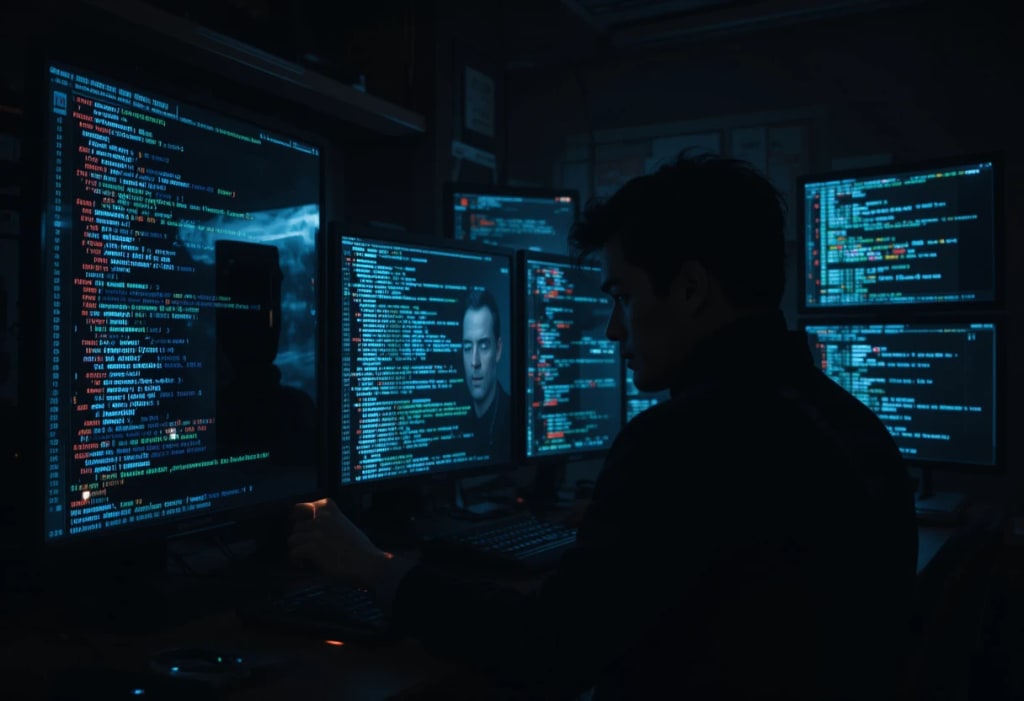
Part I: The Kid Behind the Screen
Max was fifteen when he hacked his first school database. It wasn’t out of malice—just curiosity. He wanted to see if he could. When the login screen gave way to rows of student records and confidential teacher notes, his heart thundered like a war drum. He didn’t change anything. He just stared.
And logged out.
But from that moment on, the line between can and should began to blur.
Max lived in a small, quiet town where nothing exciting ever happened unless you created the excitement yourself. His parents worked late, and he found solace in the glow of code—clean, logical, responsive. Unlike people, code didn’t lie. You asked it to do something, and it obeyed.
By sixteen, Max had taught himself Python, JavaScript, and the basics of network intrusion. He didn’t need guidance—just time, Reddit threads, and the dark corners of forums where real hackers whispered.
To the world, Max was just another skinny kid with glasses and a quiet voice.
To the networks he breached?
A ghost.
Part II: The Target
It was on a Wednesday night that everything changed.
Max sat in his room, lit only by the hum of two monitors. A thread on r/hackthisnext caught his eye:
"Small-town security firm. Claims to be unbreachable. Challenge accepted?"
The company was called VigilantOne. Based just a few cities away.
Max couldn’t resist
He started with reconnaissance: port scans, firewall pokes, looking for open doors. After hours of digging, he found one—an outdated server running legacy software, half-forgotten and poorly maintained.
Within minutes, he was inside. Not just inside—root access.
He opened the main directory, expecting boring spreadsheets or employee handbooks.
But what he saw sent a chill down his spine.
Private folders labeled:
Surveillance_Logs
Client_Harvest
Voice_Monitoring_AI
FacialScan_Backdoor
The firm wasn’t just a security company. It was a spy machine—collecting personal data from smart devices, traffic cameras, and home assistants without consent. Every client they “protected” was being watched.
Max froze.
This was bigger than him. Bigger than pranks and high school servers. This was illegal, unethical, and terrifying.
He quickly screen-captured everything. He could report them. He could make this public.
But before he could finish copying the data—
The cursor on his screen moved.
By itself.
Part III: The Mirror
UNKNOWN_USER:
Nice work, Max.
Thought you were alone in here?
Max’s throat went dry.
He yanked his fingers off the keyboard. The message blinked again.
UNKNOWN_USER:
Don't bother unplugging. You're already in. So are we.
The screen flickered.
His webcam light turned on.
Max stared at his own pale reflection as another message appeared:
UNKNOWN_USER:
Say cheese.
The screen went black.
And Max understood.
He hadn’t just hacked into a system.
The system had baited him.
Part IV: The Consequences
The knock came the next morning. Two men in suits. One smiled too much. The other not at all.
“We’d like to talk,” they said, showing shiny black IDs with no real names.
They didn’t arrest him. They didn’t threaten him.
They offered him a choice.
“Work for us. Or face a federal case for unauthorized access and theft of classified data.”
Max wanted to say no. To scream that he was the good guy, the one trying to expose corruption. But no one cared about intentions.
Just leverage.
And they had all of his.
Part V: The Inside Job
For the next two years, Max worked as a quiet contractor in a nameless office, writing defensive tools by day and tracing cyber intrusions by night. But the work felt hollow. Sanitized. Sanitized hacking was like painting with gloves on—you never touched the truth.
But Max was learning. Watching.
Because he hadn’t forgotten VigilantOne. And he hadn’t forgiven.
He waited. He grew.
He built a backdoor into every project he was assigned. Not because he planned to break out—but because he might need to break in.
And when the news broke that VigilantOne had been hacked, its inner files dumped into the public domain, no one knew who had done it.
But Max watched the CEO stumble through a press conference, sweat glistening beneath stage lights.
And he smiled.
Part VI: The Return
Max left the agency not long after. They never saw him again.
Some say he went white-hat—helping NGOs protect themselves from state surveillance. Others say he built a private system to warn journalists and activists when they’re being watched.
Some say he disappeared entirely.
But sometimes, on obscure forums, a user named GhostProof leaves comments under questions like:
"How do I expose a corrupt data broker without getting caught?"
And the answers always start with:
“First, understand who you’re dealing with…”
Closing Lines:
Because hacking was never about breaking into machines.
It was about breaking out of lies.
And for Max, the greatest hack wasn’t cracking a code—
It was rewriting who he was allowed to be.
About the Creator
Keep reading
More stories from waseem khan and writers in Fiction and other communities.
The Salt in her Voice
The myth says mermaids sing to lure sailors to their death. But why? The ocean is huge. Only 5 percent has been discovered by man. Why would a creature of the sea with that much space to roam ever care about the fate of men on ships? The answer, as it turns out, is not a simple one at all. The truth about the myth is older than the tides. Long ago before the first ship ever cut across the surface, the sea made a pact with the sky. The sky would take the souls of the drowned. Anyone who died in storms or any quiet accidents of the deep would have their soul lifted upward to the Heavens while the bodies would remain below, feeding the oceans endless hunger. The greedy sea however wanted more souls than the sky would claim. So it created mermaids. It gave them beautiful voices woven from currents and moonlight. It commanded them to sing. "Bring forth the ones who float where they should sink." it instructed them. So they did. They never killed out of malice but out of obligation. They sung to summon, not to seduce. A mermaid's voice could loosen the tether between the body and soul, making any man step willingly into the water. The sea would take the body and the sky would take the soul. Balance maintained.
By Sara Wilson6 days ago in Fiction
War of the Americas Chapter XX
Author’s preface: This is Chapter 20 in the ongoing War of the Americas series. If you have not read any of the previous 19 installments, don’t worry, you are like 99.9996% of people and each is written in such a way as to be enjoyable as a mini/micro fiction story on their own. Of course reading the entire series is recommended for the full effect. If you want to start at the beginning the full series can be on Vocal by searching or visiting my homepage. This series is a fictional account about a war between the United States and Mexico and takes place in the present day. It features some characters including the President of the United States and the President of Mexico who are real, others who are partly fictional, and others who are entirely made up. I won’t repeat my full disclaimer but it never hurts to emphasize once again that this is a fictional account. I have no special knowledge of the politics, military, operational, police, special forces, or any other inner workings of the government of either country. All the knowledge I do have has been obtained from reading publicly available documents and/or listening to others who do have such knowledge.
By Everyday Junglist4 days ago in Fiction




Comments
There are no comments for this story
Be the first to respond and start the conversation.