
The Last Broadcast
How One Moment Changed the Digital World Forever

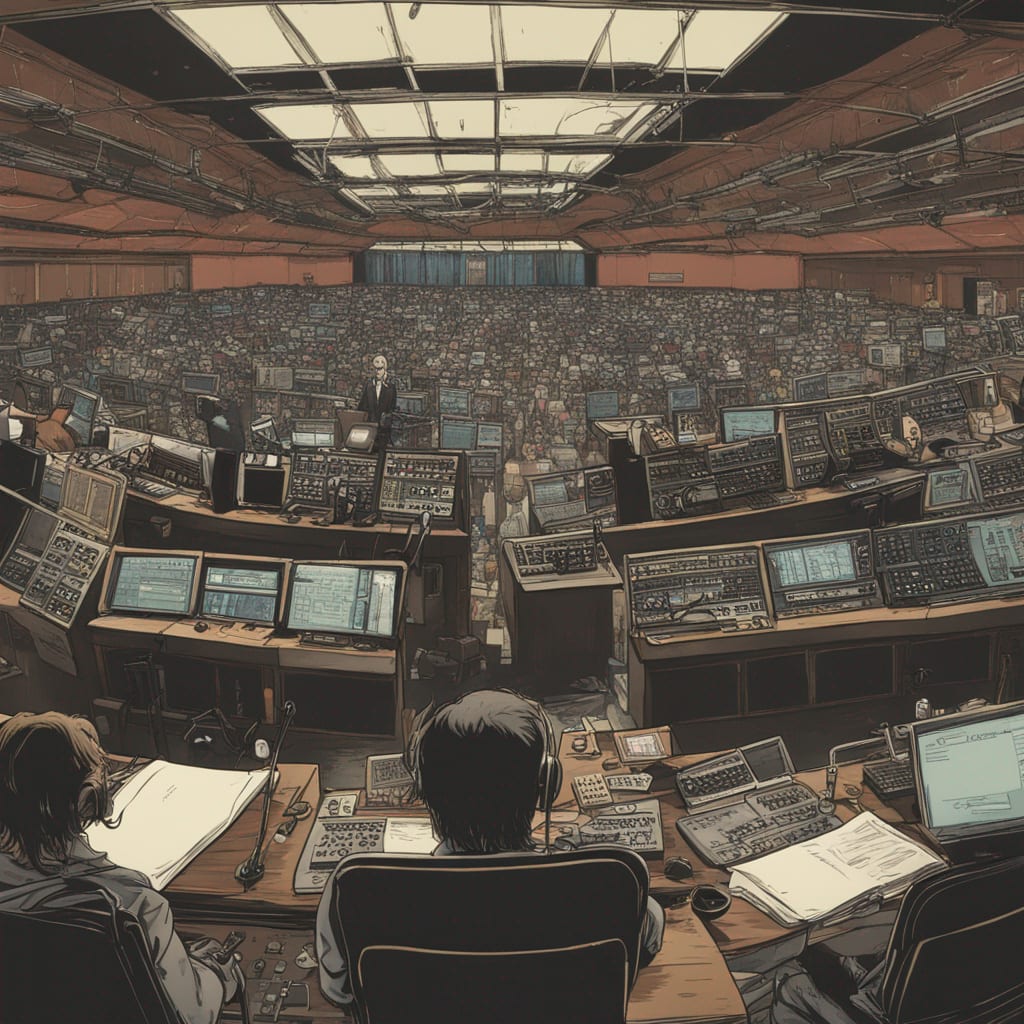
The Last Broadcast
In the age of digital dominance, the world had already become a network of connections, a place where events spread as quickly as fingers could swipe across a screen. News, both good and bad, traveled fast, but it was the quiet moments, the ones before the storm, that often went unnoticed.
Kendra sat alone in her apartment in a quiet corner of the city, the glow of her phone screen illuminating her tired face. She’d spent the last few hours scrolling through the endless feed of voices—angry, hopeful, confused. Political debates, protests, celebrities’ posts, new trends, and casual conversations between strangers. It was all there, and it was all loud. It had been loud for years. But Kendra was used to it, or at least, she thought she was. She was a journalist, after all. She was part of the world that fed it all to the masses, curated the noise, and sometimes even made it louder. Yet, she felt disconnected. The constant barrage of information, much of it fake or irrelevant, had dulled her senses. There was too much to care about, and not enough time to focus on any one thing.
That evening, as Kendra prepared to finish the last of her assignments before going to bed, she received a message that would change everything. The message was from her editor.
“You need to check this out. They’re shutting it down. It’s happening tonight.”
It was an emergency broadcast from an independent media group called NextWave, a platform known for being one of the last places where grassroots movements, alternative opinions, and uncensored discussions could thrive. The platform had been under fire for months, pressured by governments, corporations, and powerful figures who saw it as a threat to their control over the narrative. In an age where everything had its price, NextWave had managed to exist outside the system—until now.
Kendra clicked the link, her heart racing. The broadcast was about to begin, and there was an air of finality in the message.
The video stream started, and Kendra found herself staring at a simple logo on the screen—a digital countdown ticking away the seconds. The comments section was alive with speculation and confusion, a collective anxiety bubbling through the threads. She had only seen this kind of tension during moments of political unrest, but something felt different. This wasn’t a news event. This was something much more personal.
Then, the screen flickered, and a man’s face appeared.
He was older, graying hair, glasses perched on the edge of his nose. His expression was grave but determined. Kendra recognized him immediately. It was Max Delgado, the founder of NextWave. A former journalist himself, he had been the voice behind many of the platform’s most viral broadcasts—a man who had taken risks in the name of truth, no matter the consequences.
“Ladies and gentlemen, I’m sure by now, you’ve heard the rumors. The shutdown is real. In a few hours, NextWave will cease to exist. All our platforms will be wiped. Our data will be erased. They’ve silenced us,” Max’s voice was steady but thick with the weight of his words.
The screen shifted, and a map of the world appeared, pinpointing dozens of locations where protests were happening in real time, all connected by one common thread—NextWave. Kendra’s stomach dropped. These weren’t just ordinary protests. These were people fighting for their right to speak, to be heard. These were voices that had found each other in the digital noise, and now they were being stifled.
“We knew this day was coming,” Max continued, his tone softening. “But what matters now is what happens next. We can’t just walk away and let them win. This fight isn’t over. It’s just beginning.”
The countdown reached zero. The screen went black.
For a long moment, Kendra sat frozen, staring at the empty space where Max’s face had been. Then, without warning, the chat section exploded. People were angry, devastated, confused. Some were in denial, others were already calling for action. But among the chaos, one comment stood out.
“If they shut us down, we start again. It’s never over until we stop fighting.”
The comment wasn’t from Max, but from someone else entirely—an anonymous user who had been following the platform for years. Kendra clicked on the name, but it was untraceable. It was a message that resonated, that ignited something deep within her. She wasn’t sure why, but she felt a sense of urgency that she couldn’t ignore.
The shutdown had come for NextWave, but Kendra realized that this moment—this pivotal moment—wasn’t just about the loss of one platform. It was about something much larger: the erosion of freedom in a world that increasingly depended on digital spaces to organize, to inform, to resist.
In the days that followed, NextWave disappeared, leaving behind a gaping hole in the digital ecosystem. It was the start of a chain reaction. Journalists, activists, and ordinary citizens alike found themselves without a voice, their platform now controlled by a handful of corporations that could no longer afford to allow dissent. It wasn’t just about the shutdown of one site—it was a signal to the rest of the world: The digital age was shifting, and control was being reclaimed.
But Max’s final words, echoed by that anonymous user, didn’t fall on deaf ears. A movement began to take shape, one that spread across multiple platforms, using the very tools they had once fought against. New networks were born, though they operated in the shadows, built on encrypted communications and decentralized systems. People who had once felt disconnected from each other began to form alliances, gathering under new banners of hope, resistance, and reform.
Kendra was one of them. She became a voice in the new wave of independent journalists, those who continued to speak the truth no matter the cost. She had been at the center of the storm, watching it unfold, and now she was part of the rebuild. It wasn’t easy. It wasn’t quick. But it was necessary.
The ripples from that moment spread far beyond the loss of a platform. It reshaped the way people communicated, the way they fought for their rights, and the way they sought the truth. The moment Max appeared on that broadcast and made his final plea—it was the spark that ignited a global movement, one that refused to let silence take hold.
And the world? It would never be the same again.
---
About the Creator
K-jay
I weave stories from social media,and life, blending critique, fiction, and horror. Inspired by Hamlet, George R.R. Martin, and Stephen King, I craft poetic, layered tales of intrigue and resilience,
Feelings Never Die
It is Valentine's Day again, and it bought back memories that were over fifty years old. It bought me back to 1971, and I woke up and I knew my baby was due today. I was big and pregnant, and I felt like I was about to burst wide open. Imagine my surprise when the doctor told my I had a due date of February 14. I couldn't believe it, and since my baby was due today, I felt I could indulge myself a bit. I had gained a lot of weight, and chocolate was on the no-no list, but I had came to the end of this pregnancy, and I hoped it would be okay, after all I would deliver this baby today. So I walked across the street to the grocery story, and bought myself, a peppermint patty, covered in chocolate, my favorite. Me and my Valentine's baby would enjoy it together.
By Susan Payton2 days ago in Fiction
The Breaking of a Union
Hephaestus had never been especially lucky with love. So, watching Aphrodite and Ares squirm in the net he’d made to catch them cheating didn’t particularly surprise or anger him. He crossed his arms and stared at them as they blindly groped for a way out. Finally, Aphrodite’s eyes lifted and met his. She scowled at him and lifted her chin defiantly. The irate spark in her gorgeous gray eyes made his heart leap despite himself.
By Morey Guntz2 days ago in Fiction
Public Announcement Challenge Winners
For the Public Announcement Challenge, writers were asked to work inside voices built for control. These were notices, warnings, and updates meant to inform rather than confess. The strongest entries committed to that form and didn't break from it. Corporate memos, formal government alerts, and internal policy language were held consistently, allowing emotion, fear, grief, or humor to surface indirectly through pressure rather than declaration. The following poems recognize the voice of authority, and let human feeling slip through despite all its rules and restraint.
By Vocal Curation Teamabout 23 hours ago in Resources



Comments
There are no comments for this story
Be the first to respond and start the conversation.