
The Last Message Was Seen
When love ends in silence, the typing dots mean everything—and nothing.

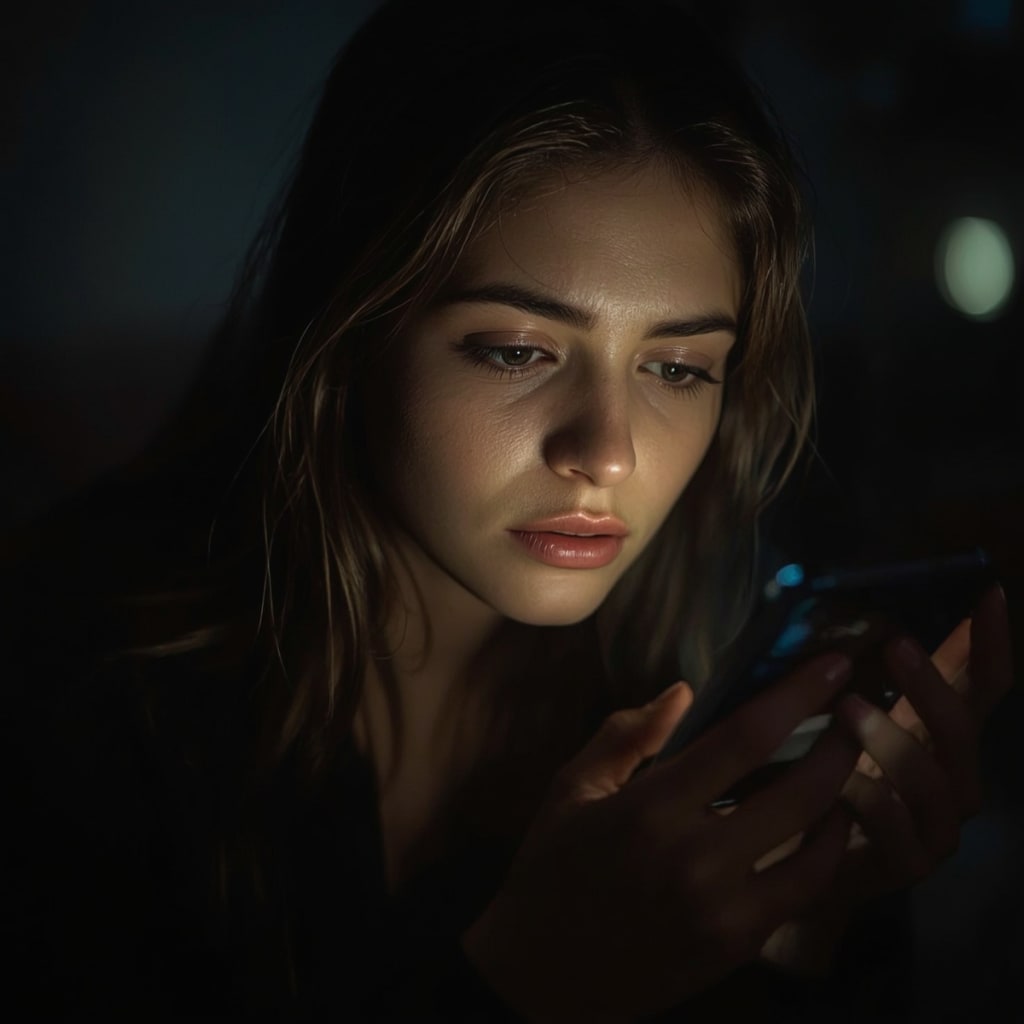
It was 2:17 AM when Alina saw the typing dots flicker beneath her last message—“Please just say something.”
The dots danced for a second. Then disappeared.
Seen.
That word glared at her like a final breath. Blue check marks confirming her heartbreak. Confirmation that her pain had been delivered, acknowledged… and dismissed.
This was not just any message. It was the final attempt to salvage a love story that once bloomed like fire in the cold. She stared at her phone, her fingers trembling, heart racing, breath catching in her throat. She waited.
And waited.
But silence replied louder than any words could.
They had met in the least romantic place—an online class during the pandemic. When the world was locked inside, Alina found freedom in Rami’s voice. His texts were lightning—quick, clever, and comforting. What began as shared notes turned into shared nights. They would talk until 3 AM, hearts syncing through screen light.
Rami made her laugh in a time when crying was easier. He called her “sunshine,” even when she felt like a rainstorm. He asked about her dreams and remembered the little things: her favorite tea, the songs she hummed unconsciously, the way she hated the word “goodbye.”
But eventually, the world reopened—and so did Rami’s silence.
She noticed it slowly.
First, the texts became shorter. Then, the calls became rare. Then the excuses. “Busy with work.” “Just tired.” “Let’s talk tomorrow.”
But tomorrow stopped coming.
Still, she held on. She remembered the way he used to look at her on video calls like she was the only person left on the planet. She remembered how he once said, “You make the noise in my head go quiet.” She believed love like that couldn't vanish without a trace.
So she sent that final message: “Please just say something.”
And he saw it.
But he said nothing.
Days passed.
She kept checking the app like an addict, rereading old conversations like scriptures. Wondering if there was a word, a sentence, something she could change. Maybe she said too much. Or not enough. Maybe the world had just moved on and left her behind in a memory.
She drafted messages she never sent.
“I miss you.”
“Why did you stop loving me?”
“Was I just something to get you through lockdown?”
“Are you happy now?”
Each one was deleted before it could be sent. What was the point?
He had already “seen” everything he needed to.
Grief in the digital age is strange.
You don’t bury someone—you bury a chat. You don’t burn letters—you scroll up through them. Their ghost lives in the cloud, in your gallery, in shared playlists and mutual likes.
She unfollowed him after a week.
Blocked him after two.
But the damage had already carved itself into her bones.
Then, one morning, as the spring sun poured into her room, she did something small but significant. She deleted the chat.
Not out of anger, but out of mercy—for herself.
She went outside, barefoot on the cold balcony tiles, and closed her eyes. She whispered, “I release you,” like a spell.
And for the first time in weeks, she felt lighter.
A year passed.
Alina wasn’t the same girl waiting for a reply. She had grown—not in spite of the pain, but because of it. She had started painting again. Traveling. Laughing with friends whose presence wasn’t pixelated. And most importantly, she was learning to love herself in ways she used to beg others to.
Then, one night, her phone buzzed.
It was a message request.
From Rami.
“Hey. I know it’s been a while. I just wanted to say… I’m sorry. I hope you’re okay.”
Her breath caught.
Not because she still loved him—but because the message reminded her of the girl who once waited.
She didn’t reply.
She just read it once.
Then archived the chat.
Because closure doesn’t always come from someone else. Sometimes it comes when you realize you don’t need their words to heal.
She had already written her own ending.
About the Creator
Abid Malik
Writing stories that touch the heart, stir the soul, and linger in the mind
Keep reading
More stories from Abid Malik and writers in Fiction and other communities.
The Forgotten Letter
The wind was sharp that evening, tugging at the corners of the old house like it wanted to enter and shake the memories loose. Lena stood at the threshold of her late grandmother’s home, staring up at the crooked roof and sagging porch. She hadn't been here in over twelve years. Not since her mother died.
By Abid Malik7 months ago in Fiction
A Love Forboding
The chipped stone slope caused unbearable footing. I slid, skirting on my heels. I cast my shield, relinquishing my guard to stay upright. Left with my double-edge and a prayer to the maker, I skated toward my objective. The earthly stubble gave way to solid ground. I found myself restored, a trail of dust in my wake.
By James U. Rizzi4 days ago in Fiction
Cabin Fever Because of Snow, Sleet, and Freezing Rain That Turned to Icy Roads
What Is Cabin Fever? The short answer is that cabin fever is restlessness from being in a confined area. Cabin fever is the distressing irritability or restlessness experienced when a person or group is stuck at an isolated location or in confined quarters for an extended time. Research shows that prolonged cold, gray skies, and being stuck indoors can trigger mood shifts similar to “winter blues.”
By Margaret Minnicks3 days ago in Humans



Comments (1)
it is nice store