
The Salute That Never Came
A former soldier returns home, hoping for healing, but silence speaks louder than rejection.

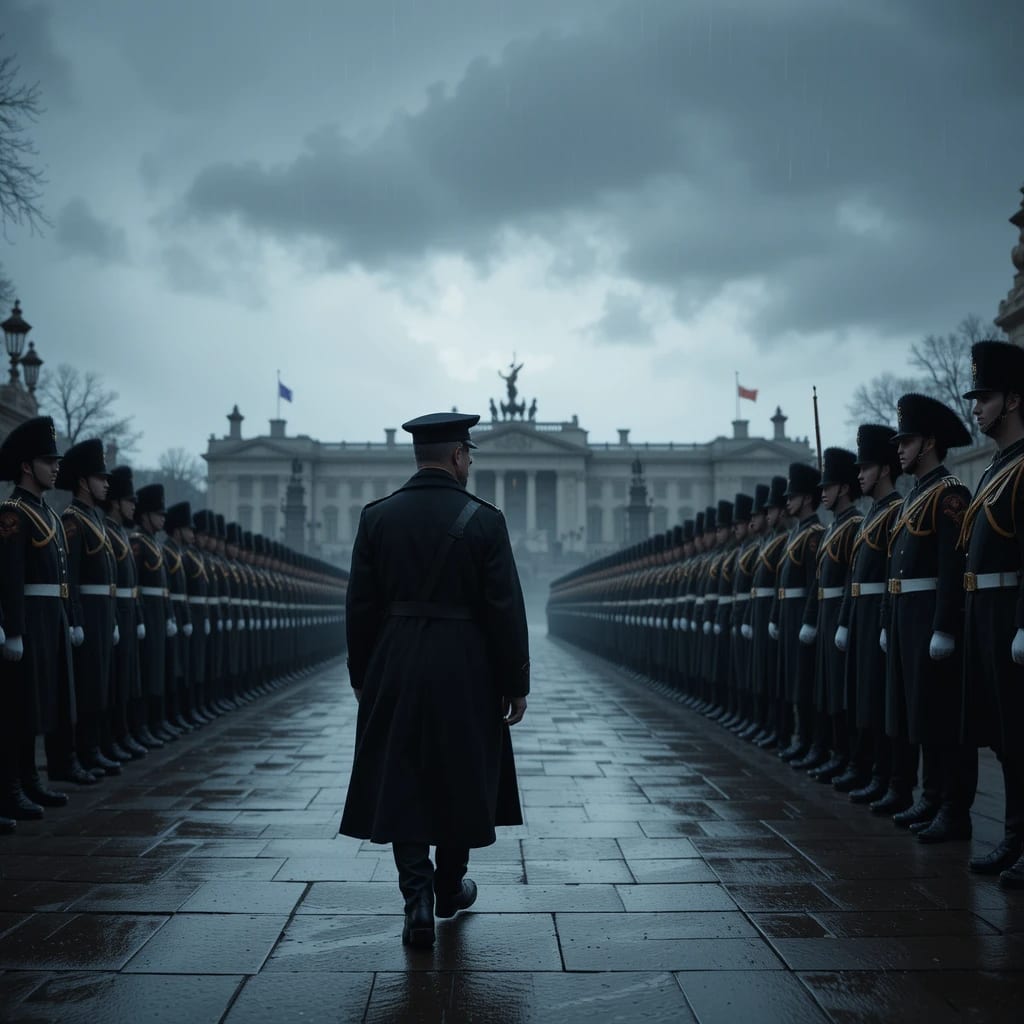
The rain had just begun when Daniel stepped off the plane. British soil stretched beneath his shoes, heavy with memories he wasn’t sure he was ready to face. For weeks he had told himself this trip was about peace—about repairing broken bridges, about quiet talks behind closed doors. He had imagined a nod of recognition, maybe even a warm handshake, the kind of gestures that once came so easily.
Instead, what he found was silence.
Outside the palace gates, a row of soldiers stood like statues. Their uniforms pressed to perfection, boots polished until they caught the dim light of dusk. Their posture was flawless, their discipline absolute. And yet, as Daniel walked past, not a single eye flickered toward him. No salute. No nod. Not even the faintest acknowledgment.
For a man who had once worn the same uniform, who had served with pride on the front lines, the moment cut deep. The silence was louder than any insult, sharper than any spoken word. It was as though he had ceased to exist in the very world that once defined him.
A camera captured it. Just a simple clip: soldiers rigid, Daniel walking past, the air thick with absence. Within hours, it was everywhere. Shared, replayed, dissected. To some, it was poetic justice. To others, a tragedy. But to Daniel, it was personal.
The salute that never came wasn’t about ceremony. It was about belonging. About honor. About being recognized as part of something larger than himself. And now, stripped of that gesture, he felt the cold weight of what he had lost.
Behind palace walls, whispers suggested this wasn’t a mistake. It was protocol—deliberate, precise, enforced. Not rebellion, but message. No salute meant no place. No gesture meant no fold. For Daniel, the man who had once been cheered in parades and decorated for service, the message was brutal in its simplicity: you walked away, and now so have we.
He tried to brush it aside, to focus on what truly mattered—his meeting with the King. It was brief, little more than an hour. They spoke of health, of family, of ordinary things cloaked in extraordinary weight. There were no official photos, no warm statements to the press, no flag raised in his honor. Just tea, and words, and a distance neither seemed able to close.
Outside, the story grew. Commentators analyzed every detail—his stiff shoulders, the way his hands stayed clasped, the absence of the easy smile he once wore in uniform. This wasn’t the confident man of old, waving from balconies or striding through royal tours. This was someone moving through familiar halls that now felt foreign, unwelcome, unkind.
And though she hadn’t come with him, another presence lingered in every conversation. Her name floated on every headline, every whispered theory. Some said she had pulled him away. Others said she had saved him. Whatever the truth, her shadow was there, unshakable, coloring the silence at every turn.
As the days passed, the atmosphere never warmed. There was no motorcade, no fanfare, no gesture of homecoming. Staff remained professional, courteous, distant. The soldiers stayed rigid. The silence held.
When Daniel finally prepared to leave, nothing had changed. No salute at his departure. No farewell crowd. Just a quiet exit beneath a gray sky, the same silence trailing him that had greeted him on arrival.
For many, that silence was louder than anger. The institution had spoken not with words but with absence. No confrontation, no drama, no spectacle. Just the simplest of messages, delivered with precision: respect is earned, belonging is maintained, and choices carry consequences.
The world debated. Was Daniel a rebel who dared to challenge old traditions, or a man who abandoned duty for the lure of something else? Some called him courageous, others called him a traitor. But for Daniel himself, the truth was more complicated.
He had hoped for warmth. For a glance of recognition from those who once stood beside him. For a sign that he still mattered to the world he left behind. Instead, he had been met with silence, the coldest rejection of all.
As his plane lifted from the runway, Daniel stared out the window at the city below. Once, it had been his home. Now, it felt like a place that had closed its doors. Whether the silence was permanent, or whether one day a salute might return, he could not say.
But one thing was certain. Some bridges are not rebuilt with words. Some wounds do not heal with time. And sometimes, silence tells you everything you need to know.
About the Creator
Keep reading
More stories from Norul Rahman and writers in Fiction and other communities.
The Silent Meeting
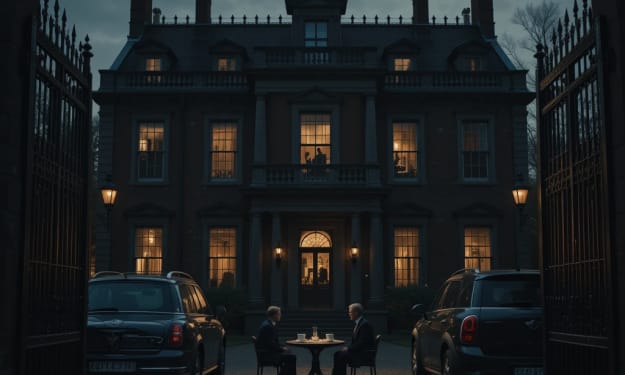
The city outside never noticed. Just two dark vehicles passing through the iron gates of Clarence House on a gray September evening. To most, it looked like nothing more than protocol. But to those who knew the story, it was extraordinary. A father and son, once inseparable, now strangers in everything but blood, finally sitting down in the same room after more than a year apart.
By Norul Rahman5 months ago in Fiction
Feelings Never Die
It is Valentine's Day again, and it bought back memories that were over fifty years old. It bought me back to 1971, and I woke up and I knew my baby was due today. I was big and pregnant, and I felt like I was about to burst wide open. Imagine my surprise when the doctor told my I had a due date of February 14. I couldn't believe it, and since my baby was due today, I felt I could indulge myself a bit. I had gained a lot of weight, and chocolate was on the no-no list, but I had came to the end of this pregnancy, and I hoped it would be okay, after all I would deliver this baby today. So I walked across the street to the grocery story, and bought myself, a peppermint patty, covered in chocolate, my favorite. Me and my Valentine's baby would enjoy it together.
By Susan Payton5 days ago in Fiction
Should We Not Try to Get Too Political?
Here's something you often hear people say, "I try not to get too political." I understand the sentiment and I sympathize with it... while at the same exact time, I completely disagree with the notion. Whether it's referring to social media or wherever, it's kind of unavoidable. You can attempt to sidestep it, not engage, leave the less important things for actual politicians to discuss... you can want it to not take over your life, your conversations, your relationships, and that makes perfect sense.
By Stephen Kramer Avitabile5 days ago in Writers


Comments (1)
Some time silence is mirror but invisible.