
Trivium
Chapter One: The Aristotle Test

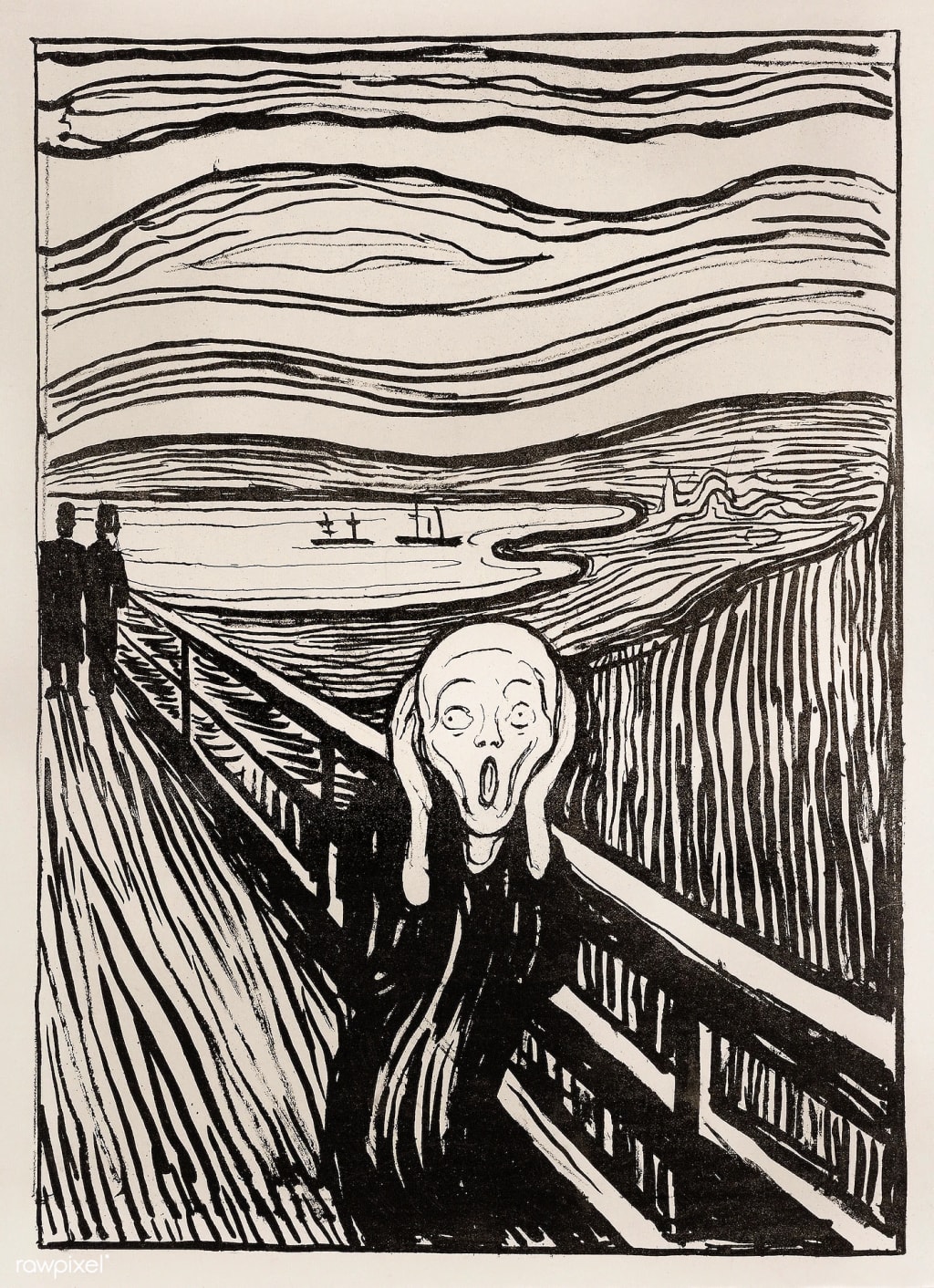
Nobody can hear a scream in the vacuum of space, or so they say. Discuss.
Shelly turned over her exam paper and stared at the statement printed in Arial font, size 12, at the top. Fifteen simple words, nineteen syllables, fifty-nine letters, and symbols brought together in an attempt to do her over.
"They" could not have picked a worse time for such a "show" of emotion. This was a Space Corp Physics examination paper, the final paper in a barrage of tests. Passing this exam meant joining the elite teaching ranks at Trivium Tower. It was the stuff that all young Trivium physicists dreamt of. Why would They encode the final exam with such ridiculous emotional baggage? It was an absolute joke, and it wasn't even funny. It was pitiful.
Suspended somewhere between laughter and tears, Shelly sat like an interned corpse in a morgue with nineteen other equally inanimate and equidistantly spaced postgraduate exam students. She stared ahead in disbelief at her predicament as the giant, red, digital clock on the white-washed wall started to flash its colon like a hospital heart monitor counting down her ninety minutes until death.
Under the clock, on a chair elevated above the examinees, reached by three squeaky narrow metal steps, sat the adjudicator. A fat, little man with a face like a slapped arse sunk into which were two black and beady eyes that watched over them all like a one-man firing squad.
Shelly took a sip of water from her bottle. Not because her mouth was dry or because she was thirsty. She was not nervous at all. She took a sip of water because it was far easier to hide how pissed she felt.
The adjudicator’s eyes locked onto her like a pair of heat-seeking missiles.
"Thirsty?"
"Yes." She lied.
Her voice was calm. Her answer was brief. No further conversation had been asked for, nor was it required.
Controlling your tells was everything in Trivium.
Shelly returned her gaze to her blank answer page. She could ill afford any further attention. She picked up her standard issue plastic pen to demonstrate her intent to start. Too much delay in processing fifteen simple words could infer emotional complexities. While it was true that all she wanted to do right there and then was drive the pen through the sheet of paper into the desk and carve into it the words "YOU ARE ALL FUCKING BASTARDS," then stand on her seat and scream her head off at the insanity she was forced to live within... She had come too far to let one statement poke her over the edge.
Besides, where would it get her if she did?
Locked up in a vacuum in space no doubt.
Where nobody would hear her scream,
or so they say.
The adjudicator started to scribble in his little black book. Time and type of "tell," most likely. Damn it. She was usually so good at holding face. She focused on her breathing, keeping it shallow and steady. She was riled, and she knew the adjudicator could sniff it. This was the last leg of a long-played game; she could not lose her nerve now.
Shelly stared at her exam paper, gripping her pen tighter than a throttled throat. It was only a statement; she reminded herself, an arrangement of letters into fifteen words typed onto paper, no more, no less.
Or so they say.
Those four little words, tagged onto the end, were like shit on the tip of a poking stick.
"They" were bastards.
She was not going to fall for their ruse.
She began decoding the statement, hacking away the emotional clutter to reach the objective truth.
The only truth that mattered in Trivium.
The first word to go was the word "Nobody." It inferred that somebody was listening. It inferred that somebody might care. In physics, the search for universal truths could not be clouded by sentimentality or sensibility. Humanity was flawed; errors were inevitable wherever human nature became involved. This was unacceptable. To evolve, humans had to rise above their humanity. Anything less compromised the search for truth as it created the opportunity for fault.
"Can" went into the bin next. It suggested that somebody was trying to hear. This smacked of "Inductive" science, science that sought verification rather than a refutation of its hypotheses. Bad science. The should-have-been-sainted-if religion-were-still-a-thing Karl Popper would have turned in his grave over that implication. Deduction was sacrosanct.
The word "Scream" went next—unnecessary use of emotional context. Science should never be sensationalised. The term "Sound" would suffice; the magnitude or emotional motivation was irrelevant.
"Space" followed the rest of the emotive rhetoric into the bin. Its only purpose in the statement was to excite and enforce a feeling of isolation. In this context, it was an emotionally meddlesome word and offered nothing to the search for objective truth.
She wanted to sigh. It was quite a relief to see her newly excavated statement disrobed from its emotional clutter.
Sound cannot be heard in vacuums,
or so they say.
It was better. Cleaner. She would have to get back to the shitty end of the stick later.
For now, she had a firm, scientific starting place.
or so they say.
Why did those words mess with her head so much?
Shelly drew a horizontal line through the middle of her page and wrote the header "Good Science" in the top corner, and under the line, she wrote the title "Bad Science." The categorisation was comically simplistic for a final physics exam, almost childlike. In another world, in another time, the original statement could have provoked a critical debate about power, emotional freedom, and control. Within those fifteen words, there had nestled enough ammunition to explode a manifesto into existence. Yet, Shelly was about to write an essay on sounds in vacuums because anything more would be unscientific.
Or was it?
Why had They encoded the question?
The action was entirely out of step with Trivium policy.
She had assumed that she was being messed with. She had assumed that the question was designed to catch her out emotionally because.... well... because it had. The use of the word "scream" and the personalisation of the statement were all loaded with unscientific baggage, seemingly designed to goad her. But what if that was not the point? What if it wasn't a political ploy to catch the emotionally weak? What if they were asking for a discussion about emotionally loaded statements in science? What if they wanted a debate on the subversion inherent to emotional encoding?
Was she about to cut the point of the exercise out altogether?
Because she had become emotional.
Damn it.
That would be the biggest tell in the history of all tells. She may as well have written the essay in her own blood and hung herself.
Exam rule number 1: Always answer the question.
She had changed the question.
Because it was emotionally loaded.
It screamed of avoidance.
Shit.
Trapped in her combusting body, Shelly looked up at the red clock as it earnestly flashed away the time she had left.
Sound cannot be heard in vacuums.
That was where the physics was. Shelly reflected on what she had cut out. She had made no error. All that lay on the cutting room floor was noise.
Dear God, was she thinking in puns now?
With the adjudicator's focus taken by movement down at the other end of the firing line, Shelly blinked her eyes slowly and surely. The darkness calmed her, helping to centre her thoughts.
There was only one way to play this.
Exam rule number 2: If you write nothing, it cannot be marked or graded.
She had to start getting stuff onto her page. Whatever that may be. The one thing she could not do was hand in a piece of work with only incoherent random scraps of notes to her name.
She may as well just stand on her chair and scream. The net result would be the same.
She began to write down everything she knew about the history of science and sound in the hope that a way through the mire would emerge. She decided chronology was the best approach. They would appreciate how linear that was.
Pythagoras went in first, straight into the top half of her page under her "Good Science" header. Good old Pythag, mathematically proving that string instruments create sound through vibration, very on brand with Trivium policy, ahead of his time. Never blurred the lines, never played an angle.
Oh, man. Thank God the adjudicator couldn't see into her head.
Puns could be her death.
She blamed Aristotle. After all, he was the first person to suggest that tragedy was linked by ridicule to comedy. If only he could see her now, halfway between tears and laughter for a full ninety minutes of exam condition tyranny.
This exam was the epitome of ridiculous.
Aristotle went under the line.
It didn't matter that Aristotle was a polymath who pioneered significant advances in multiple theoretical fields. When it came to acoustic theory, the guy had messed up by asserting that the frequency of sound propagated faster the higher the pitch. He offered no real science to validate his claim; folk just believed him because he was Aristotle.
Textbooks in current circulation claimed that his hubris was a significant lynchpin in the decisions that led to his execution. That, and the minor issue of his audacity to question the state's agenda - a crime that still carried the death sentence in Trivium.
Shelly wrote his name under the line on her page.
Aristotle, Trivium's archetypal bad boy.
What a legend!
Two Romans, Vitruvius and Boethius came next... centuries later... due to Aristotle and his maverick ideas. Both these men were big cheeses in the history of the science of sound, but each came with some colourful baggage, so both had to be handled carefully when it came to this "discussion."
Shelly considered them in turn.
Vetruvius' work on mathematical proportions had created some of the most sublime auditoriums. Sadly, all music was banned in Trivium due to its capacity to provoke emotional recklessness. Auditoriums did still exist though and were often used for speeches. He went above the line.
Boethius was more complicated. He had proved that sound was mathematically created. Boethius was why this specific question could be asked on a physics exam paper. Incongruently, Boethius also believed that sound and music could be studied emotively as well as scientifically.
Music is part of us, and either ennobles or degrades our behaviour. - Boethius
Feelings are intangible manifestations that reveal a compromised mind - They #statetrivium.
The two points of view were hardly complimentary. There was no discussion to be entered into here.
One day, thought Shelly, this essay could be found in an archive somewhere, and the person who reads it could believe that she, Shelly Stott, daughter of Purity Stott, one of the best mathematicians of his age, was a complete and utter state whore, incapable of critical thought or discourse.
If there were a reason to see a thing through, writing Boethius and Aristotle's names under the line as men bad at science would be up there amongst the best of them. Shelly's pen hovered under the line on her savagely demarcated page, desperate to ink onto it her own name, penned in solidarity with Aristotle and Boethius in recognition of the tyranny she was living with.
Of course, she couldn't do that.
This essay was a means.
This would not be her end.
or so they say
Damn those four little words, crawling around her mind like flies on rotten meat.
She would not be goaded.
She continued, noting names like Galileo, Savart, and Mersenne who all went in above the line. They had all cut through the din that Aristotle had left and made headway in the science of sound.
She paused, taking a shallow breath that barely registered in her chest and ignoring the starchy line of sight of the adjudicator, she took a sip of water. She had to navigate the "The Bell Vacuum" experiment next, an experiment that was scientifically sound on the surface but waded through some deep waters.
She swallowed back another sigh - there were just too many puns. If only there could be a little appreciation for them, but like with screams... nobody cared, and nobody was listening.
The sooner she landed this essay, the better! Her sanity, as solid and sure as it was, was at risk of slipping away from her and joining the farce.
She drew over the horizontal line a little to accentuate its thickness and steady her resolve to get this nightmare done with.
All the people associated with the bell in a vacuum experiment had made mistakes, starting with Kircher, who had conceived the experiment. His equipment hadn't been good enough to create a viable vacuum. They would not care about the limitation of scientific equipment in the 17th Century. They would only care that Kircher tried to run before he could walk. He went in below the line.
Robert Boyle, who later that century, with improved scientific equipment, actually created a proper vacuum, showed that sound came in waves and decreased in volume where there was less air. Still, he had incorrectly concluded that a sound could not be heard in a vacuum. Shelly had done the same experiment many times, with equipment light years ahead of his. The bell could be heard if the density of the jar was thin enough. It was not a question of the vacuum but of the density of the object to which the sound was being transmitted. The results were a matter of a mismatch between low density transmitting to high.
Jars are pretty dense.
As it would appear are They
All vacuums contain enough air to transmit sound.
Everyone knows sound, even a scream, can be heard in a vacuum, even if that vacuum were in space.
Damn. Damn. Damn.
She had been right all along. The question had been designed to goad. It was politically charged.
Or so they say.
Those four shitty words meant more than all the other words in the original statement. If They said the sound could not be heard, who was she to say otherwise?
All They wanted to know from this final exam was whether her state loyalty was stronger than her integrity.
This was an Aristotle test.
The bastards.
The realisation stung like antiseptic on a wound. It didn't matter how good a physicist she was; it only mattered how loyal she was to the State of Trivium. Despite what she had been taught, emotional integrity had nothing to do with the search for truth.
Emotions were the enemy because They could not control them.
Everything else... Everything... was a device to maintain Trivium power.
She had been right. There was a manifesto begging to be fired from those fifteen original words.
One day, she would write it.
Squeak
Step.
Squeak.
Step.
Squeak.
Lost in the hate that pulsed through her veins, Shelly's consciousness returned to the exam hall with a gun to its head.
The adjudicator was on the move.
Fear surged through her like a rage of pistons, her primal urge desperate to make her fight or fly.
She sat, like ice, staring at her page. Her only movement was her hand with her pen, which crawled across the sheet of paper, writing names and dates, on automatic pilot.
Had the fireball of emotion imploding within her shown itself?
A shuffling sound followed the series of awkward squeaks. The ungainly trudge of an overweight man who had been sat too long, moving across an unforgiving concrete floor.
His step came closer and closer.
She felt her heart rise into her neck. Please... No. Not after all she had been through.
Closer.
Closer.
He stopped. She could see him in her peripheral vision. She was not going to give him the satisfaction of looking at him.
The sound of his whistle pierced through the dead air like a mortician’s scalpel.
She carried on writing.
More feet, clipped in sound, buoyant, and certain of their step, marched towards her from the back of the room.
Not now.
Not now.
She carried on writing, They may take her, but fear would not.
She could feel the presence of the person with the military step right behind her.
Any second now, it could all be over.
The seat at the side of her scraped back along the concrete floor. There was a muffled whimper, then the steps turned, and with a slower, heavier, more laboured tread, they retreated to the back of the exam hall.
Silently, the adjudicator turned and shuffled away.
Back up his squeaky steps.
Back to his seat.
Back to watch.
Shelly could feel sweat pooling in her shoes as she fought to stop her body from shaking. In fury she scrawled Robert Boyle's name above the line, and, irrespective of the truth, she started writing her final essay, which would conclude that screams could not be heard in vacuums.
The only way to bring the state down was from the inside.
She was going to become a teaching physicist.
She was going to move her way through the devout academic ranks, and when she found that one red button, hidden in some obscure engine room of the Trivium hive, she was not going to hesitate, she would run at it, launch herself at it, press it with all the fury her pent up rage would release to her and bring the whole shit show down around her.
And when that day came, when the world was in beautiful chaos, when people were dancing in the streets, shouting and screaming and singing, then...
Then…
...she would laugh until she fucking cried.
About the Creator
Caroline Jane
CJ lost the plot a long time ago. Now, she writes to explore where all paths lead, collecting crumbs of perspective as her pen travels. One day, she may have enough for a cake, which will, no doubt, be fruity.
Reader insights
Outstanding
Excellent work. Looking forward to reading more!
Top insights
Excellent storytelling
Original narrative & well developed characters
Compelling and original writing
Creative use of language & vocab
Eye opening
Niche topic & fresh perspectives
Heartfelt and relatable
The story invoked strong personal emotions
On-point and relevant
Writing reflected the title & theme
Easy to read and follow
Well-structured & engaging content
Masterful proofreading
Zero grammar & spelling mistakes
Expert insights and opinions
Arguments were carefully researched and presented
Keep reading
More stories from Caroline Jane and writers in Fiction and other communities.
Lavender Orphan Love Spell
Bertie The children at Chandler Home Orphanage were not allowed to talk to the gypsies. It had been over a year since the last time they set up their caravan at Anson's Rock in the woods south of the Chandler Home campus. That was the spring of 1922.
By John R. Godwin4 days ago in Fiction
Not Just For Clean Up: A History Of The MCU's Department of Damage Control
Initially an organisation that seemed to exist to help the heroes of the Marvel Cinematic Universe, from Phase Four onwards, the Department of Damage Control has shifted into a more antagonistic role. Most recently seen in the Wonder Man series, the current incarnation of Damage Control seems to target superpowered individuals, regardless of whether that person poses an active or intentional threat.
By Kristy Anderson2 days ago in Geeks




Comments (17)
Excellent story! You took us on an emotional journey along with your main character. This was a great way to use the prompt.
Wow!
This was a unique take on the prompt. You taught me several words and I always appreciate that! Thank you for creative ride!
This had ME laugh crying. How many times have I been here? Whether test-taking or just freaking WRITING. This dug deep into the core of my muse and gouged the little fonker. HAHAHAHAH!
Wow! It blew me away how you took the phrase and went into such an original take. I was not expecting it at all, yet I could not stop reading.
I loved the internal battle going on in her mind all while she worked to remain so stoic. It added this level of underlying tension to the entire story. I adored the way you wrestled with the each scientist, especially Aristotle! I loathed physics in high school and college, so this was fun to read in that respect, because it wasn't my exam, lol :) I hope she rises up and gets them all, well done.
That was such an interesting read! Fantastic job.
I loved this! Shelly suspended somewhere between laughter and tears was so relatable. Her train of thoughts was very interesting. You did a fantastic job!
Laughing! Beware of the Voc... I mean... Trivium overlords. There is no greater vengeance than one who wields a pen. Hell hath no fury as a writer scorned by a prompt. Enjoyed the journey into your mind. Love your character Shelly.
I love this. The reference to the scientists and all, had me laughing at the critiques of them. Smart and fun. Fantastic!
Fantastic stuff. Love the narrator's voice in this one, was rooting for her immediately!
I love how it turned out! The ending is fab now. It captures a bit of your spirit, too <3
This is so well done. I was inside her mind and it was a wild ride. Loved it.
Fantastic writing. The intellect, the emotional, and the humour all weave perfectly. This is awesome.
Cheers! Awesome, impressive, creative, and outstanding story! Honesty, I'll admit remembering an exam and wanting to scream and write naughty words. Thinking, we have all been there. 💖💕
Very smart! Loved the precision of this one. So well written and humorous too!
Not a winner? This is an excellent take on the premise and you fill it with a lot of interesting names and characters and situations and lead with a wonderful image. This is excellent.