
When I Was Fat, the World Treated Me Differently
A Story About Hope


The first time I realized the world had changed, no one said anything.
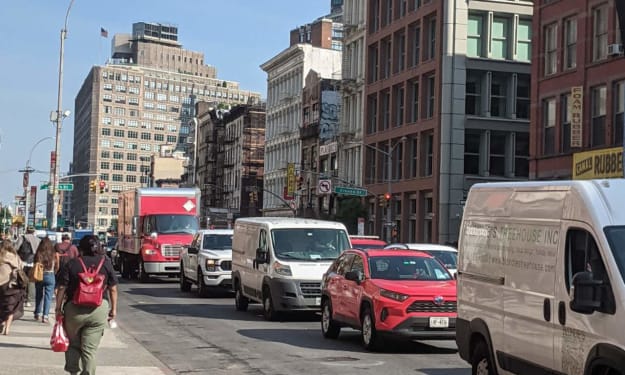
It was a Tuesday morning in October. The air in Manhattan had just turned sharp enough to feel honest. I was standing in line at a coffee shop on 23rd Street, the kind with exposed brick and quiet music that made people feel more important than they were.
“Next,” the barista said.
She looked directly at me.
Not through me. Not past me.
At me.
And she smiled.
It was a small smile. Automatic, maybe. But it lingered half a second longer than necessary.
I noticed.
Because before, when I was fat, people did not linger.
When I was fat, I learned how to disappear without leaving.
It wasn’t something anyone taught me. It was something I absorbed, like humidity in summer. The way people stepped slightly aside on sidewalks without making eye contact. The way conversations continued around me, but not with me. The way waiters placed menus on the table without meeting my eyes, as if I were an extension of the furniture.
My name is Andrew Chen. I am thirty-nine years old. I work as a financial analyst in New York City. I live alone in a one-bedroom apartment that costs more than my parents’ first house.
Today, I weigh 172 pounds.
Three years ago, I weighed 287.
The difference between those numbers is not just weight.
It is an entirely different life.
When I was fat, mornings began with negotiation.
Not with the world. With objects.
Chairs were the first test of every day.
At home, I had one chair I trusted. It was reinforced steel, something I bought online at two in the morning after another chair cracked beneath me with a sound that echoed longer than it should have.
At work, there was a chair I avoided. It looked identical to the others, but its legs were thinner. I learned this the hard way.
The sound it made when it bent was subtle. A soft, metallic complaint. No one said anything, but everyone heard it.
After that, I stood more often.
Standing was safer.
Standing required less faith.
Clothes were another negotiation.
I owned five identical blue shirts. Same brand. Same size. Buying variety required optimism, and optimism was expensive.
Buttons were unreliable allies. I checked them often. Sitting, standing, reaching—each movement carried risk.
I learned to move carefully. Economically.
As if sudden motion might betray me.
The subway was where I felt my body most clearly.
It wasn’t the stairs. I could climb stairs.
It wasn’t the distance. I could walk.
It was the seats.
Seats were judgments disguised as furniture.
I remember one morning, standing in a crowded train. There was one empty seat between two people. A man and a woman.
The space looked normal.
But space can lie.
I hesitated.
The man noticed.
He shifted slightly, not enough to be obvious, but enough to say something.
I stayed standing.
My legs ached. My back ached. But the ache was familiar.
Familiar pain is easier than unfamiliar humiliation.
People assume fatness arrives suddenly.
It doesn’t.
It arrives quietly, through small permissions.
One late dinner becomes a habit. One skipped walk becomes routine. One year becomes ten.
For me, it began after my father died.
He had a stroke at sixty-two. No warning. No drama. Just absence.
After the funeral, I returned to New York and resumed my life, except everything felt slightly misaligned.
Food became structure.
Breakfast at 8:00. Lunch at 12:30. Dinner at 7:00. Snacks in between.
Eating gave shape to hours that otherwise felt formless.
No one noticed at first.
Weight gain is polite. It does not announce itself.
Until one day, it does.
When I was fat, people were kinder in a certain way.
Not cruel. Not openly.
But careful.
Carefulness is its own kind of distance.
At work, my ideas were acknowledged, but rarely challenged. Disagreement requires engagement. Engagement requires seeing someone fully.
I was useful.
But I was not visible.
At restaurants, servers addressed my friends first, even when I spoke.
At stores, employees asked, “Can I help you find something?” in a tone that implied the answer was no.
Dating was the clearest difference.
Or the absence of it.
Dating apps were quiet places. My profile existed, but it did not live.
Occasionally, there would be a match. A brief conversation. Then silence.
Silence is a language.
I became fluent in it.
The moment everything began to change was not dramatic.
It was a doctor’s appointment.
Routine. Predictable.
The doctor reviewed my chart. Numbers filled the screen between us.
“You’re healthy,” he said carefully.
Carefully.
“But you’re moving in a direction that will make that harder.”
He did not say lose weight.
He did not need to.
I went home that night and stood in my kitchen.
I opened the refrigerator.
Inside were the usual things. Containers. Bottles. Familiar comforts.
I closed it.
Not because I was strong.
Because I was tired.
Tired of negotiating with chairs. With seats. With space.
Tired of disappearing.
Weight loss, people imagine, is dramatic.
It is not.
It is repetitive.
The first morning I walked around the block, nothing happened. No revelation. No transformation. Just movement.
My knees hurt.
My lungs protested.
But I finished.
The next day, I did it again.
And again.
Progress was invisible. Like weight gain, but in reverse.
Months passed.
My body changed slowly, reluctantly.
The scale moved in small increments.
Five pounds. Ten. Twenty.
Each number felt both enormous and insufficient.
The world did not notice immediately.
But eventually, it did.
The first difference was eye contact.
Strangers looked at me.
Not with curiosity. Not with judgment.
With acknowledgment.
As if I existed.
At work, people began asking my opinion more often.
Not because I was smarter.
Because I was seen.
Waiters spoke directly to me.
Cashiers smiled.
Baristas remembered my order.
These were small things.
But small things accumulate.
Just like weight.
The most confusing difference was kindness from strangers.
Doors held open longer.
Conversations started more easily.
Compliments appeared.
“You look great,” people said.
I smiled.
I said thank you.
But inside, I wondered.
Had I changed?
Or had their permission to see me changed?
One evening, I ran into an old coworker, Daniel.
We had worked together five years earlier.
He stared at me for a moment.
“Andrew?”
“Yeah.”
“Wow. You look… different.”
Different.
He meant thinner.
But he said different.
As if thinness were identity.
We talked for a few minutes.
He laughed at my jokes more than he used to.
I noticed.
Because before, he hadn’t.
Dating became possible.
Not easy. But possible.
Matches appeared.
Conversations lasted longer.
Women looked at me with curiosity instead of polite indifference.
On my first date after losing weight, I was more nervous than I had been in years.
Her name was Julia. We met at a wine bar in Brooklyn.
She smiled when she saw me.
A real smile.
During the date, she leaned forward when I spoke.
She asked questions.
She listened.
These things felt extraordinary.
But they were ordinary.
That was the difference.
The strangest moment came one winter morning.
I was walking to work. The air was cold, sharp enough to sting.
I passed a man standing outside a deli.
He was large. Larger than I had ever been.
He stood slightly apart from the flow of people, as if he understood something about space others did not.
People moved around him without looking.
I recognized the posture.
The quiet apology of existing.
For a moment, I wanted to stop.
To tell him something.
But I didn’t.
Because I didn’t know what to say.
Anything I said would sound like betrayal.
People think losing weight makes you a different person.
It doesn’t.
It makes you the same person, treated differently.
My thoughts did not change.
My humor did not change.
My intelligence did not change.
Only my body did.
And yet, the world responded as if everything had.
This was the hardest truth.
Not that the world had been cruel before.
But that it had been indifferent.
Indifference leaves no scars you can show.
Only ones you carry.
Sometimes, late at night, I look at old photos.
I see myself as I was.
I do not feel shame.
I feel recognition.
That man survived quietly.
He endured negotiations no one saw.
He learned the geography of judgment.
He moved through a world not built for him.
He deserved kindness.
He did not always receive it.
But he deserved it.
That Tuesday morning in the coffee shop, when the barista smiled at me, nothing extraordinary had happened.
Except that she saw me.
Not as an obstacle.
Not as a shape.
As a person.
This is what changed.
Not my body.
Not really.
What changed was the world’s willingness to acknowledge my existence.
And once you have lived on both sides of that line, you understand something most people never see:
The world is not fixed.
It shifts around you.
Quietly.
Constantly.
According to rules no one admits, but everyone obeys.
When I was fat, I learned how invisible a person could become.
And now, when strangers smile at me, when conversations begin easily, when doors are held open just a second longer, I carry both truths inside me.
The man I was.
And the man the world now allows me to be.
They are the same man.
Only the world is different.
About the Creator
Peter
Hello, these collection of articles and passages are about weight loss and dieting tips. Hope you will enjoy these collections of dieting and weight loss articles and tips! Have fun reading!!! Thank you.
MARVEL/DC COMICS PRESENTS #15
Illuminati Unknown Location 1977 “In the beginning, was darkness, emptiness, chaos. Then light came and with it came all life. In ancient times, our world was threatened by forces of darkness from within and from without. Our ancestors formed a council of light to keep back the darkness and protect our world. I, Hippolyta, Queen of the Amazons of Themyscira, take my seat at this assembly.”
By Derrick Billups 8 days ago in Fiction


Comments
There are no comments for this story
Be the first to respond and start the conversation.