
When They First Showed Up They Had Gifts
Dawn's first diary entry

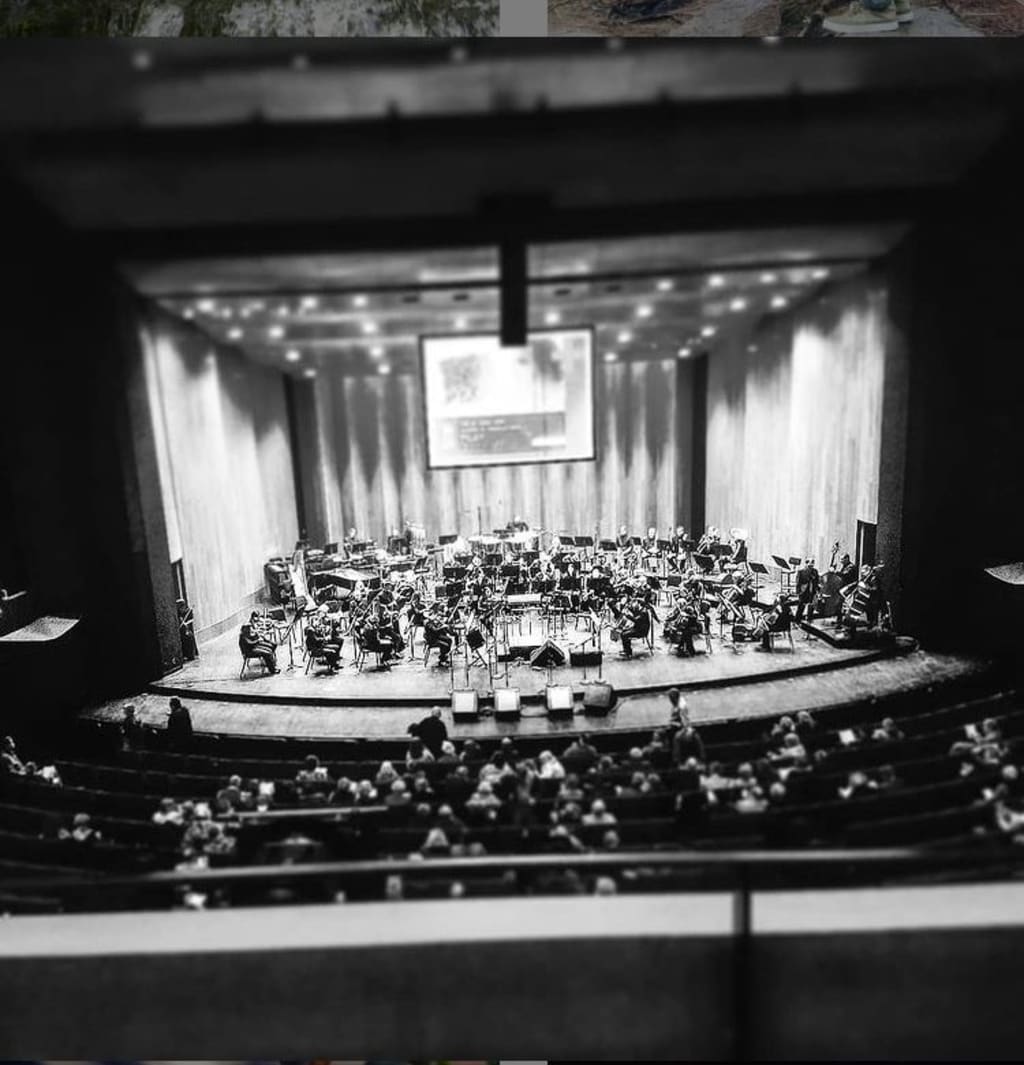
“When they first showed up, before they started all this, they had gifts.”
That’s how Grampy started his annual history lesson tonight. Something technically fantastic happened tonight when he showed us a heart. It made me want to start this diary.
Alexander cried “Grampy, tell me the one about how the Americans came with dogs and horses!” My frail grandmother in the corner shot Grampy an icy look before she said, “And they came with guns too, before me or your grandfather were alive. He should have told you that all the same, later in your lives.” She knew that history better than he did.
Her intense focus went back to her cell-pad’s screen. She had told me once that she had to focus since the cell-pad was such an old American model. It had trouble reading the deep umber color of her eyes and fingers tips. Our grandmother closed herself with her old grey blanket in the ergonomic chair that her doctor had ordered her for sleep. It was late as these history lessons always are, but when Grampy tells us his stories, she wants us to be there with her in the room where she sleeps. I think she likes to correct him.
Grampy said, “She’s right. I’m sorry, Sasha,” and he said, “that’s a story for another time.” The old man cooed Alexander, my nephew whom they called Sasha, and ruffled the child’s hair. Grampy saw something in those blonde curls. Neither of their children, my mother and uncle, had inherited the old man’s blue eyes nor his hair color and such pale skin. Neither had the grandchildren—me and my siblings—but Sasha had. Sasha is their first great-grandchild and they taught him to call them the same names that we do.
I want to still get some of my own history down here first. Sasha is only a handful of years younger than me. I’m the youngest of the six grandchildren. My biggest sister, Dede, died too young in childbirth. Sasha’s ‘sperm donor’—as Dede had called him when she was carrying the fetus—ran off when our grandmother predicted that Dede was pregnant.
I can tell this weight is sinking in the old man’s chest since Dede died. Tonight, he fronted a smile into Sasha’s green eyes and his own blue eyes looked dead and not at all happy. The man placed both his own hands back firmly on his own thighs to start his story.
He said, “I’ll say it again. The Rhythms, they weren’t just gifts from humans to humans, they brought gifts from their own space. We had called this music in the first half of this century. My parents, their parents and past called this music. Music was a type of gift for centuries before that. Some people were calling them ‘beats’ maybe as early as the 1980’s…” He shot a look at our grandmother who didn’t look up from her cell-pad. I trusted that she was always listening. Her silence didn’t mean that the story was correct, but I think it meant that it was good enough for her.
He kept going. “… So, we always called this music. We can still hear this today if we do something like this…” Then old man pursed his lips and made a happy grumbling sound. He alternated the steady grumbling with this soft high-pitched blowing noise while bobbing his head and smacking his hands together repeatedly. I laughed at Grampy because he is silly, but Rail just shook her head and rolled her eyes. Rail was almost too old to care. We did not know yet that this was the first time any of us had heard music.
“Now there used to be machines that made this music. They were called speakers and amplifiers. Big, clunky, boxy constructs that looked more like furniture than machines. Even before my time people were using these constructs that basically were furniture. A whole cabinet dedicated to ‘turning records’ and making sounds. These made much more complex sounds and music than I can do with my mouth here. For centuries we also used ornate pieces of wood and hair or wire or even skin strung together by a master maker. In my time, we also used computers to put sounds to music. These were all instruments that we, as skilled techs, worked into making music. As far as I know there are none left, besides maybe in the underground. None of your computers have speakers today, but they all used to.”
Two years ago, he gave us history of the kitchen tools which are now simpler and more noiseless. I couldn’t imagine how noisy blenders used to be. He had nearly yelled to demonstrate. He always lets us know how ‘cell-pads’ used to be called ‘phones’ because he still calls them ‘phones’ all the time. This is because he is silly. We’re used to hearing about antique tech when Grampy tells his stories.
“Your grandmother and I were musicians. She was a singer and I made beats. We used these instruments to record bits of audio over time— songs— and we released these songs into the world hoping to be paid when people listened to them. This was back before there was a universal eco-flow or whatever your parents call it. We really had to do things or build constructs that would make the system let you get food or a house from the markets. None of the jobs really paid. So, we released a song that got a couple hundred million plays in 2026. I was twenty-four and she was twenty-five at the time and it’s the reason that we’re here today. We bought this house off that song…” He was reminiscing.
“Your grandfather wouldn’t be here without my voice,” Piped in our grandmother, softly.
Rail called “They gave you a house!? because you went bbptz bptzz woo hooo?” Her guffawed imitation of Grampy made our grandmother freeze and lock eyes with her for a moment. Grampy froze too.
There was a long pause.
Rail griped, “Yeez, I can’t imagine how easy life must have been for you all. You don’t even understand how hard it is now.”
They did not respond for a long time.
“Yes. And no. It’s more complicated than that, Rail. You’re right. Life was good. And it’s difficult now. But the ecosystem is for the better, now. We had a lot of freedom back then but it was a wicked freedom to fail out. We were allowed to die if we didn’t perform.” She said perform with greater disgust than she said 'die'. “Our friends weren’t as lucky as us to have had a hit song. We lost families in the shift…” Our grandmother trailed off. “I’m sorry, Grampy, you finish your story. I’m laying it on these kids too hard today. I’m sorry, Rail.” She went back to her cell-pad. I am worried about Rail since Dede died. She’s the oldest now and the only other girl besides me.
Grampy continued now “So, Rail, yes. We did get paid to make music, but it wasn’t music like what I did earlier. I’ll show you what it was eventually… Just a sec.” Grampy reached into his left pocket and closed his hand around something cold and metallic.
Then, Sasha asked with all innocence. “Why did we stop music, Grampy?”
The old man sighed and kept his hand in his pocket.
“Alexander, Rail, all of you should hear this. It was the mid 30s and the gift economy—what we had before all this—was just kicking off into dominance. We were all trading each other what we needed, alternative energy was taking a lead on fuel-burning and music was the 'oh be eight' of the masses…[not sure I heard that]”
“Peter! No.” Grandmother called. I don’t know why she stopped him.
I think sometimes she was too hard on Grampy. He said, “Uhm, sorry... uhm music was just what everyone did for fun. Now you go play your games on your cell pad or play with the trees, it was like that. And we danced. In groups. Oh, how did we dance… That’s another story for another time.
“When the Rhythms came on the scene, they were the first band to make AI music. The name was a play on algorithms, see? We were giving all the credit to the men that made the machines. The Rhythms were their gift to us, but then the men went into their machine. Billionaires had paid for this ‘life after death’ idea. They were piloting with the Rhythms, and it worked.
“The band of men were living in virtual space much like your AI teachers do today. I think it might even be the same technology. Anyways, they were making the wickedest music. Wicked meant good, sort of. It sounded the best. It was the greatest gift. And then someone said for their next ‘diversification’ they were hooking the Rhythms up to a 3-D-printer and Auto-CAD software to make custom instruments. Does that make sense?”
“What’s a printer?” I had to ask.
“Yeah, what’s CAD? I think I’ve heard of that. Is that like my Build app?” Rail asked next. She must know what printers were, she is smart and in school for tech stuff.
“Yeah, basically, Rail.” Grampy said to me “Don’t worry about it much, Dawn. I’ll tell you when you’re older. Anyways, they started printing stuff like this.” Grampy continued talking as he pulled his shaking hand out of his pocket with a closed fist. He had some difficulty doing this. He was seated, and my quiet brothers were all upon him. He opened his hand to reveal a piece of shining metal.
“They made these little instruments that were like wind-up toys.” He said this locket was the first gift the Rhythms ever gave to humanity. He said it was given to our grandmother. He said the shape was one that we don’t see nowadays. It’s called a heart and it’s patterned off a woman’s rear end, named after the muscle in your chest that keeps your blood flowing, and it stands for the love that we share among us. Must be a powerful construct. He said it also used to be one of the first emojis before they cut it out in the newer updates. Grampy turned the locket around show us the turner on the back and wound it to a soft clicking sound.
Speaking while he wound, he reminded us of “what sort of grand machines the algorithms have given us now” like the Central. He said that we know that better than him. Our grandmother looked at him curiously then and he paused.
“I don’t know” Grampy said, and he released the locket’s turner. It played something like the machine was speaking for a few moments and then slowed down. We all listened for a long time after it had stopped playing. At the end, Sasha nabbed the locket and started looking at it closely and curiously.
Rail was crying when I looked at her. She wiped away her tears so that she didn’t think anyone saw but I saw. She asked “Grampy, why did we stop playing music?”
“People saw what the Rhythms' gifts could do and were angry with musicians. They said we had been wrong for using music for fun and love and expecting to be paid. We didn’t know better. It’s just not considered appropriate any more…” Then Grampy said “Sasha, give me that back.” and took the locket.
Our grandmother chimed in “The Rhythms eventually released a song that compelled every one of us to trash our instruments, and some folks who heard it started attacking musicians.” She said we won’t get in trouble for music, now, but that she didn’t want to catch us singing and sent us to bed. I know there’s more to his story…
-Dawn Carry, 1.1.2098
About the Creator
James M. Joyce
Born in 1996, James M. Joyce was born in Kentucky and is a graduate of the University of Louisville as well as the Kentucky Governor School for the Arts. I work as a Graduate Teaching Assistant in Sociology at the University of Louisville.
Keep reading
More stories from writers in Fiction and other communities.
THE MAN WHO COULD WORK MIRACLES
George McWhirter Fotheringay was not the kind of man anyone would expect to possess miraculous powers. He was small, with bright red hair, freckles, sharp brown eyes, and a habit of twisting the ends of his moustache when arguing. He worked as a clerk at Gomshott’s and enjoyed proving people wrong. Until the age of thirty, he did not believe in miracles at all. In fact, he strongly argued that miracles were impossible. His strange discovery happened one evening while he was debating the subject in the bar of the Long Dragon.
By Faisal Khana day ago in Fiction
Where there's Art there's Heart
Here's a stupid thing: I adore art, but I start to panic whenever I step into a gallery. In the one place I should be at my contented best - surrounded by walls teeming with creative expression - I fall apart. What ought to be an enriching experience, tacitly designed to facilitate the exploration of human empathy and perspective, is for me an overwhelming purgatory of anxiety that compresses me to the point I cannot breathe. At the same time, I experience a sense of extraction, as though my head is being prized open to create a hole so big my sanity could evaporate. Somewhere between these two opposing forces of vice and vortex, I feel myself dissolving in a stream of panic that makes me want to cry; and I feel so daft feeling this way, that all I want to do is run for the hills.
By Caroline Jane5 days ago in Humans



Comments
There are no comments for this story
Be the first to respond and start the conversation.