
How Local Singles Can Solve Real-Time Relationship Challenges With Emotional Intelligence
Applying emotional intelligence to navigate conflicts, improve communication, and handle relationship challenges effectively in real time

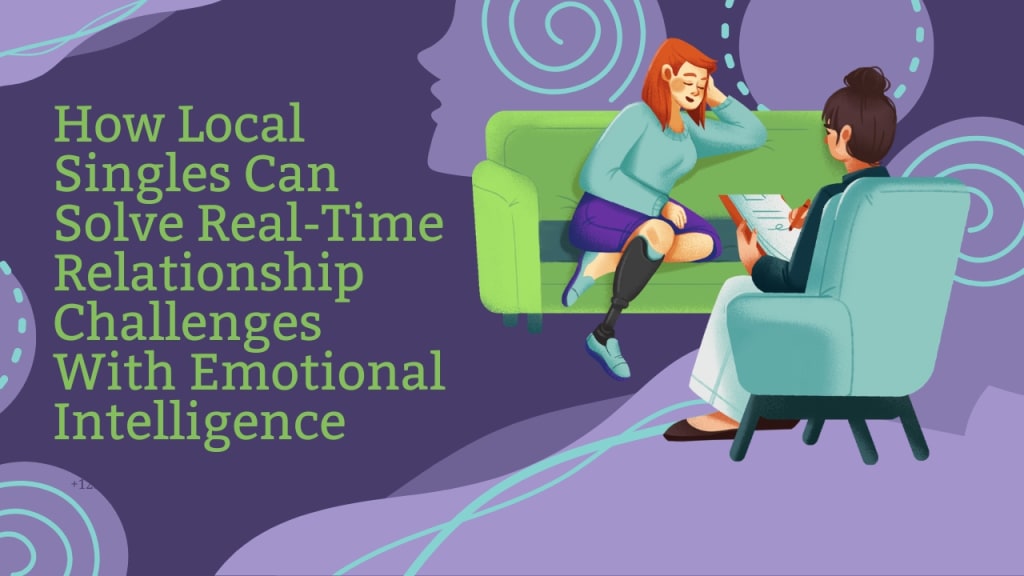
The first stage of emotional intelligence (EI) is the capacity to be able to identify emotions (one’s and those of others). The common relationship issues that local singles struggle with include misunderstanding, conflicts, and communication problems. Being able to discover emotions such as frustration, insecurity, or excitement presently, people will be able to act wisely instead of acting on the spur of the moment. Sensitivity to emotional indicators, like voice tone, facial expressions, or physiological cues, can facilitate and avoid escalation, as well as understanding. When the singles observe their emotions at an early stage, they are able to control them, which results in a relaxed atmosphere to talk about them. The ability to identify emotions is the basis of constructive resolution of challenges.
It is also necessary to understand the feelings of a partner or a date. By putting themselves in their shoes, single individuals are able to act sensitive even when differences of opinion occur. This skill makes a person less defensive and encourages free speech. As an instance, when one realizes that his or her partner is withdrawn or anxious, then one can engage in supporting talk instead of confrontation. Emotional awareness can be used to understand the rational behind behaviors, thus not judging wrongly. Local singles who are trained in this skill are able to detect any kind of tension or excitement and respond accordingly to retain connection. The key in transforming possible challenges into opportunities of learning and development is to understand the emotions.
Self-Regulation in Disputes.
Self-regulation is one of the key elements of emotional intelligence that enables singles to deal with impulses and react in a cool manner when confronted by real-time relationship dilemmas. The original emotion response can be anger, defensiveness, or frustration when there are conflicts. Self control helps people stop and take a moment to think about their reaction. This helps to avoid escalation, and facilitate positive communication. Being calm is also a form of emotional stability that is modeled and this encourages the partner to be calm. Self-regulation assists the singles to deal with issues in a rational manner whereby solutions are directed towards the issue as opposed to personal attacks or reactive behavior.
Deep breathing, mindfulness, or short reflection are techniques that can be used to improve self-regulation during difficult times. As an example, taking time before replying to a heated message or a comment will permit the time to take the perspective in communicating. Self regulation involves negative self-talk management and the prevention of overgeneralization in arguments also. When people react to each other voluntarily rather than instinctively, the understanding between them is clarified and the mutual respect is created. Emotional intelligence is necessary to make sure that conflicts are managed in a non-escalation focused way so that real-time problems become easier to solve and emotional integrity of the relationship is not harmed.
Empathy as a Question of Effective Communication.
Empathy plays a very important role in solving relationship issues in a real time. Single people who embrace emotional intelligence are active listeners and are willing to hear the point of view of their partner. They put questions and reflect on what they hear instead of presuming intentions or making assumptions or conclusions. This will ensure that there is no miscommunication and both parties will feel justified. Compassionate communication creates trust, even during the tense moments. Once a partner feels that they are understood, he or she will react more calmly and cooperatively, and finding a solution to the problem will be easier. Empathy is seen to change conflict into a conversation and not a fight and hence create emotional attachment and respect.
Empathy is also about being able to convey empathy without condoning bad behavior. An example is recognizing that your partner is stressed or frustrated and being able to discuss the boundaries anyway, this results in a more balanced relationship. When I statements are used instead of accusatory language, this helps to lower the defensiveness and promote the discussion. Empathy enables single individuals to detect emotional requirements, as well as, hidden issues in real-time. This skill when used on a regular basis can assist couples to overcome conflicts, disagreements or misunderstandings with care and sensitivity. Successful empathetic communication brings with it a cooperative attitude in solving relationship problems enhancing bond and ensuring stability.
Problem-Solving Collaborative Approaches.
EI leads to group problem solving instead of individual competitive or responsive. Local singles may use EI to resolve the issues by concentrating on the common interests, which may include upholding respect, understanding, and harmony. Instead of blaming each other, the partners brainstorm. The attitude promotes cooperation and innovation when solving problems such as time clash, finances, or conflicting priorities. Joint problem solving enhances accountability, whereby every partner plays the role of contributing towards solving. When singles take problems as a joint venture, the partnerships become stronger and less emotional tension occurs in the present times.
There is also flexibility and adaptability in collaboration. Not all solutions are ideal at the beginning, and emotionally intelligent singles will realize that they will have to change according to feedback and changing situations. Honest communication of emotions, hopes and compromise possibilities will make sure that both partners will be happy with any consequences of the decision made. This would help to eliminate resentment and will encourage both sides to invest in the relationship. In case of difficulties, the team-working attitude will enable the couples to balance their emotions and find effective solutions effectively. Emotional intelligence makes problem solving a relationship enhancing and a constructive process and not a tension causing one.
Exploiting Experiences to develop Resilience.
The use of emotional intelligence in a live situation offers learning and development. Single people who consider the previous disputes, misunderstandings or emotional responses can understand the patterns that can influence relations. This conscious makes them better prepared to deal with future circumstances and minimizes anxiety and impulse. EI can turn adversity into an educational process to build strength and self-confidence. The knowledge of what worked and what did not helps the singles to improve the skills of communication, empathy, and self-regulation, which make each communication advance their ability to establish authentic, balanced relationships.
Another lesson that can make one resilient is to take on challenges without personalizing it. Local singles who perceive conflicts as common issues and not individual setbacks are emotionally stable. Reflection, journaling or talk with peer-support can be used to intertwine lessons and avoid recurring errors. This habit over time results in emotional stamina, tolerance and sanity in dating and relationships. With self-awareness, empathy and problem-solving, single people will be able to confront the immediate challenges with confidence and calmness. It is emotional intelligence that eventually turns challenges into growth opportunities, which leads to healthier and true relationships in the long-run.
Conclusion
Emotional intelligence represents an essential device of single people when it comes to real-time relationship issues. The ability to identify emotions, self-regulate, empathically communicate, address problems as a team, and reflect is what helps people deal with the conflicts and reinforce their relationships. These abilities minimize miscommunication, foster emotional regulation and build up a place that enables relationships to flourish. Local singles that learn emotional intelligence are clear, patient, and mature in their dating and partnership. Through practicing these tips in their daily dealings, singles find more solutions to solving their issues in a positive way, develop trust, and lead to true, sustainable and long relationships founded on understanding, empathy and mutual respect.
About the Creator
Willian James
William James, 30, London-based lifestyle article writer. Covering wellness, travel, culture, and modern living with stories that inform, inspire, and connect readers worldwide.
Keep reading
More stories from Willian James and writers in Filthy and other communities.
Relationship problem solving methods improving intimacy, communication, and long-term happiness
Good relationships are based on effectively solving problems. The presence of conflicts is unavoidable, and the manner in which the couples handle them defines the level of intimacy, effectiveness of communication, and happiness. Denial or acting in a defensive manner would cause emotional separations and repeated miscommunications. Conversely, active and joint problem-solving approaches assist partners to solve the conflicts in a constructive way and at the same time strengthen their emotional bond. Through their empathetic approach, clarity, and cooperation couples mend issues, as well as build on trust, understanding, and long-term happiness in the relationship.
By Willian James16 days ago in Filthy
Lifestyle Adjustments That Boost Emotional Resilience In Relationships
Relationships start with a regular practice of self-care. Spending some time to learn about personal emotions and how to control them allows people to react and respond to conflict situations, as opposed to acting on reflex. Journaling, meditation, or silent contemplation are some of the activities that provide room to emotional processing and decongesting of emotions. By developing mental health, people will not be as reliant on their partner to regulate emotions. This autonomy enhances relations by avoiding emotional exhaustion and promoting equal relations. Mood stability also enhances self care and the partners can be able to go through the challenges with patience, clarity and the ability to understand each other better.
By Olivia Smith6 days ago in Filthy
Review of '56 Days'
My wife and I just binged 56 Days on Amazon Prime. Aside from the title, I thought that this was one wild, sometimes winsome, sometimes weird, multifaceted gem of a thrilling whodunnit series, with two separate complex intersecting stories that jump back and forth from the present to the past.
By Paul Levinsonabout 14 hours ago in Filthy



Comments
There are no comments for this story
Be the first to respond and start the conversation.