
Israel to Permit 10,000 Palestinian Worshippers to Al-Aqsa in Ramadan
A look at what the decision means for faith, freedom of worship, and rising tensions in Jerusalem

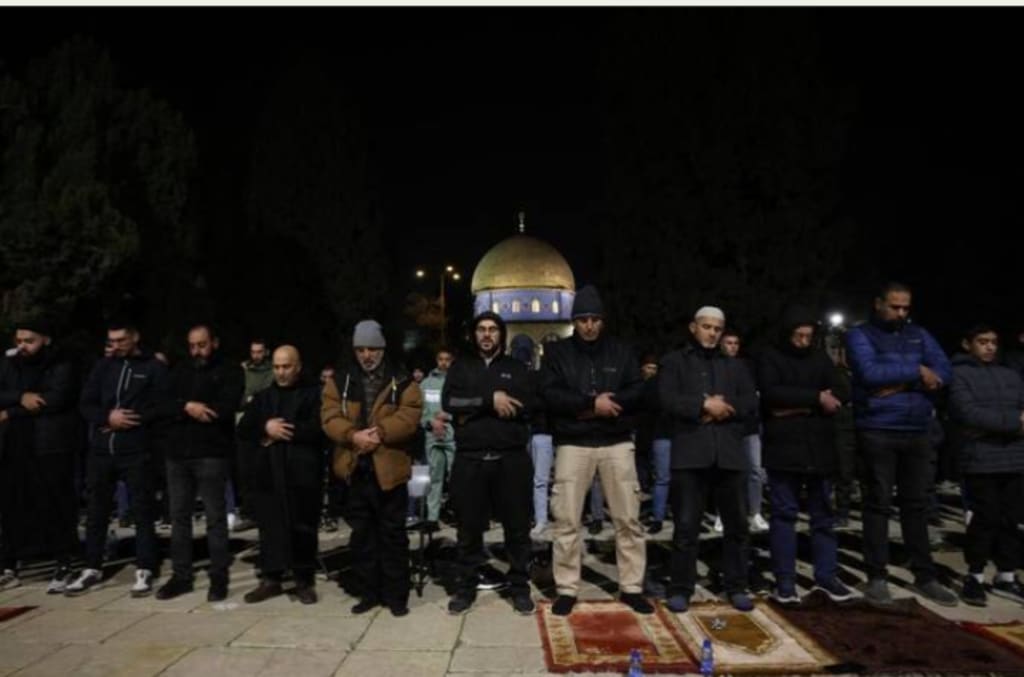
As the holy month of Ramadan begins, a fragile calm settles once again over Jerusalem’s Old City — a place where faith and politics have been inseparably intertwined for decades. This year, Israeli authorities announced that 10,000 Palestinian worshippers from the West Bank will be permitted to enter Jerusalem to pray at the sacred Al-Aqsa Mosque on Fridays during Ramadan.
While the announcement may sound like a gesture of religious accommodation, it has been met with mixed reactions. For many Palestinians, the decision highlights how limited access to one of Islam’s holiest sites has become. For Israeli officials, it represents an attempt to balance religious freedom with security concerns during a historically sensitive period.
Why Al-Aqsa Matters So Deeply
The Al-Aqsa Mosque compound, located in the heart of the Old City of Jerusalem, is revered by Muslims worldwide as the third holiest site in Islam after Mecca and Medina. Known as Al-Haram al-Sharif (the Noble Sanctuary), it includes the iconic Dome of the Rock, whose golden dome dominates the city’s skyline.
For Jews, the same area is known as Temple Mount, believed to be the site of the First and Second Jewish Temples. This dual religious significance makes the compound one of the most contested religious spaces in the world.
Israel captured East Jerusalem during the 1967 war and later annexed it, a move not recognized by much of the international community. Administration of the mosque compound remains under the Jordanian-run Islamic Waqf, while Israeli security forces control access points.
What the Ramadan Decision Allows
According to the Israeli military body known as COGAT (Coordinator of Government Activities in the Territories), a maximum of 10,000 Palestinians from the West Bank will be allowed to enter Jerusalem for Friday prayers during Ramadan.
However, the policy comes with strict conditions:
Men must be 55 years and older
Women must be 50 years and older
Children under 12 may enter only with close family members
All worshippers must obtain special permits in advance
Entry remains subject to security screening
These restrictions drastically limit the number of eligible worshippers, especially younger adults and families who traditionally attend prayers together.
A Sharp Contrast to Previous Years
Before the outbreak of the war in Gaza in late 2023, Ramadan prayers at Al-Aqsa would draw hundreds of thousands of worshippers each Friday. Entire neighborhoods would travel together, and the Old City would transform into a center of spiritual energy, charity, and community.
This year’s cap of 10,000 worshippers represents only a small fraction of that number. Critics argue that the restrictions hollow out the spiritual meaning of Ramadan for Palestinians who view Al-Aqsa not just as a mosque, but as a symbol of their religious and national identity.
For many families in the West Bank, traveling to Jerusalem during Ramadan has been a tradition passed down through generations. The new limits mean that younger worshippers — often those most eager to participate — are left behind.
Security Concerns and Heightened Tensions
Ramadan has historically been a time of heightened tension in Jerusalem. Large gatherings at Al-Aqsa have frequently turned into flashpoints for clashes between worshippers and Israeli security forces.
This year, authorities have announced increased police deployment around the Old City and surrounding neighborhoods. Checkpoints will be reinforced, and movement in and out of Jerusalem will be tightly monitored.
Israeli officials argue that these measures are necessary to prevent unrest and ensure public safety. They point to past incidents in which political protests and violent confrontations erupted during prayer times.
Yet Palestinians and human rights groups say the security narrative masks a broader system of control over religious practice and freedom of movement.
Controversy Over Religious Leadership
Adding to the tension, reports have emerged that senior religious figures associated with Al-Aqsa have faced restrictions themselves. Some imams were temporarily barred from entering the compound during Ramadan preparations, a move widely criticized by Palestinian officials and religious authorities.
For worshippers, this was seen not only as a security decision but as an interference in religious life. Ramadan is traditionally a period when religious leaders play a central role in guiding prayer, charity, and communal unity.
Two Narratives, One Sacred Space
The Israeli government maintains that it is acting responsibly by allowing limited access while prioritizing security. Officials stress that freedom of worship must be balanced with preventing violence in a highly sensitive environment.
Palestinians, however, see the decision as another example of unequal control over their religious rights. They argue that age-based restrictions and permit systems undermine the spirit of Ramadan and deny many believers the chance to pray at one of Islam’s holiest sites.
What emerges is a familiar pattern: one sacred space carrying two deeply opposing narratives — one of security and control, and the other of faith and freedom.
A Ramadan of Reflection and Uncertainty
As Ramadan unfolds, Al-Aqsa will once again become a global focal point. The number of worshippers allowed inside may be smaller, but the symbolism remains immense.
For Palestinians who are permitted to enter, each prayer carries the weight of both devotion and resilience. For those denied access, the restrictions serve as a reminder of the political realities shaping daily life.
This Ramadan, Al-Aqsa stands not only as a place of worship, but as a measure of how unresolved conflict continues to shape even the most sacred moments. Whether the limited access will preserve calm or deepen resentment remains to be seen.
One thing is certain: in Jerusalem, faith never exists in isolation from history — and every prayer echoes far beyond the mosque walls.
About the Creator
Sajida Sikandar
Hi, I’m Sajida Sikandar, a passionate blogger with 3 years of experience in crafting engaging and insightful content. Join me as I share my thoughts, stories, and ideas on a variety of topics that matter to you.
Keep reading
More stories from Sajida Sikandar and writers in Filthy and other communities.
🌙 Egypt Officially Announces Start of Ramadan 2026 on February 19
The holy month of Ramadan is one of the most anticipated and spiritually significant times of the year for Muslims around the world. In Egypt, preparations are already underway following the official announcement that Ramadan 2026 will begin on Thursday, February 19.
By Sajida Sikandarabout 19 hours ago in Filthy
What Illinois Residents Should Know Before They Settle IRS Debt
If you are in Illinois and you owe the IRS, you are not alone. People fall behind for many reasons, like job changes, medical bills, divorce, a slow business season, or simply not understanding how much tax they would owe. The good news is that the IRS usually has more than one way to fix the problem. The key is choosing the right option for your situation, not the fastest sounding one.
By Advocate Tax Solutions3 days ago in Filthy
Real-World Strategies To Improve Trust And Intimacy In Relationships
Any strong relationship is based on trust and intimacy. Without them even the most fervent unions may seem insecure or remote. In our daily life, the hectic schedules, misunderstanding, and emotional strain may erode intimacy between lovers gradually. The positive thing is that the trust and intimacy are not constant features, but they can be reinforced by making it a habit and communication. The real-life strategies are centered on consistency, emotional openness and mutual respect. Couples can find the strength to build a safe, supportive and emotionally satisfying relationship by making small, but significant changes.
By Kellee Bernierabout 3 hours ago in Filthy
Draft Deleting? Don't Do It!
Today, I had a little time. I decided that I would have a look at the drafts that I have on Vocal. This is part of a long-term wish to have everything I've written on paper rather than virtually. I've not looked at them for weeks and something drew me to them, just to browse and see what was there.
By Rachel Deeming4 days ago in Writers

Comments
There are no comments for this story
Be the first to respond and start the conversation.