
Palestinians Shop in Gaza City Market Ahead of Ramadan
Faith, resilience, and fragile hope shape preparations for the holy month amid hardship

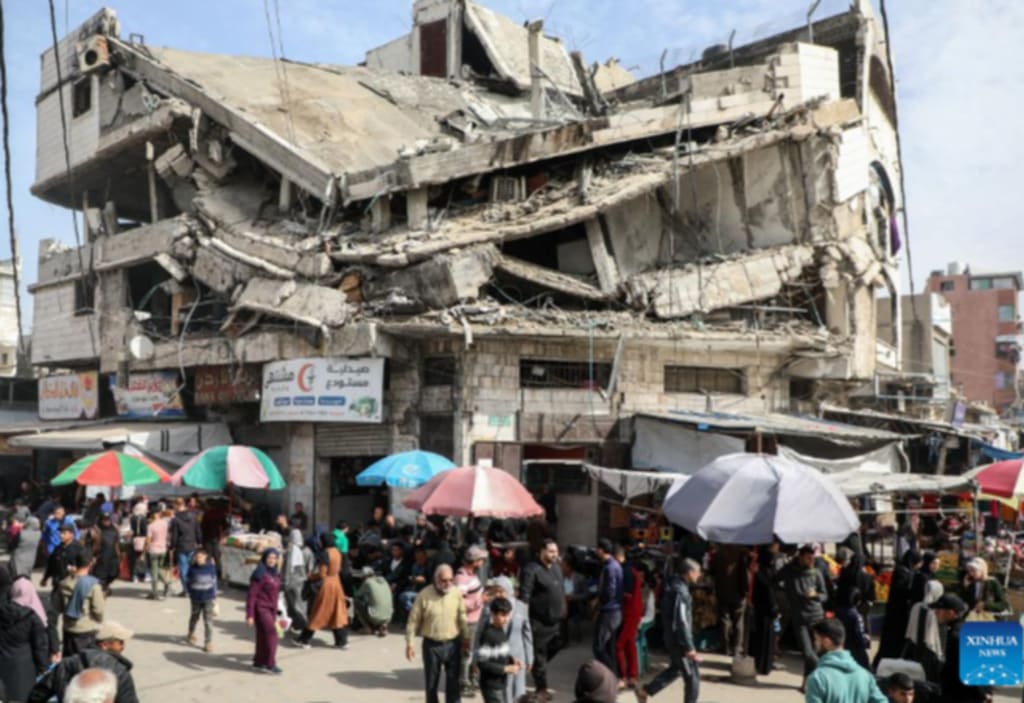
As the sun rises over Gaza City, narrow streets begin to fill with people carrying shopping bags, baskets, and weary determination. Markets buzz with voices calling out prices for dates, lentils, spices, and cooking oil. For Palestinians in Gaza, the days leading up to Ramadan are traditionally a time of excitement and preparation. This year, however, the holy month arrives under the heavy shadow of conflict, displacement, and economic strain.
Still, the spirit of Ramadan endures. Families move through the markets searching for what they can afford, hoping to recreate a sense of normalcy through food, faith, and togetherness.
A Sacred Season Meets Daily Struggle
Ramadan is the most important month in the Islamic calendar, marked by fasting from dawn to sunset, prayer, and generosity toward others. In Gaza, it has always been a deeply communal time. Streets are decorated with lanterns, children wait eagerly for special sweets, and families gather each evening for iftar, the meal that breaks the fast.
This year, those traditions are challenged by scarcity. Many shops that once overflowed with goods now display limited stock. Vendors say supply chains remain fragile, and prices have risen beyond the reach of countless families.
“I used to buy meat, rice, and fruit for the whole month,” said one shopper in a local market. “Now I choose only the essentials—flour, lentils, and a small bag of dates.”
For many, shopping is no longer about abundance but survival.
Markets as Symbols of Resilience
Despite the hardships, Gaza City’s markets remain open and active. Stalls selling spices, vegetables, and bread attract steady streams of customers. The markets are not just places of commerce; they are spaces of human connection where neighbors exchange greetings, news, and quiet encouragement.
Shopkeepers say they see both desperation and determination in the faces of their customers.
“People come with very little money, but they still want to prepare for Ramadan,” one vendor explained. “Even if they buy only one kilo of rice, it means they can feel the month has begun.”
In a place where uncertainty defines daily life, the simple act of shopping for Ramadan carries emotional weight. It is an assertion that faith and culture remain alive, even when circumstances are harsh.
Families Rewriting Traditions
For generations, Ramadan in Gaza was associated with long tables of food, crowded family gatherings, and festive evenings. Now, many families must rewrite these traditions.
Instead of hosting relatives, some families break their fast with just a few items: bread, tea, and soup. Meat and sweets—once staples of Ramadan—have become rare luxuries. Mothers calculate carefully how much flour and cooking oil will last through the month.
Yet the meaning of Ramadan is not measured only by food. Community members stress that the month is about patience, gratitude, and spiritual strength.
“Even if we eat very little, Ramadan reminds us to be thankful and to support each other,” said a father shopping with his children. “That is what keeps us going.”
Children and the Ramadan Spirit
Children, often the most vulnerable during crises, still look forward to Ramadan with curiosity and hope. Some help their parents carry groceries. Others stare longingly at shop windows displaying small lanterns or trays of sweets.
Parents try to shield them from fear and loss by preserving rituals—waking them for the pre-dawn meal, teaching them prayers, and telling stories about the significance of the holy month.
Psychologists note that maintaining these traditions can offer children emotional stability. In an environment shaped by trauma, familiar rituals help restore a sense of structure and belonging.
Even when food is scarce, families light candles or decorate their homes with handmade ornaments, reminding children that Ramadan is about more than what is on the table.
Economic Pressure and Rising Prices
One of the biggest challenges facing shoppers is inflation. Basic goods cost far more than they did in previous years. Cooking gas, flour, and sugar are often sold in limited quantities, forcing families to budget week by week.
Aid organizations and local charities have stepped in to distribute food packages, but demand far exceeds supply. Long lines form outside community centers offering rice, oil, and canned goods.
For many families, these donations make the difference between fasting with dignity and facing hunger.
“We depend on these food parcels now,” said a widow waiting in line with her teenage son. “Without them, we could not prepare for Ramadan at all.”
Faith as a Source of Strength
In mosques and community spaces, religious leaders remind people that Ramadan is a time for endurance and compassion. Sermons emphasize patience, charity, and unity. Neighbors share what little they have, offering plates of food to those who cannot shop at all.
In Gaza, faith has long been intertwined with survival. Ramadan becomes not only a spiritual journey but a collective act of resistance against despair.
Even as markets struggle and shelves remain thin, the sound of evening prayers and the breaking of the fast brings a quiet sense of peace to households across the city.
A Month of Hope in Difficult Times
The scene of Palestinians shopping in Gaza City ahead of Ramadan is a powerful portrait of human resilience. It shows people determined to honor their traditions despite hardship, to hold on to faith in a landscape shaped by uncertainty.
Their shopping bags may be lighter than in years past, but their intentions are heavy with meaning. Every bag of flour, every packet of dates, and every candle purchased is an act of hope.
As Ramadan begins, Gaza’s markets stand as reminders that even in the most difficult circumstances, people seek moments of normal life—moments that affirm dignity, belief, and connection.
Conclusion
The markets of Gaza City ahead of Ramadan are filled with contradiction: scarcity alongside determination, sorrow mixed with faith. Palestinians prepare for a sacred month not with abundance, but with courage and careful planning.
Their story is not only about shopping for food. It is about preserving identity, sustaining community, and finding light in a time of darkness. Ramadan in Gaza this year will be modest, but its meaning will be profound—a testament to the enduring human spirit and the power of faith to carry people forward, one day at a time.
About the Creator
Sajida Sikandar
Hi, I’m Sajida Sikandar, a passionate blogger with 3 years of experience in crafting engaging and insightful content. Join me as I share my thoughts, stories, and ideas on a variety of topics that matter to you.
Keep reading
More stories from Sajida Sikandar and writers in Filthy and other communities.
When Is Ramadan 2026, and How Is the Moon Sighted?
Every year, Muslims across the globe eagerly wait for the announcement that marks the beginning of one of the most sacred months in Islam — Ramadan. The anticipation builds as families prepare spiritually and socially for a month of fasting, prayer, and reflection. In 2026, Ramadan is expected to arrive earlier in the year than many might expect, continuing its annual shift through the Gregorian calendar.
By Sajida Sikandara day ago in Filthy
15 Best Places to Sell Feet Pics in 2026
15 Best Places to Sell Feet Pics in 2026 In this article, I’ll explain how people sell pictures of their feet online and how this niche market works. The digital world has created many unconventional income opportunities, and selling photos online has become one of them.
By Vijay Singh7 days ago in Filthy
Diamond 💎: The Timeless Symbol of Luxury, Power, and Eternal Beauty
Few gems carry the mystique, prestige, and allure of the diamond. From engagement rings to royal crowns, from luxury watches to exclusive jewelry collections, diamonds have long been synonymous with wealth, power, and eternal beauty. But beyond their glittering appearance, diamonds hold stories of human aspiration, cultural symbolism, and even controversy.
By Ayesha Lashari7 days ago in Filthy




Comments
There are no comments for this story
Be the first to respond and start the conversation.