
A Day on Venus Is Longer Than a Year on Venus
Uncover the mind-boggling rotation and orbit of our neighboring planet

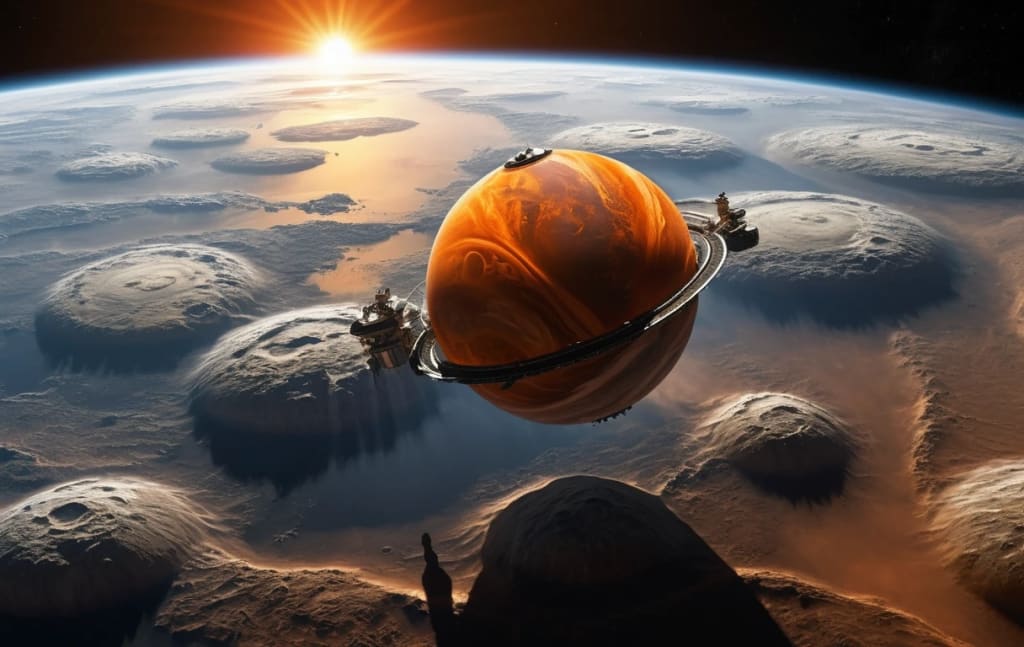
Think Earth’s days feel long? You haven’t seen anything until you hear about Venus. Here’s something that might blow your mind: a day on Venus lasts longer than its year. This fact sounds like something straight out of a sci-fi novel, but it’s true. When you learn about how this oddball of a planet spins, you can’t help but feel a bit stunned. It’s not just a quirky tidbit—Venus is playing by its own set of rules.
The weirdness of Venus’s rotation is not just some fun trivia. It’s actually a result of the planet’s retrograde spin. Most planets in the solar system, including Earth, rotate in the same direction as they orbit the Sun—counterclockwise. But Venus does things its own way. It spins clockwise, which means its day lasts longer than its year. It’s like Venus just decided to ignore the rules everyone else is following and go down its own path.
But this strange spin isn’t just a fun fact. It’s deeply tied to how Venus’s atmosphere works. The thick clouds of carbon dioxide that cover Venus trap so much heat that they actually cause the winds in its atmosphere to blow much faster than the planet itself spins. This phenomenon, known as atmospheric super-rotation, probably contributed to Venus’s incredibly slow rotation over millions of years. The planet is basically stuck in a slow-motion spin, held in place by its own thick, turbulent atmosphere.
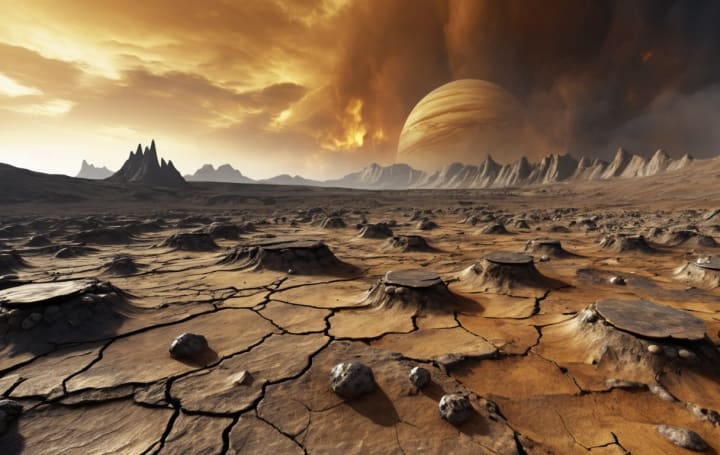
Now, let’s talk about the atmosphere itself because Venus is home to some extreme conditions. For one, it has scorching temperatures. At an average surface temperature of around 864°F (462°C), Venus is the hottest planet in the solar system, even hotter than Mercury, which is closer to the Sun. And the reason for that isn’t just because it’s close to the Sun—it’s because Venus’s runaway greenhouse effect traps heat in its thick atmosphere, creating an environment where nothing could survive.
But it’s not just the heat that makes Venus so hostile. The pressure on the surface of the planet is a staggering 92 times greater than what we experience here on Earth. That’s equivalent to being nearly 3,000 feet underwater. And if that wasn’t enough, the clouds are made of sulfuric acid, making the atmosphere not only hot and dense but also incredibly corrosive. Venus is basically a planet that has no intention of being hospitable.
Still, even with these extreme conditions, scientists haven’t given up on Venus. In fact, NASA has been working on missions like VERITAS and DAVINCI+, hoping to learn more about the planet’s history and its potential to support life—or, more likely, why it became so inhospitable. Researchers are digging into the planet’s geology, trying to uncover what led to such extreme conditions. Could Venus have once been habitable? Or is it simply a cautionary tale about what happens when things go wrong on a planet? The answers to these questions could change how we think about Venus and even Earth.
Despite the hostile conditions, Venus remains a planet of intrigue. Its unusual rotation, blistering heat, and crushing pressure make it one of the most extreme places we’ve studied. But with every discovery, Venus challenges our assumptions and reminds us how much we still don’t know about the universe. It forces us to think about time, space, and life in a different way—things that seem so straightforward on Earth can be completely flipped on their head somewhere else.
In the future, as we continue to explore Venus, we might find even more surprises. There’s still so much to learn about this strange planet. But for now, the fact that Venus’s day is longer than its year stands as one of the many mysteries that makes our universe endlessly fascinating. It challenges us to keep exploring, to keep learning, and to embrace the wonder of what’s out there. Who knows what other mind-blowing facts are waiting for us just beyond our reach?
About the Creator
Ojo
🔍 I explore anything that matters—because the best discoveries don’t fit into a box...
Saudi Arabia Plasma Fractionation Market: Rising Immunoglobulin Demand, Biologics Expansion & Growth Outlook
The healthcare sector in Saudi Arabia is seeing significant momentum in specialized medical treatments, with rising demand for advanced therapeutic solutions across multiple patient segments. Better access to diagnostic services, increasing healthcare spending, and stronger government support are all driving this forward. According to IMARC Group's latest data, The Saudi Arabia plasma fractionation market size reached USD 349.6 Million in 2025. Looking forward, IMARC Group expects the market to reach USD 733.6 Million by 2034, exhibiting a growth rate (CAGR) of 8.59% during 2026-2034.
By Shubham Sharma 5 days ago in Futurism
Your Phone Just Became Smarter Than Your Real Estate Agent
You're standing outside a house you saw on Zillow. Before you even call your agent, your phone buzzes: "This property is overpriced by $47,000 based on recent sales. Would you like to see comparable listings?"
By Navghan Modhwadia 2 days ago in Futurism
The Tango Connection
I suppose I've become a writer so I wouldn't bore everyone to death telling them my stories. Reading them is reading. Not the same. There's rhythm. And timing and, most importantly, drama and suspense. Unless you have tremendous magnetism and an undeniable stage presence, there's no way you can engage an audience the way you can by writing your story. That's my opinion.
By Rene Volpi 4 days ago in Beat


Comments
There are no comments for this story
Be the first to respond and start the conversation.