
Amazon Robots Take Over UK Warehouses End of Human Jobs Begins?
Amazon robots are now replacing human workers in UK warehouses, marking a bold shift toward full automation. Discover how this move impacts jobs, efficiency, and the future of logistics.

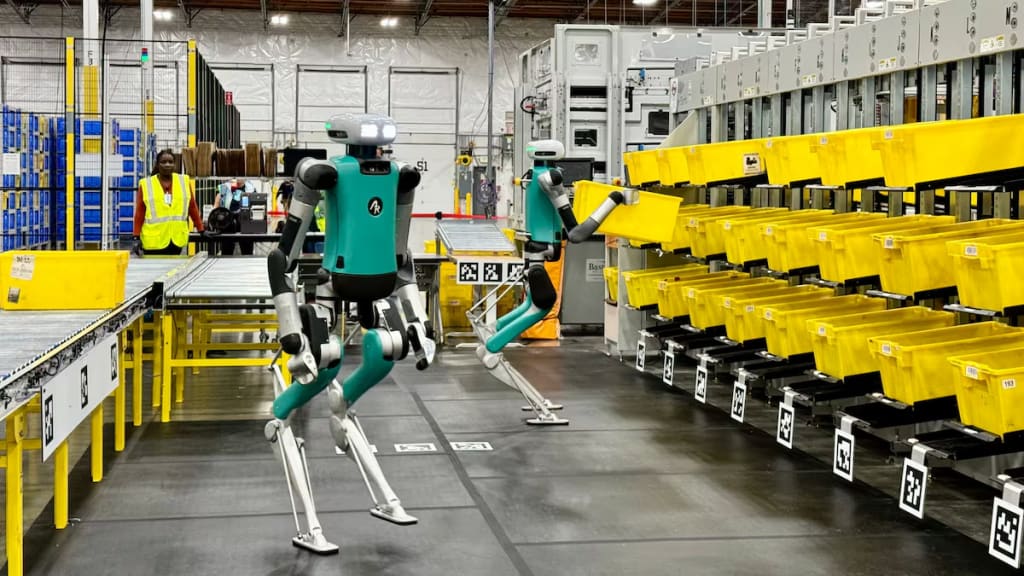
In a transformative move, Amazon has officially deployed its next generation Amazon robots across key UK fulfillment centers, signaling a dramatic shift in warehouse operations. This rollout is more than just a technological upgrade it's the foundation for a future where human labor is no longer central to logistics. These robots, powered by cutting edge artificial intelligence, are designed to perform tasks that were once the sole domain of warehouse workers.
With automation accelerating at unprecedented speed, the introduction of Amazon robots raises important questions about labor displacement, operational efficiency, and the ethical implications of a robotic workforce. Are we witnessing the end of humans in warehouses?
Amazon Robots in the UK A Major Leap Toward Full Automation
Amazon’s UK rollout follows years of robot assisted operations in the United States, where machines like Proteus, Sparrow, and Kiva have become integral to the supply chain. In the UK, warehouses in Tilbury, Doncaster, and Coventry have now received robotic fleets capable of autonomous navigation, real time item recognition, and intelligent inventory sorting.
Each robot can transport up to 1,200 kg of goods, scan product labels with zero errors, and operate around the clock without breaks or fatigue. Amazon claims these robots will “enhance safety, increase accuracy, and improve the speed of deliveries.”
But this level of efficiency comes at a human cost.
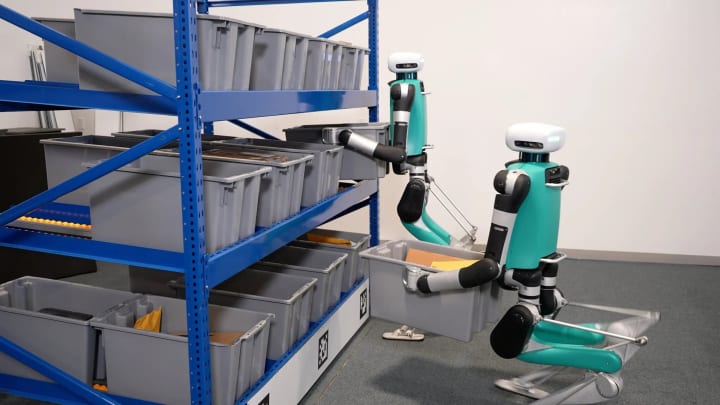
Tilbury Fulfillment Center
At Amazon’s Tilbury facility, warehouse worker headcounts have dropped by nearly 20% since robot integration began. According to a report by The Guardian, many workers were either reassigned to less physically demanding roles or faced redundancy packages.
However! the robots improved order fulfillment time by 35% and reduced workplace injuries by 28%, according to internal Amazon data. The trade off is evident greater efficiency, fewer humans.
We’re Reaching the Tipping Point
Dr. Elaine Carter, Robotics and AI Professor at the University of Manchester, says! “The deployment of Amazon robots is not surprising it’s been in the pipeline for years. What's surprising is how quickly Amazon is scaling full automation across Europe. This isn’t just augmentation anymore it's workforce replacement.”
Dr. Carter believes this marks a "tipping point" where physical labor jobs, especially in repetitive environments like warehouses, will be permanently replaced by intelligent machines. Meanwhile! Mark Chamberlain, a logistics consultant who’s worked with Amazon suppliers, adds- “From a business perspective, robots don’t go on strike, don’t need pensions, and don’t take sick leave. That’s a dream for any enterprise but a nightmare for labor unions.”
A Worker’s Voice in a Robotic Warehouse
Sarah Ali, 34, worked in Amazon’s Doncaster warehouse for five years before being transferred to a control room position. “At first, I thought the robots were here to help us. They carried heavy stuff and saved our backs. But slowly, they started replacing more and more of what we did. Then the pink slips came” she says.
She adds that the atmosphere in the warehouse changed becoming quieter, colder, and less human. “You can’t chat with a robot. You can’t laugh or share lunch. Everything became mechanical literally.”
Sarah’s story reflects the emotional toll automation takes on real people, whose lives have long been tied to jobs in physical logistics.
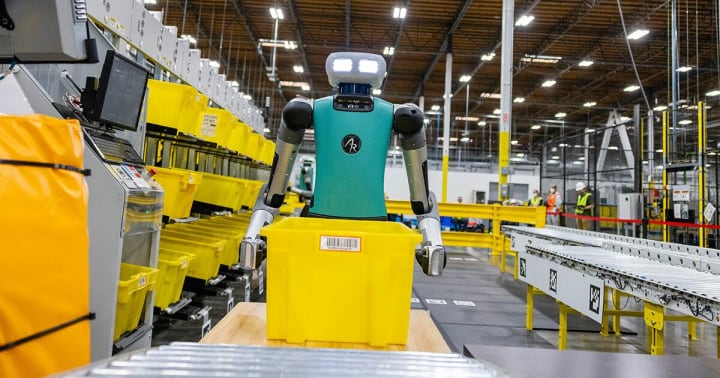
Efficiency vs Humanity
The core argument for Amazon robots is productivity. Each robot can complete thousands of tasks per hour with precision unmatched by human workers. This has profound implications for Amazon’s core promises faster deliveries, reduced shipping costs, and competitive pricing.
Benefits of Full Automation:
Speed: Robots operate 24/7, significantly reducing delivery windows.
Accuracy: AI powered visual recognition virtually eliminates shipping errors.
Cost saving: Fewer workers mean reduced labor costs and increased profitability.
Safety: Physically dangerous or exhausting tasks are automated, lowering injury rates.
Job losses: Tens of thousands of roles could vanish across the UK.
Dehumanized workspaces: Less collaboration, more isolation.
Social unrest: Labor unions have begun protesting the move toward full automation.
According to The Trades Union Congress (TUC), nearly 40% of UK warehouse jobs could be automated by 2030, with Amazon’s new rollout acting as a catalyst for broader industry change.
Global Implications Is Amazon Setting the Standard?
Amazon isn't alone in this automation race. Competitors like Walmart, Alibaba, and Ocado are also heavily investing in autonomous warehouse technologies. However! Amazon is clearly leading the charge in terms of scale, AI integration, and market impact.
By positioning the UK as a testing ground for full automation, Amazon is setting a precedent that will likely ripple across Europe and beyond. Analysts expect Germany, France, and Spain to be next in line for widespread robotic deployment.
If successful, this could lead to a new industrial revolution, one powered not by steam or electricity, but by algorithms and mechanical limbs.
What Does the Future Hold for Human Workers?
The rise of Amazon robots marks a definitive shift in how global e-commerce operates. While the benefits for business and consumers are undeniable, the implications for human workers cannot be ignored.
Automation is inevitable, but displacement doesn't have to be. The challenge now is ensuring fair transition policies, reskilling programs, and safety nets for workers like Sarah Ali people who built Amazon into what it is today.
As robots roll through aisles once filled with human footsteps, the question isn’t whether automation will take over it’s how we, as a society, choose to respond.
About the Creator
Adnan Rasheed
Author & Creator | Writing News , Science Fiction, and Worldwide Update| Digital Product Designer | Sharing life-changing strategies for success.
Keep reading
More stories from Adnan Rasheed and writers in Futurism and other communities.
Mosquito Sized Drone Designed for Chinese Spy Missions Military Robotics Lab Unveils Tiny Bionic Flying Robots
In an era where technological innovation is shaping the future of warfare and intelligence, China has once again taken a significant leap forward. A military robotics lab has revealed an astonishing advancement — mosquito-sized drones designed specifically for Chinese spy missions. These incredibly tiny, bionic flying robots not only push the boundaries of engineering but also raise serious concerns about surveillance, privacy, and the future of modern espionage.
By Adnan Rasheed8 months ago in Futurism
Your Phone Just Became Smarter Than Your Real Estate Agent
You're standing outside a house you saw on Zillow. Before you even call your agent, your phone buzzes: "This property is overpriced by $47,000 based on recent sales. Would you like to see comparable listings?"
By Navghan Modhwadia about 9 hours ago in Futurism
Stanislav Kondrashov Oligarch Series: Oligarchy and the Architecture of a Type I Civilisation
You like to think progress is inevitable. Technology improves. Systems get smarter. Humanity moves forward. But here’s the uncomfortable truth: progress at the scale of civilisation is not automatic. It is financed.
By Stanislav Kondrashov2 days ago in Futurism
The Tango Connection
I suppose I've become a writer so I wouldn't bore everyone to death telling them my stories. Reading them is reading. Not the same. There's rhythm. And timing and, most importantly, drama and suspense. Unless you have tremendous magnetism and an undeniable stage presence, there's no way you can engage an audience the way you can by writing your story. That's my opinion.
By Rene Volpi 3 days ago in Beat



Comments
There are no comments for this story
Be the first to respond and start the conversation.