
Australia 3D Printing Market: Industrial Adoption, Material Innovation & Application Expansion
How rising industrial adoption, continuous material innovation and expanding application areas are shaping Australia’s 3D printing market
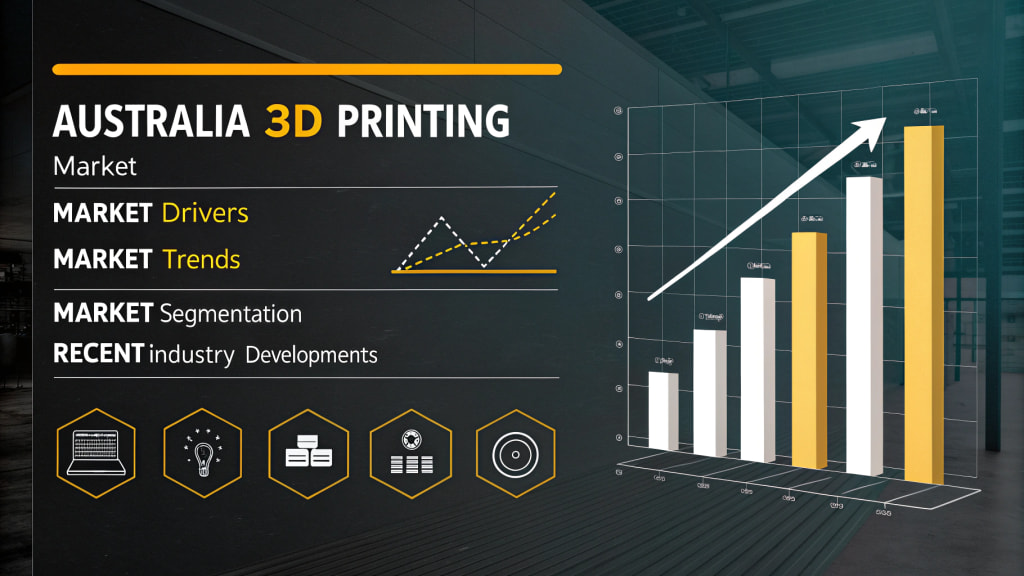
According to IMARC Group, the Australia 3D printing market reached USD 672.3 Million in 2025 and is projected to expand to USD 2,773.3 Million by 2034, exhibiting a strong compound annual growth rate (CAGR) of 17.05% during 2026–2034. This rapid expansion highlights the accelerating adoption of additive manufacturing technologies across industries in Australia. Once limited to prototyping, 3D printing is now transforming full-scale production, healthcare innovation and aerospace engineering. As industrial modernization advances and material science breakthroughs expand application possibilities, 3D printing is becoming a core pillar of Australia’s advanced manufacturing ecosystem.
Why Should Smart Buyers and Investors Know About the Australia 3D Printing Market?
Strong Double-Digit Growth Outlook
With a projected CAGR of 17.05%, the market offers high-growth potential within advanced manufacturing.
Strategic Industrial Modernization Role
Additive manufacturing enhances domestic production capacity and supply chain resilience.
Cross-Sector Application Opportunities
Healthcare, aerospace, automotive and construction industries provide diversified demand streams.
Innovation-Driven Competitive Advantage
Breakthrough material technologies and precision printing create differentiation potential.
Sustainability and Efficiency Benefits
Reduced waste and energy efficiency align with long-term ESG and sustainability goals.
Recent Trends & Developments in the Australia 3D Printing Market
July 2025:
Industrial manufacturers expanded in-house additive production capabilities to reduce dependency on imported components.
April 2025:
Healthcare providers increased adoption of customized 3D-printed implants and surgical planning models.
October 2024:
Research collaborations advanced multi-metal printing technologies for aerospace-grade applications.
The Australia 3D printing market represents a transformative force within the nation’s industrial and healthcare landscape. Supported by IMARC’s strong growth projections, additive manufacturing is moving beyond prototyping toward full-scale production and advanced material applications. As industries prioritize localization, efficiency and customization, 3D printing is redefining manufacturing economics and design flexibility. For technology developers, industrial manufacturers and investors, Australia’s 3D printing market offers a forward-looking opportunity rooted in innovation, material science advancement and the modernization of production systems in an increasingly digital and decentralized economy.
Australia 3D Printing Market Vision 2050
1. Fully Digitized Manufacturing Ecosystems
By 2050, digital design-to-production workflows may enable seamless additive manufacturing integration within smart factories.
2. Advanced Bioprinting and Regenerative Medicine
3D bioprinting may support tissue engineering and personalized organ development.
3. Large-Scale Construction Printing
Additive manufacturing in construction may enable rapid building of housing and infrastructure components.
4. Sustainable Production Models
Reduced material waste and energy-efficient processes may position 3D printing as a cornerstone of sustainable manufacturing.
5. Distributed Manufacturing Networks
Decentralized production hubs may enable on-demand manufacturing closer to end users.
What Are the Key Growth Drivers in the Australia 3D Printing Market?
Industrial Modernization and Localized Manufacturing
Manufacturers are increasingly adopting 3D printing to enhance efficiency, reduce production lead times and lower supply chain dependency. Additive manufacturing enables localized production, minimizing logistics costs and enhancing resilience against global disruptions.
Rapid Healthcare Innovation
The healthcare sector is leveraging 3D printing for personalized implants, prosthetics, surgical guides and anatomical models. Customization capabilities significantly improve patient outcomes while reducing production timelines for medical devices.
Material Innovation and Multi-Metal Printing
Advancements in material science—including high-performance polymers, composites and multi-metal printing—are expanding the technology’s applicability. Aerospace and biomedical industries are particularly benefiting from stronger, lighter and more heat-resistant materials.
Aerospace and Defense Applications
Australia’s aerospace and defense sectors are adopting additive manufacturing to produce lightweight components with complex geometries. Reduced material waste and enhanced precision support cost-efficient production.
Research and Development Investment
Universities, research institutions and technology incubators are actively developing next-generation additive manufacturing solutions. Government-backed innovation programs further strengthen commercialization pathways.
Customization and Rapid Prototyping Demand
Industries such as automotive, construction and consumer goods rely on rapid prototyping to accelerate product development cycles. 3D printing allows iterative design testing without high tooling costs.
About the Creator
Keep reading
More stories from Shrestha Roy and writers in Futurism and other communities.
Australia Seaweed Market: Aquaculture Expansion, Product Diversification & Sustainability Demand
According to IMARC Group, the Australia seaweed market reached USD 271.5 Million in 2025 and is projected to expand to USD 528.2 Million by 2034, exhibiting a compound annual growth rate (CAGR) of 7.45% during 2026–2034. This strong growth trajectory reflects the increasing recognition of seaweed as a versatile, sustainable and commercially valuable resource across Australia. Once considered a niche marine product, seaweed is now gaining prominence in food, agriculture, pharmaceuticals and environmental applications. Driven by aquaculture expansion, innovation in value-added products and rising sustainability awareness, the seaweed industry is positioning itself as a strategic contributor to Australia’s blue economy and low-carbon future.
By Shrestha Roya day ago in Futurism
Investment Casting Market Trends: Precision Manufacturing, Lightweight Components & Forecast to 2033
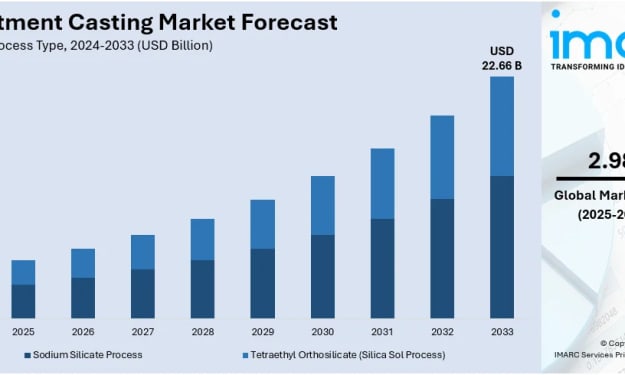
Rising demand for precision-engineered aerospace and automotive components, coupled with advances in automation and sustainable manufacturing, is driving substantial growth in the investment casting sector. The sector is expanding rapidly as manufacturers adopt robotics, digital design tools, and cleaner production methods. According to IMARC Group's latest data, the global investment casting market size was valued at USD 17.17 Billion in 2024. Looking forward, IMARC Group estimates the market to reach USD 22.66 Billion by 2033, exhibiting a CAGR of 2.98% from 2025-2033.
By Andrew Sullivana day ago in Futurism
Why Data Transparency Matters More Than Price Talk in Crypto Markets?
As cryptocurrency markets continue to evolve, access to reliable data has become one of the most important factors shaping informed participation. While price movements often attract the most attention, deeper insights into blockchain activity, governance, and network behavior are increasingly central to understanding how these ecosystems function.
By Muhammad Irfan Afzala day ago in Futurism


Comments
There are no comments for this story
Be the first to respond and start the conversation.