
Australia Agrochemical Market: Crop Protection Demand, Sustainable Farming & Regulatory Compliance
How growing demand for effective crop protection, adoption of sustainable farming practices and evolving regulatory compliance requirements are shaping Australia’s agrochemical market
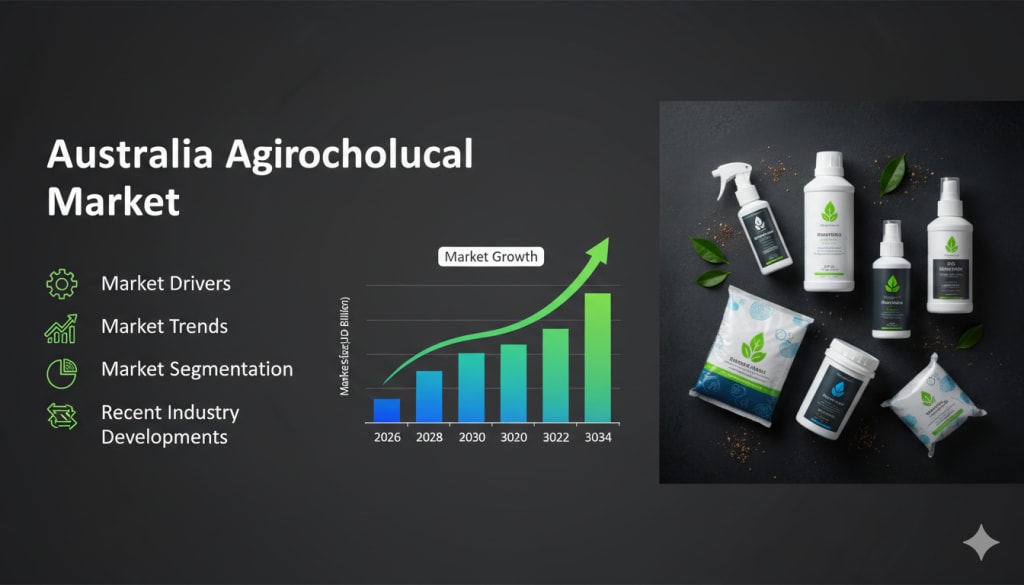
According to IMARC Group, the Australia agrochemical market reached USD 6,150.5 Million in 2025 and is projected to grow to USD 8,120.2 Million by 2034, exhibiting a compound annual growth rate (CAGR) of 3.14% during 2026–2034. This steady expansion underscores the critical role agrochemicals play in supporting agricultural productivity across Australia. As climate variability, pest resistance and global food demand intensify, farmers increasingly rely on herbicides, insecticides, fungicides and fertilizers to protect yields and enhance crop performance. Simultaneously, sustainability considerations and regulatory oversight are reshaping formulation strategies and usage practices, driving innovation within the sector.
Why Should Smart Buyers and Investors Know About the Australia Agrochemical Market?
Stable Moderate Growth
With a projected CAGR of 3.14%, the market demonstrates steady expansion driven by structural agricultural demand.
Essential Role in Food Security
Agrochemicals remain vital for maintaining crop yields and supporting export competitiveness.
Innovation-Led Differentiation
Advanced formulations and bio-based solutions create premium product opportunities.
Alignment With Sustainability Trends
Precision agriculture and environmentally responsible chemicals align with global ESG frameworks.
Export-Driven Revenue Stability
Strong international demand for Australian produce reinforces the need for reliable crop protection inputs.
Recent Trends & Developments in the Australia Agrochemical Market
July 2025:
Manufacturers launched new bio-based pesticide formulations aligned with sustainable farming objectives.
April 2025:
Farmers adopted precision spraying technologies to reduce chemical usage and optimize application rates.
October 2024:
Research collaborations advanced integrated pest management systems combining chemical and biological controls.
The Australia agrochemical market represents a foundational component of the nation’s agricultural ecosystem. Supported by IMARC’s steady growth outlook, the sector continues to balance productivity demands with sustainability objectives and regulatory oversight. As farmers integrate precision technologies and adopt environmentally conscious solutions, agrochemicals are evolving toward safer, more efficient and data-driven applications. For manufacturers, agritech innovators and investors, Australia’s agrochemical market offers a forward-looking opportunity anchored in food security, export resilience and sustainable agricultural transformation in an increasingly climate-conscious world.
Australia Agrochemical Market Vision 2050
1. Precision and Data-Driven Application
By 2050, digital mapping, drone spraying and AI-driven analytics may optimize agrochemical application, reducing waste and environmental impact.
2. Expansion of Bio-Based and Green Chemicals
Biopesticides and plant-derived solutions may gain market share as sustainability regulations tighten.
3. Climate-Resilient Crop Protection
New formulations may address extreme weather patterns and evolving pest dynamics linked to climate change.
4. Regulatory Harmonization and Global Standards
Stronger alignment with international regulatory frameworks may enhance export competitiveness.
5. Integrated Farm Management Platforms
Agrochemicals may integrate with digital farm management systems that provide real-time soil and crop health data.
What Are the Key Growth Drivers in the Australia Agrochemical Market?
Rising Demand for Crop Protection Solutions
Australian agriculture faces challenges from invasive pests, fungal diseases and weed resistance. Crop protection chemicals remain essential in maintaining consistent yields across grains, fruits, vegetables and oilseeds. Effective pest management directly influences export competitiveness.
Need for Higher Agricultural Productivity
Global demand for food and agricultural exports is rising, encouraging Australian farmers to maximize output per hectare. Advanced agrochemical products improve nutrient absorption, plant health and resistance to environmental stress.
Adoption of Sustainable Farming Practices
Sustainability is increasingly influencing agrochemical usage. Farmers are adopting precision agriculture techniques to optimize application rates and reduce environmental impact. Integrated pest management (IPM) strategies combine chemical solutions with biological controls.
Advanced Formulation Technologies
Innovations in controlled-release formulations, bio-based pesticides and improved delivery systems are enhancing product efficiency. New-generation agrochemicals aim to reduce runoff, increase target specificity and minimize ecological footprint.
Government Support and Agricultural Innovation
Government initiatives promoting research, rural development and sustainable agriculture are strengthening industry resilience. Funding programs support development of safer and more efficient agrochemical solutions.
Rising Export Opportunities
Australia’s reputation for high-quality agricultural produce supports global demand. Compliance with international phytosanitary standards encourages adoption of advanced and regulated agrochemical products.
About the Creator
Keep reading
More stories from Shrestha Roy and writers in Futurism and other communities.
Australia Natural Gas Market: Domestic Demand, LNG Exports & Infrastructure Investment
According to IMARC Group, the Australia natural gas market reached USD 34.46 Billion in 2025 and is projected to expand to USD 73.82 Billion by 2034, exhibiting a robust compound annual growth rate (CAGR) of 8.83% during 2026–2034. This strong growth reflects natural gas’s strategic role within the evolving energy framework of Australia. As the country balances decarbonization goals with energy security and industrial competitiveness, natural gas continues to function as both a critical domestic fuel source and a high-value export commodity. Sustained LNG demand, infrastructure modernization and growing industrial consumption are reinforcing the sector’s long-term outlook.
By Shrestha Roy2 days ago in Futurism
Baby High Chairs and Booster Seats Market: Safety Certifications, Durable Materials & Market Forecast
According to IMARC Group's latest research publication, the global baby high chairs and booster seats market size reached USD 4.68 Billion in 2025. Looking forward, IMARC Group expects the market to reach USD 6.34 Billion by 2034, exhibiting a growth rate (CAGR) of 3.43% during 2026-2034.
By sujeet. imarcgroup39 minutes ago in Futurism


Comments
There are no comments for this story
Be the first to respond and start the conversation.