
Australia Fast Food Market: Consumer Preferences, Convenience Demand & Digital Ordering
How shifting consumer preferences, increasing demand for convenience and expansion of digital ordering platforms are shaping Australia’s fast food market
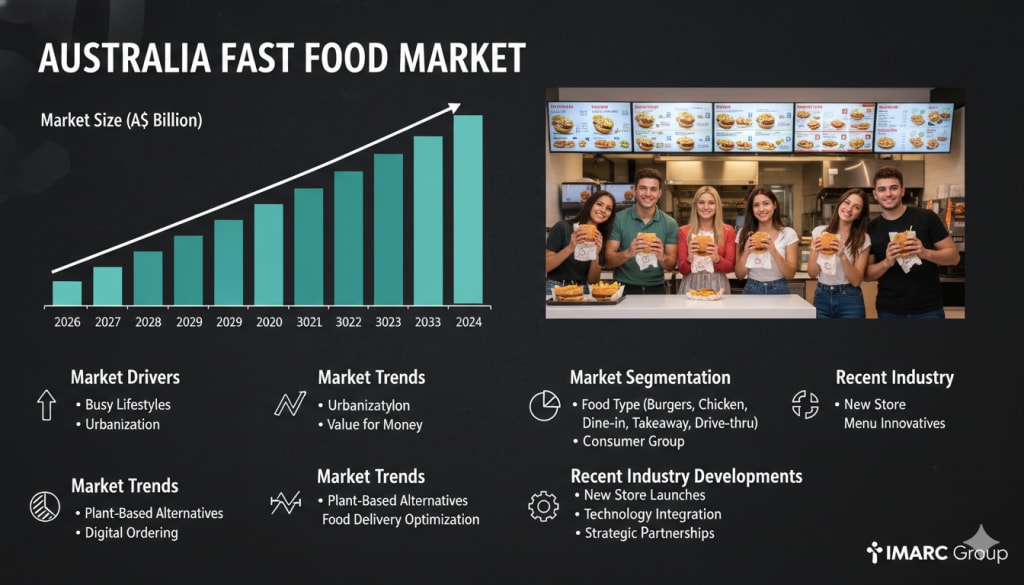
According to IMARC Group, the Australia fast food market reached USD 18.8 Billion in 2025 and is projected to grow to USD 26.5 Billion by 2034, exhibiting a compound annual growth rate (CAGR) of 3.80% during 2026–2034. This steady expansion reflects evolving consumption habits, urban convenience culture and digital transformation across Australia. Fast food, once defined primarily by traditional quick-service restaurant formats, now encompasses app-based ordering, drive-through innovation, delivery integration and menu diversification. As disposable incomes rise and consumers seek speed without sacrificing variety, Australia’s fast food ecosystem is adapting through technology, health-oriented reformulation and omnichannel engagement strategies.
Why Should Smart Buyers and Investors Know About the Australia Fast Food Market?
Stable Moderate Growth
With a projected CAGR of 3.80%, the market offers steady expansion supported by structural consumer demand.
Digital Transformation Opportunities
Integration of mobile apps and delivery platforms enhances revenue streams and customer retention.
Diversified Consumer Base
Broad appeal across demographics ensures consistent footfall and order frequency.
Innovation-Driven Differentiation
Menu innovation and sustainability initiatives provide competitive advantages.
Resilience Across Economic Cycles
Affordable pricing models help maintain demand during economic fluctuations.
Recent Trends & Developments in the Australia Fast Food Market
July 2025:
Major chains expanded plant-based menu options in response to rising demand for alternative proteins.
April 2025:
Delivery platforms introduced AI-driven recommendation engines to enhance personalization.
October 2024:
Fast food operators invested in eco-friendly packaging initiatives to reduce environmental impact.
The Australia fast food market represents a dynamic intersection of convenience culture, digital innovation and evolving consumer preferences. Supported by IMARC’s steady growth outlook, the sector is adapting to health-conscious trends, sustainability demands and technology integration. As ordering platforms become more sophisticated and menu offerings diversify, fast food operators are balancing speed, affordability and quality. For investors, franchise operators and technology providers, Australia’s fast food market offers a forward-looking opportunity anchored in digital transformation, brand innovation and enduring consumer demand within a competitive yet resilient food service landscape.
Australia Fast Food Market Vision 2050
1. Fully Integrated Digital Ecosystems
By 2050, fast food chains may operate through fully automated ordering and AI-driven personalization systems.
2. Plant-Based and Alternative Protein Expansion
Alternative protein products may gain mainstream acceptance, reshaping menu structures.
3. Sustainable Packaging and Waste Reduction
Eco-friendly packaging solutions and circular waste management systems may become industry standards.
4. Robotics and Kitchen Automation
Automated cooking systems may enhance operational efficiency and consistency.
5. Hyper-Localized Menu Customization
Data analytics may enable region-specific menu offerings based on consumer preferences.
What Are the Key Growth Drivers in the Australia Fast Food Market?
Increasing Demand for Convenience
Urban lifestyles, dual-income households and time-constrained consumers are prioritizing quick meal solutions. Fast food remains attractive due to minimal preparation time and accessible pricing. Extended operating hours and drive-through models enhance accessibility.
Rising Disposable Income and Culinary Exploration
Growing purchasing power supports higher dining-out frequency. Consumers increasingly seek diverse cuisines, prompting fast food chains to expand menus with global flavors, fusion offerings and limited-time specialty items.
Digital Ordering and Delivery Platforms
Mobile applications, third-party delivery services and self-service kiosks are transforming customer interactions. Digital platforms allow real-time tracking, personalized promotions and seamless payment integration. The expansion of contactless ordering further enhances convenience.
Intense Competition Among International and Domestic Brands
Australia’s fast food landscape features global chains alongside strong domestic brands. Competitive differentiation increasingly focuses on menu innovation, pricing strategies and brand loyalty programs.
Health-Conscious Consumer Trends
While indulgent options remain popular, consumers are demanding healthier alternatives. Reduced-calorie items, plant-based offerings and transparent nutritional labeling are becoming standard across major chains.
Expansion of Retail Locations
Growth in shopping centers, transport hubs and suburban developments supports expansion of fast food outlets. Strategic site selection strengthens brand visibility and accessibility.
About the Creator
Keep reading
More stories from Shrestha Roy and writers in Futurism and other communities.
Australia Air Purifier Market: Indoor Air Quality, Health Awareness & Technology Innovation
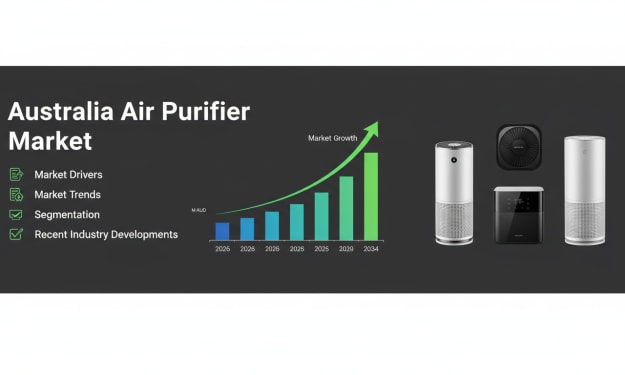
According to IMARC Group, the Australia air purifier market was valued at USD 438.89 Million in 2025 and is projected to reach USD 861.09 Million by 2034, growing at a compound annual growth rate (CAGR) of 7.78% during 2026–2034. This steady expansion reflects rising consumer awareness regarding indoor air quality and respiratory health across Australia. Air purifiers—once considered optional household appliances—are increasingly viewed as essential components of healthy living environments. Concerns about allergens, bushfire smoke, urban pollution and airborne pathogens are driving adoption across residential, commercial and healthcare settings. As technology innovation enhances filtration efficiency and smart connectivity, the air purifier market is evolving into a dynamic segment within Australia’s home appliance ecosystem.
By Shrestha Royabout 16 hours ago in Futurism
GCC Battery Market Analysis: Industry Trends, Key Players & Growth Forecast
According to IMARC Group's latest research publication, GCC battery market size reached USD 4.77 Billion in 2025. The market is projected to reach USD 8.43 Billion by 2034, exhibiting a growth rate of 6.53% during 2026-2034. Secondary batteries dominate with 65.1% share, lithium-ion leads at 58.08%, automotive batteries account for 46.05%, and Saudi Arabia commands 41% market share.
By Abhay Rajput8 days ago in Futurism
AI Market Panic or Productivity Boom? Investors Debate the Real Impact of Artificial Intelligence
What Happened Artificial intelligence is once again at the center of investor anxiety, following the release of more powerful AI systems and a wave of stock market volatility affecting sectors from software to wealth management and logistics.
By Behind the Tech4 days ago in Futurism
The Guardian Chapter V
Alexander left his Coming of Age ceremony with Cronos and the elders with as many new questions as he had answers for his old questions. Cronos had confirmed his suspicions were correct. Not only was there a link between the Beast Masters and the inhabitants of the Citadel, but it was the Citadel's fault that the Beast Masters existed in the first place. Instead of banishing the law breakers which allowed them to wreak havoc on the rest of humanity, the Citadel elders should have stripped them of their powers before they became too strong. Now Alexander would need to battle the Beast Masters and the Jikininki. It would be difficult for him to forgive the Citadel Elders because their poor decisions led to the deaths of his parents and more than half the planet's human population.
By Mark Gagnon4 days ago in Chapters



Comments
There are no comments for this story
Be the first to respond and start the conversation.