
Australia Frozen Fruits & Vegetables Market: Consumer Health Trends, Retail Penetration & Product Innovation
How growing consumer focus on health and convenience, expanding retail penetration and ongoing product innovation are shaping Australia’s frozen fruits & vegetables market

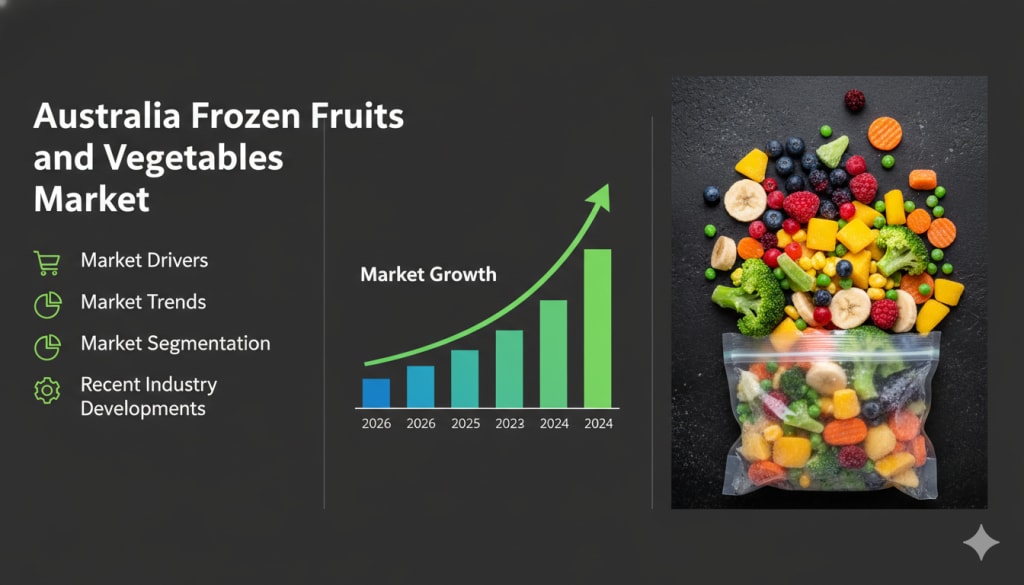
According to IMARC Group, the Australia frozen fruits and vegetables market reached USD 564.8 Million in 2025 and is projected to expand to USD 686.6 Million by 2034, exhibiting a compound annual growth rate (CAGR) of 2.13% during 2026–2034. This moderate but stable growth reflects evolving consumption habits and increased preference for convenient, nutritious food options across Australia. Frozen fruits and vegetables are widely regarded as practical alternatives to fresh produce, offering extended shelf life, reduced food waste and year-round availability. As consumers prioritize balanced diets while managing busy lifestyles, the frozen produce segment is maintaining relevance within Australia’s broader food retail ecosystem.
Why Should Smart Buyers and Investors Know About the Australia Frozen Fruits & Vegetables Market?
Stable and Predictable Growth
With a projected CAGR of 2.13%, the market demonstrates consistent demand supported by household consumption patterns.
Alignment With Health and Wellness Trends
Nutrient retention and convenience appeal to health-conscious consumers.
Strong Retail Integration
Supermarket penetration ensures widespread availability and stable sales volumes.
Waste Reduction and Sustainability Benefits
Extended shelf life supports food waste reduction goals.
Resilience in Economic Fluctuations
Frozen products offer cost-efficient alternatives during inflationary periods.
Recent Trends & Developments in the Australia Frozen Fruits & Vegetables Market
July 2025:
Retailers expanded frozen vegetable mixes tailored for plant-based meal preparation.
April 2025:
Producers introduced recyclable packaging solutions to reduce environmental impact.
October 2024:
Cold storage operators invested in energy-efficient refrigeration systems to enhance sustainability.
The Australia frozen fruits and vegetables market reflects the balance between convenience, nutrition and sustainability. Backed by IMARC’s steady growth projections, the sector continues to benefit from advancements in freezing technology, retail expansion and consumer health awareness. While growth remains moderate compared to premium functional food categories, frozen produce maintains a stable position within Australia’s food consumption landscape. For food processors, retailers and investors, the market presents a forward-looking opportunity grounded in reliable demand, supply chain innovation and evolving consumer preferences favoring convenient and waste-reducing food solutions.
Australia Frozen Fruits & Vegetables Market Vision 2050
1. Smart Cold Chain Monitoring
By 2050, IoT-enabled temperature tracking systems may ensure optimized freshness throughout the supply chain.
2. Functional and Fortified Frozen Products
Enhanced offerings may incorporate added nutrients to meet specific dietary needs.
3. Sustainable Energy Use in Freezing Facilities
Renewable energy integration may reduce carbon emissions from cold storage operations.
4. Plant-Based and Clean-Label Expansion
Frozen vegetables may increasingly support plant-based meal innovations and ready-to-cook meal kits.
5. Digital Grocery Integration
AI-driven inventory management may improve supply-demand alignment and reduce waste.
What Are the Key Growth Drivers in the Australia Frozen Fruits & Vegetables Market?
Rising Demand for Convenient Food Options
Time-constrained households are increasingly turning to frozen produce as a practical solution. Pre-cut, pre-washed and ready-to-cook vegetables simplify meal preparation while minimizing food waste. Frozen fruits are also gaining popularity for smoothies and breakfast applications.
Growing Consumer Health Awareness
Australians are becoming more health-conscious, seeking nutrient-dense foods that support balanced diets. Modern freezing technologies preserve vitamins and minerals, allowing frozen produce to compete closely with fresh alternatives in perceived nutritional value.
Advancements in Freezing Technologies
Technological improvements such as individual quick freezing (IQF) enhance texture retention and nutrient preservation. These innovations ensure product quality and reduce spoilage during storage and transportation.
Expansion of Cold Chain Infrastructure
Improved refrigeration logistics and warehousing capabilities have strengthened supply chain reliability. Enhanced cold chain networks enable nationwide distribution, even to remote and regional areas.
Increasing Retail Penetration
Supermarkets, convenience stores and online grocery platforms are expanding frozen food sections. Private-label offerings and promotional pricing strategies are further stimulating category growth.
Sustainable Packaging and Waste Reduction
Manufacturers are introducing recyclable and eco-friendly packaging solutions. Frozen produce inherently reduces food waste due to extended shelf life, aligning with sustainability-focused consumer behavior.
About the Creator
Kevin Cooper
Hi, I'm Kavin Cooper — a tech enthusiast who loves exploring the latest innovations, gadgets, and trends. Passionate about technology and always curious to learn and share insights with the world!
Keep reading
More stories from Kevin Cooper and writers in Futurism and other communities.
Australia Machine Tools Market: Industrial Automation, Manufacturing Demand & Technology Advancement
According to IMARC Group, the Australia machine tools market reached USD 2,185.2 Million in 2025 and is projected to expand to USD 3,046.8 Million by 2034, exhibiting a compound annual growth rate (CAGR) of 3.65% during 2026–2034. This steady growth reflects the strengthening foundation of advanced manufacturing and industrial automation across Australia. Machine tools—encompassing lathes, milling machines, drilling systems, grinding equipment and CNC machinery—are essential to precision manufacturing processes. As infrastructure projects expand and digital transformation accelerates in industrial environments, demand for high-performance, automated machining solutions continues to rise.
By Kevin Cooperabout 9 hours ago in Futurism
Why the Anti-Venom Market Is Essential to Global Emergency Healthcare?
Bites and stings from venomous snakes, scorpions, spiders, and other venomous organisms are a serious and common world public health problem and can be a major medical emergency in areas where people are likely to encounter them, and the distribution of anti-venom plays a role in the worldwide delivery of healthcare.
By Akshay Kumar4 days ago in Futurism
Saudi Arabia Dental Supplies Industry Trends: Infection Control & Competitive Landscape
According to IMARC Group's latest research publication, The Saudi Arabia dental consumables market size reached USD 316.5 Million in 2025. Looking forward, IMARC Group expects the market to reach USD 478.3 Million by 2034, exhibiting a growth rate (CAGR) of 4.69% during 2026-2034.
By Faisal Al-Harbi7 days ago in Futurism


Comments
There are no comments for this story
Be the first to respond and start the conversation.