
Australia Meat Market: Protein Demand, Consumer Preferences & The Future of Food Supply
How changing diets, retail trends and sustainability awareness are shaping Australia’s meat industry
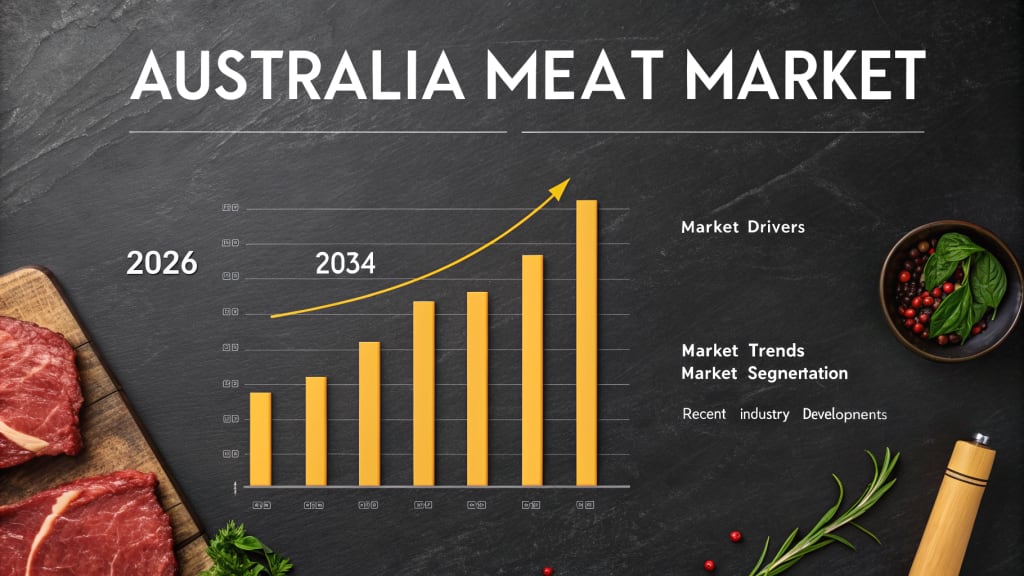
According to IMARC Group, the Australia meat market was valued at USD 29.15 Billion in 2025 and is projected to reach USD 34.39 Billion by 2034, growing at a compound annual growth rate (CAGR) of 1.85% during 2026–2034. While this growth rate reflects a relatively mature market, it underscores the continued structural importance of meat within Australia’s food system. The sector remains a cornerstone of domestic nutrition and a critical contributor to agricultural exports, even as consumer expectations, sustainability pressures and dietary awareness reshape demand patterns. Traditional meat categories such as beef, poultry and lamb continue to dominate consumption, but purchasing decisions are increasingly influenced by quality, provenance, ethical sourcing and environmental impact. As food security, climate responsibility and evolving consumer lifestyles gain prominence, the Australia meat market is transitioning from a scale-driven industry toward a value-focused, innovation-led protein ecosystem across Australia.
Why Should Smart Buyers and Investors Know About the Australia Meat Market?
Stable Demand in a Low-Volatility Food Segment
As a staple protein category, meat offers resilience against economic cycles, providing predictable baseline demand despite modest growth rates.
Value Growth Through Premiumization Rather Than Volume
Opportunities increasingly lie in higher-margin segments, including branded, organic and ethically positioned products, rather than pure volume expansion.
Export Diversification and Revenue Stability
Strong access to global markets reduces dependence on domestic demand and enhances long-term revenue resilience.
Rising Importance of Sustainability and Compliance
Environmental performance, animal welfare standards and traceability systems are becoming decisive factors for investment, market access and consumer trust.
Strategic Role in the Future Food System
The meat sector remains a critical component of the broader food supply chain, interacting closely with sustainability technologies, digital agriculture and evolving dietary frameworks.
Recent Trends & Developments in the Australia Meat Market
March 2025:
Meat processors expanded investments in digital traceability and compliance systems, improving visibility across livestock sourcing and processing stages to meet export and retail requirements.
October 2024:
Retailers increased shelf space for premium and sustainably positioned meat products, reflecting growing consumer interest in ethical sourcing and quality assurance.
June 2024:
Producers adopted improved cold-chain and packaging solutions to enhance shelf life, reduce waste and maintain product integrity across domestic and international distribution channels.
The Australia meat market reflects the evolution of a mature yet strategically vital food industry navigating changing consumer values, sustainability pressures and technological advancement. While growth remains moderate, the sector’s long-term relevance is reinforced by sustained protein demand, export strength and ongoing innovation across production and supply chains. As transparency, ethical considerations and value-added differentiation become central to purchasing decisions, the market’s future will be defined less by scale and more by quality, efficiency and trust. For producers, investors and food system stakeholders, Australia’s meat industry represents not just a traditional agricultural market, but a forward-looking case study in how established food sectors adapt to the future of responsible, resilient and consumer-centric nutrition.
Australia Meat Market Vision 2050
1. Sustainability-Centered Production Models
By 2050, sustainability is expected to be deeply embedded across livestock farming and meat processing operations. Emissions reduction, regenerative grazing and water-efficient practices will become essential to maintaining competitiveness and social license to operate.
2. Data-Driven and Precision Livestock Management
Digital technologies such as sensors, analytics and farm management platforms will increasingly guide feed optimization, animal health monitoring and yield forecasting, improving productivity while minimizing environmental impact.
3. Coexistence With Alternative Protein Sources
Rather than being displaced, meat is expected to coexist with plant-based and cultivated proteins. The future market will likely position meat as a premium, high-quality protein choice within a diversified dietary landscape.
4. Greater Transparency and Regulatory Alignment
Consumer expectations and regulatory standards will demand greater disclosure around sourcing, animal welfare and sustainability performance, driving standardized certifications and verified labeling practices.
5. Brand Trust and Provenance as Competitive Differentiators
Long-term success will increasingly depend on brand credibility, traceable supply chains and clear value propositions, particularly in export markets where differentiation supports pricing power.
What Are the Key Growth Drivers in the Australia Meat Market?
Sustained Protein Demand in a Mature Food Market
Meat remains a central source of dietary protein for Australian consumers across demographics. Despite the emergence of alternative protein options, meat continues to play a foundational role in household diets, supported by cultural preferences, nutritional familiarity and culinary versatility.
Shift Toward Quality, Premium and Branded Meat Products
Consumer behavior is moving away from purely price-driven purchasing toward premium cuts, grass-fed products and branded offerings that emphasize taste, safety and origin. This premiumization trend supports value growth even as overall volume expansion remains moderate.
Modern Retail Formats and Changing Purchase Behavior
Supermarkets, specialty retailers and organized foodservice operators are reshaping how meat is marketed and consumed. Ready-to-cook, portion-controlled and value-added meat products are gaining popularity, reflecting demand for convenience, consistency and reduced food waste.
Strong Export Orientation and Global Market Integration
Australia’s meat industry benefits from a well-established export infrastructure and a strong international reputation for quality and safety. Export demand continues to provide revenue stability, balancing fluctuations in domestic consumption.
Technological Advancements in Processing and Supply Chains
Automation, cold-chain optimization and digital traceability systems are improving efficiency, food safety and compliance. These advancements enhance supply reliability while supporting transparency requirements from regulators and global buyers.
About the Creator
Keep reading
More stories from Shrestha Roy and writers in Futurism and other communities.
Australia Wind Energy Market: Renewable Power Expansion, Grid Integration & Clean Energy Transition
According to IMARC Group, the Australia wind power market reached a value of USD 2.72 Billion in 2024 and is projected to grow to USD 4.78 Billion by 2033, registering a compound annual growth rate (CAGR) of 5.80% during 2025–2033. This growth reflects wind energy’s central role in Australia’s clean energy transition as the country accelerates efforts to decarbonize electricity generation and modernize its power grid. With abundant wind resources across multiple states, Australia has steadily expanded both onshore and emerging offshore wind capacity. Wind power is no longer a supplementary renewable source—it has become a foundational pillar of the nation’s future electricity mix, supporting energy security, emissions reduction and long-term infrastructure transformation.
By Shrestha Roy20 days ago in Futurism
Materials That Only Work in Space: When the Universe Becomes the Laboratory
For most of human history, materials science has been constrained by Earth itself. Gravity shapes how crystals grow, air corrodes exposed surfaces, moisture seeps into polymers, and temperature changes happen gradually. But beyond Earth’s atmosphere lies an environment so extreme—and so different—that entirely new classes of materials can exist. Some of them do not merely perform better in space; they only function in space.
By Holianyk Ihorabout 3 hours ago in Futurism


Comments
There are no comments for this story
Be the first to respond and start the conversation.