
Australia Waterproof Textiles Market: Outdoor Recreation Demand, Technological Advancements & Sustainability Adoption
How rising demand from outdoor activities, continuous technological advancements and growing adoption of sustainable waterproof solutions are shaping Australia’s waterproof textiles market

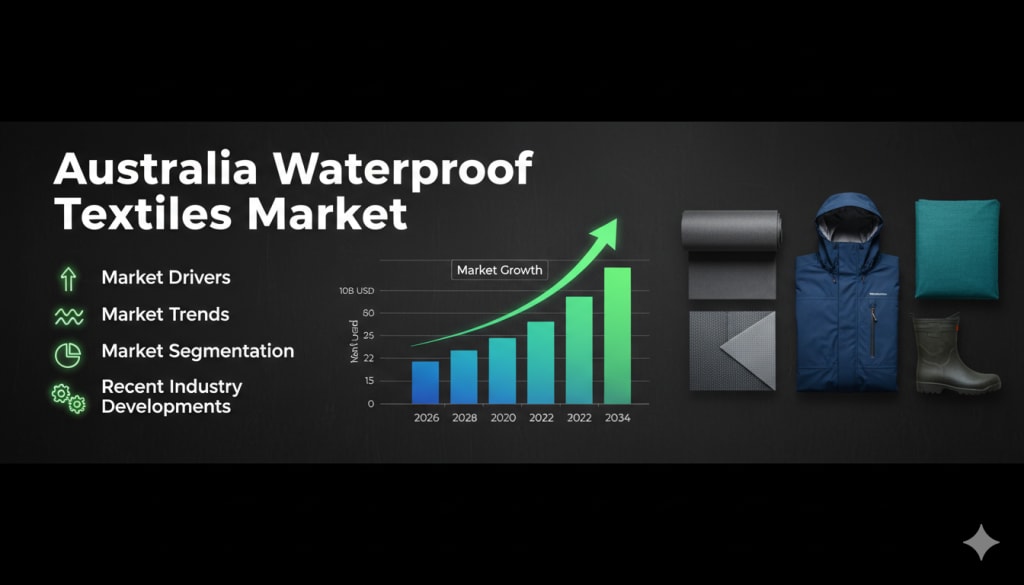
According to IMARC Group, the Australia waterproof textiles market was valued at USD 57.43 Million in 2025 and is projected to reach USD 94.92 Million by 2034, growing at a compound annual growth rate (CAGR) of 5.74% during 2026–2034. This steady growth reflects increasing demand for high-performance fabrics across outdoor apparel, sportswear, defense, healthcare and industrial applications in Australia. Waterproof textiles—engineered using advanced membranes, coatings and laminated fabrics—are becoming essential for durability, weather resistance and performance comfort. As outdoor recreation expands and sustainability standards tighten, manufacturers are innovating to deliver lightweight, breathable and environmentally responsible waterproof solutions.
Why Should Smart Buyers and Investors Know About the Australia Waterproof Textiles Market?
Stable Mid-Single-Digit Growth
With a projected CAGR of 5.74%, the market demonstrates consistent demand across multiple end-use sectors.
Diversified Application Portfolio
Opportunities span consumer apparel, industrial safety, healthcare and defense.
Innovation-Driven Competitive Advantage
Technological advancements in membranes and coatings create product differentiation.
Sustainability-Linked Market Evolution
Eco-friendly solutions align with ESG investment criteria and consumer preferences.
Climate-Resilient Product Demand
Weather variability ensures long-term need for reliable waterproof protection.
Recent Trends & Developments in the Australia Waterproof Textiles Market
July 2025:
Outdoor apparel brands introduced fluorocarbon-free waterproof jackets targeting environmentally conscious consumers.
April 2025:
Manufacturers adopted advanced lamination techniques to enhance breathability in multi-layered fabrics.
October 2024:
Industrial suppliers expanded waterproof protective clothing lines for mining and construction workers.
The Australia waterproof textiles market reflects a dynamic blend of outdoor lifestyle demand, technological innovation and sustainability transformation. Backed by IMARC’s steady growth projections, the sector is evolving toward high-performance, environmentally responsible fabric solutions. As consumers prioritize comfort and durability while industries require protective compliance, waterproof textiles are transitioning from niche products to essential components of modern apparel and industrial design. For manufacturers, investors and technology innovators, Australia’s waterproof textiles market presents a forward-looking opportunity rooted in material science advancement, climate adaptability and sustainable production practices within a performance-driven textile ecosystem.
Australia Waterproof Textiles Market Vision 2050
1. Bio-Based and Fully Recyclable Waterproof Fabrics
By 2050, biodegradable membranes and recyclable textile systems may dominate product innovation.
2. Smart and Adaptive Fabrics
Advanced textiles may adapt to temperature and humidity changes, offering dynamic breathability and protection.
3. Nanotechnology-Enhanced Water Resistance
Nano-coatings could significantly improve waterproof performance while reducing material weight.
4. Integration With Wearable Technology
Waterproof fabrics may incorporate sensors for performance tracking in sports and defense applications.
5. Closed-Loop Manufacturing Systems
Circular production models may reduce textile waste and promote sustainable lifecycle management.
What Are the Key Growth Drivers in the Australia Waterproof Textiles Market?
Rising Outdoor Recreation and Adventure Tourism
Australia’s diverse climate and strong outdoor culture are driving demand for waterproof apparel and gear. Hiking, camping, cycling, fishing and marine sports require high-performance textiles that offer water resistance without compromising breathability. Consumer interest in outdoor experiences continues to fuel steady market growth.
Expansion of Sportswear and Performance Apparel
Athletic and lifestyle brands are integrating waterproof and water-repellent fabrics into activewear collections. Lightweight rainproof jackets, insulated performance gear and multi-layered sports apparel are gaining popularity among fitness-conscious consumers.
Technological Advancements in Fabric Engineering
Innovation in membrane technology—such as microporous and hydrophilic coatings—is enhancing waterproof efficiency while maintaining comfort. Laminated textiles and durable water repellent (DWR) treatments improve resistance to harsh weather conditions. Manufacturers are focusing on improving flexibility, abrasion resistance and long-term durability.
Growing Adoption of Sustainable Solutions
Environmental awareness is reshaping production practices. The industry is gradually moving toward fluorocarbon-free coatings and recycled polyester-based fabrics. Brands are adopting eco-friendly finishing processes and reducing chemical-intensive treatments to align with global sustainability frameworks.
Industrial and Healthcare Applications
Waterproof textiles are used in protective workwear, medical gowns and industrial covers. Demand from mining, construction and healthcare sectors supports diversified revenue streams beyond consumer apparel.
Climate Variability and Extreme Weather Conditions
Increasing rainfall variability and unpredictable weather patterns are reinforcing the need for weather-resistant clothing and equipment across both recreational and professional sectors.
About the Creator
Kevin Cooper
Hi, I'm Kavin Cooper — a tech enthusiast who loves exploring the latest innovations, gadgets, and trends. Passionate about technology and always curious to learn and share insights with the world!
Keep reading
More stories from Kevin Cooper and writers in Futurism and other communities.
Australia Energy Storage Market: Renewable Integration, Grid Resilience & Technology Advancements
According to IMARC Group, the Australia energy storage market reached 4.72 GW in 2025 and is projected to expand to 19.81 GW by 2034, exhibiting a strong compound annual growth rate (CAGR) of 17.28% during 2026–2034. This rapid expansion reflects the critical role energy storage is playing in transforming the power infrastructure of Australia. As renewable energy generation from solar and wind increases, storage systems are becoming indispensable for stabilizing the grid, balancing supply and demand and ensuring uninterrupted electricity delivery. Battery storage, pumped hydro systems and emerging long-duration storage technologies are moving from supportive assets to foundational components of Australia’s energy ecosystem.
By Kevin Cooperabout 6 hours ago in Futurism
Australia Seaweed Market: Aquaculture Expansion, Product Diversification & Sustainability Demand
According to IMARC Group, the Australia seaweed market reached USD 271.5 Million in 2025 and is projected to expand to USD 528.2 Million by 2034, exhibiting a compound annual growth rate (CAGR) of 7.45% during 2026–2034. This strong growth trajectory reflects the increasing recognition of seaweed as a versatile, sustainable and commercially valuable resource across Australia. Once considered a niche marine product, seaweed is now gaining prominence in food, agriculture, pharmaceuticals and environmental applications. Driven by aquaculture expansion, innovation in value-added products and rising sustainability awareness, the seaweed industry is positioning itself as a strategic contributor to Australia’s blue economy and low-carbon future.
By Shrestha Roy2 days ago in Futurism
Low Density Polyethylene (LDPE) Market Outlook: Packaging Demand and Growth Opportunities
According to IMARC Group's latest research publication, The global low density polyethylene market size reached USD 47.3 Billion in 2024. Looking forward, IMARC Group expects the market to reach USD 67.4 Billion by 2033, exhibiting a growth rate (CAGR) of 3.8% during 2025-2033.
By Michael Richard7 days ago in Futurism


Comments
There are no comments for this story
Be the first to respond and start the conversation.