
Automotive 48V System Market Outlook: Electrification Trends and Growth Opportunities
The automotive 48V system market is gaining momentum as automakers increasingly adopt mild hybrid and electrification technologies to improve fuel efficiency and reduce emissions.

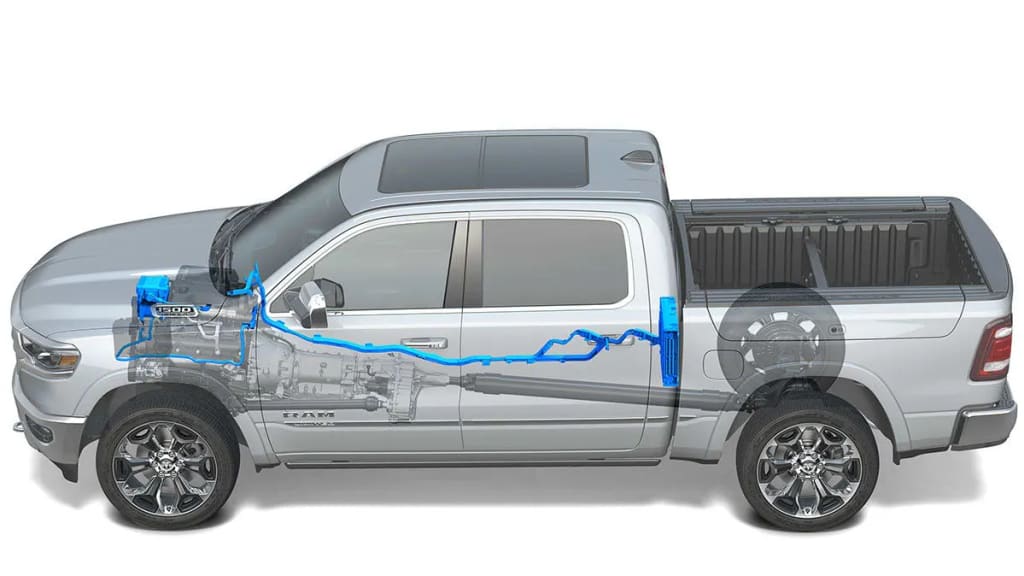
Rising focus on fuel efficiency, emission reduction, and vehicle electrification is driving growth in the automotive 48V system market. Automakers adopt 48V architectures to support mild hybrid functions, start-stop systems, and electric boosting at lower cost than full hybrids. According to IMARC Group's latest research publication, The global automotive 48V system market size reached USD 8.5 Billion in 2024. Looking forward, IMARC Group expects the market to reach USD 43.8 Billion by 2033, exhibiting a growth rate (CAGR) of 18.96% during 2025-2033.
How AI is Reshaping the Future of Automotive 48V System Market
- Intelligent Battery Management and State Estimation: AI-powered battery management systems achieve state-of-charge and state-of-health estimations within 3% error margins. These systems use machine learning algorithms to continuously monitor battery conditions, optimizing charge-discharge cycles and predicting performance degradation before issues occur.
- Predictive Thermal Management and Safety Monitoring: Advanced AI models forecast thermal events during charging and aggressive driving, dynamically adjusting cooling and heating systems. Real-time predictive analytics identify potential faults early, enabling preventive maintenance that minimizes downtime, avoids costly repairs, and protects battery health throughout vehicle lifecycles.
- Adaptive Energy Optimization and Regenerative Control: AI learns individual driver behaviors—commuting patterns, acceleration habits, traffic conditions—and adapts energy management accordingly. Systems optimize regenerative braking strength, propose customized charging schedules, and fine-tune climate control, extending range and enhancing overall driving experiences through personalized power delivery.

Automotive 48V System Industry Overview:
The automotive 48V system sector is experiencing transformation driven by emissions regulations and electrification incentives. The European Union enforced new on-board monitoring regulations in July for light commercial vehicles and passenger cars to significantly minimize particulate emissions, with heavy-duty vehicles following in July. California's Advanced Clean Cars Program mandates zero-emission vehicles rise from 4.5% to 22% of manufacturer sales, pushing automakers toward cost-effective mild hybrid solutions. The Multi-State ZEV Task Force, representing 16 jurisdictions, targets 30% zero-emission medium and heavy-duty vehicle sales, accelerating 48V adoption as an accessible electrification pathway.
Automotive 48V System Market Trends & Drivers
Mild hybrid vehicle adoption is surging as manufacturers seek affordable electrification pathways that satisfy emissions requirements without full hybrid complexity. Global annual production of 48V mild hybrids is projected to surpass 10 million units, demonstrating massive industry commitment to this technology. These systems deliver measurable fuel efficiency improvements—Toyota's 48V mild-hybrid diesel powertrain launched in India provides 10% better fuel economy through belt-driven electric motor torque assistance and regenerative braking. Automakers like Ford, GM, and Hyundai are rapidly integrating 48V architectures across vehicle portfolios as cost-efficient solutions that reduce carbon dioxide emissions while maintaining performance. The technology enables start-stop functionality, torque boost during acceleration, and energy recovery, positioning mild hybrids as ideal transitional vehicles bridging conventional and full electrification strategies for consumers and manufacturers alike.
Powertrain innovation is accelerating through advanced 48V component development that dramatically enhances vehicle efficiency and performance. Electric superchargers and integrated starter generators now optimize engine operation by improving energy revitalization during braking and idling while boosting acceleration responsiveness. Major automakers are investing heavily in sophisticated 48V architectures—Vicor launched BCM6135, DCM3735, and PRM3735 power modules specifically for automotive 48V systems, delivering significant weight and cost savings in EV manufacturing. Toyota's European Hilux hybrid model features 2.8-liter diesel engines with 48V systems providing enhanced comfort, exceptional driving performance, and improved efficiency. These high-performance, cost-efficient components enable manufacturers to meet emission objectives without substantial production cost increases, making 48V technology increasingly attractive across entry-level, mid-range, premium, and luxury vehicle segments seeking performance improvements and regulatory compliance simultaneously.
Stringent emission standards worldwide are compelling rapid 48V system adoption as automakers navigate complex regulatory landscapes. Government policies targeting vehicle emissions create strong incentives for cleaner technologies that maintain affordability and performance. The federal clean vehicle tax credit program provided up to USD 7,500 for qualifying plug-in hybrid electric vehicles through September, encouraging electrification investments. California's Zero Emission Vehicle program and similar initiatives across multiple states establish mandates requiring increasing percentages of low-emission vehicle sales. Industry projections show the AI-driven battery management systems market reaching USD 18.5 billion as manufacturers integrate predictive analytics and real-time optimization. The 48V system emerged as an efficient compliance solution enabling vehicles to meet these strict standards while avoiding performance compromises. As regulatory bodies continue reinforcing environmental policies globally, demand for fuel-efficient, low-emission technologies like 48V architectures will accelerate, driving further innovation and market expansion.
Leading Companies Operating in the Global Automotive 48V System Industry:
- Borgwarner Inc.
- Continental Aktiengesellschaft
- Dana Limited
- Hyundai Motor Company
- Magna International Inc.
- MAHLE GmbH (Mahle Stiftung GmbH)
- Mitsubishi Electric Corporation
- Robert Bosch GmbH
- Valeo
Automotive 48V System Market Report Segmentation:
By Architecture:
- Belt Driven (P0)
- Crankshaft Mounted (P1)
- Dual-Clutch Transmission-Mounted/Input Shaft of Transmission (P2/P3)
- Transmission Output Shaft/Rear Axle (P4)
Belt driven (P0) represents the largest segment due to its simpler integration, lower cost implementation, and widespread adoption across multiple vehicle manufacturers globally.
By Vehicle Class:
- Entry-level
- Mid-range
- Premium
- Luxury
Mid-range vehicles account for the largest market share, driven by mass-market appeal, balanced pricing, and manufacturers' focus on delivering fuel efficiency improvements to mainstream consumers.
Regional Insights:
- North America (United States, Canada)
- Asia Pacific (China, Japan, India, South Korea, Australia, Indonesia, Others)
- Europe (Germany, France, United Kingdom, Italy, Spain, Russia, Others)
- Latin America (Brazil, Mexico, Others)
- Middle East and Africa
Asia Pacific leads the market due to technological innovations, escalating vehicle production volumes, strong manufacturing bases, and strict environmental policies driving rapid adoption.
Recent News and Developments in Automotive 48V System Market
- February 2025: Infineon Technologies and Eatron extended their partnership for AI-powered battery management solutions to comprehensive portfolios including automotive, industrial, and consumer applications. The collaboration combines AI-powered battery optimization software with advanced power semiconductor components to minimize degradation, detect safety issues, and enhance system performance.
- October 2024: Vicor launched BCM6135, DCM3735, and PRM3735 power modules specifically designed for automotive 48V systems in electric vehicles. The BCM6135 module provides significant weight and cost savings in EV manufacturing, addressing critical industry needs for efficiency and affordability.
- December 2023: Toyota launched the new Hilux hybrid 48V model in the European market, featuring a 2.8-liter diesel engine. The vehicle offers enhanced comfort, exceptional driving performance, and improved vehicle efficiency through advanced 48V mild-hybrid technology.
- June 2023: Major automotive suppliers announced expanded 48V component production capacity to meet surging global demand. Industry leaders increased manufacturing investments to support the projected 10 million unit annual production milestone for mild hybrid vehicles.
- March 2023: Leading automakers announced collaborative initiatives to standardize 48V system architectures across vehicle platforms. This industry-wide cooperation aims to reduce development costs, accelerate time-to-market, and improve component interoperability for manufacturers and suppliers.
Note: If you require specific details, data, or insights that are not currently included in the scope of this report, we are happy to accommodate your request. As part of our customization service, we will gather and provide the additional information you need, tailored to your specific requirements. Please let us know your exact needs, and we will ensure the report is updated accordingly to meet your expectations.
About the Creator
Michael Richard
Michael Richard is a Market Research Expert specializing in market intelligence, competitive analysis, and data-driven insights. He helps organizations understand trends and emerging opportunities through in-depth research.
Keep reading
More stories from Michael Richard and writers in Futurism and other communities.
Cat Food Market: Functional Nutrition, Digestive & Urinary Health & Growth Outlook
According to IMARC Group's latest research publication, The global cat food market size was valued at USD 37.07 Billion in 2024. Looking forward, IMARC Group estimates the market to reach USD 49.80 Billion by 2033, exhibiting a CAGR of 2.99% from 2025-2033
By Michael Richarda day ago in Futurism
Electric School Bus Market: Clean Mobility Initiatives, Fleet Electrification & Market Growth
According to IMARC Group's latest research publication, The global electric school bus market size was valued at USD 35.5 Billion in 2024. Looking forward, IMARC Group estimates the market to reach USD 335.3 Billion by 2033, exhibiting a CAGR of 28.33% during 2025-2033.
By James Whitman3 days ago in Futurism
Free £5 voucher
Dear fellow Beckenham resident, Anyone else reading this may need to adapt for context I thought you would be interested to know that Tesco Elmers End is offering a free £5 (or more) voucher to any Beckenham resident. All you need to do to get this amazing offer is to make a complaint through their new, super-sexy, high-tech, AI chatbot service.
By Raymond G. Taylora day ago in Futurism




Comments
There are no comments for this story
Be the first to respond and start the conversation.