
Can Scientists Bring Dinosaurs Back to Life?
The Truth About De-Extinction

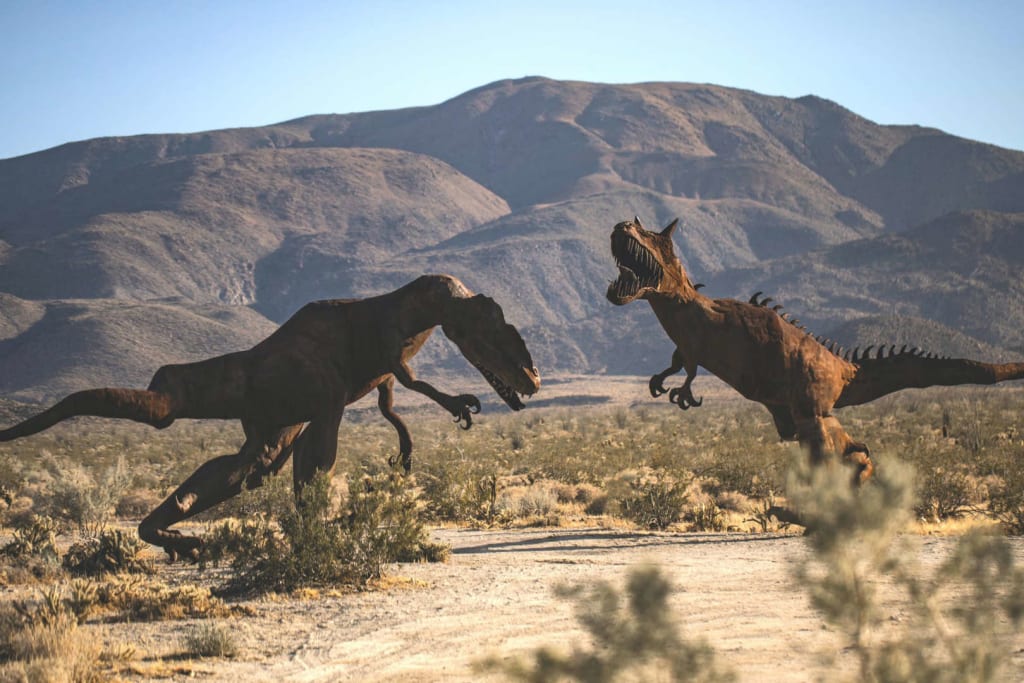
The idea of bringing dinosaurs back to life has fascinated people for decades, especially since the blockbuster movie Jurassic Park hit the screens. But how close are we to actually reviving these ancient giants? Is it just science fiction, or could it one day become a reality? In this article, we explore the long-tailed keyword topic “Can scientists bring dinosaurs back to life? De-extinction explained” and break it down in simple, clear terms.
What Is De-Extinction?
Before diving into dinosaurs, let's understand what de-extinction means. De-extinction is the process of bringing extinct species back to life using modern science and technology. This could involve cloning, gene editing, or breeding species that are closely related to the extinct ones.
Scientists have already made progress with some recently extinct animals like the woolly mammoth, passenger pigeon, and even the Pyrenean ibex (a wild goat that went extinct in 2000 and was briefly revived in 2003 through cloning before dying shortly after birth). But dinosaurs? That's a different story altogether.
Why Dinosaurs Are a Special Case
The big challenge with bringing dinosaurs back to life is that they went extinct around 65 million years ago. That’s a massive amount of time. Most DNA, even under the best conditions, breaks down over time. According to current scientific knowledge, DNA can only survive for about 6.8 million years at most — and that's under perfect preservation conditions like in permafrost. Unfortunately, we’ve never found any intact dinosaur DNA.
So the short answer to the question “Can scientists bring dinosaurs back to life?” is not yet — and maybe never.
What Scientists Are Doing Instead
Even though we can't bring back real dinosaurs like the Tyrannosaurus rex or Velociraptor, scientists are working on related ideas:
Studying Dinosaur DNA Through Birds
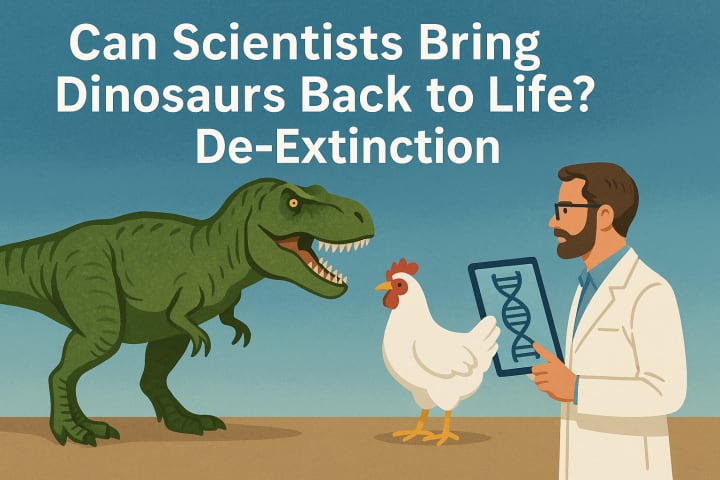
Birds are the modern descendants of dinosaurs. In fact, many paleontologists consider birds to be living dinosaurs. Scientists are studying bird DNA to understand how it evolved from their dinosaur ancestors. Some researchers are even trying to "reverse-engineer" birds to bring out more dinosaur-like features. This project is nicknamed the “Chickenosaurus.”
The idea behind Chickenosaurus is to edit a chicken's DNA to make it grow certain dinosaur-like features, such as teeth, a long tail, or clawed fingers. This isn't exactly bringing dinosaurs back to life, but it could help us understand them better.
Synthetic Biology and Cloning
Cloning is a method where scientists copy the DNA of an animal and use it to create a new, living version of that animal. This was done with Dolly the sheep in 1996. However, cloning requires an intact genome, and as we mentioned earlier, dinosaur DNA is far too old and damaged to be useful for cloning.
Some scientists are exploring synthetic biology, where they could build DNA from scratch using computers and chemicals. This would be extremely complicated, and even if we could build a dinosaur genome, we’d still need a way to grow it — and there’s no dinosaur egg or mother to carry the baby dinosaur.
Ethical and Ecological Concerns
Even if we could bring back dinosaurs, should we?
Bringing back long-extinct creatures raises many ethical questions:
Where would they live? Dinosaurs lived in a completely different climate and ecosystem. Today’s world might not be suitable for them.
Would they be dangerous? We all saw what happened in Jurassic Park. Reviving a predator like T. rex could pose real safety risks.
What would be the purpose? Some scientists argue that we should focus on saving endangered animals instead of reviving extinct ones.
Others believe de-extinction could help restore damaged ecosystems, educate the public, and push the boundaries of science.
Why the Idea Still Fascinates Us
Despite the challenges, the idea of bringing dinosaurs back captures the human imagination. Dinosaurs are powerful symbols of a lost world — massive, mysterious, and awe-inspiring. Books, movies, and documentaries continue to fuel public interest.
Can scientists bring dinosaurs back to life?
Is dinosaur de-extinction possible in 2025?
How close are we to cloning dinosaurs?
Are birds modern dinosaurs?
Chickenosaurus DNA editing experiment
People want answers, even if science hasn’t caught up with fiction yet.
The Future of De-Extinction
Even if dinosaurs remain out of reach, de-extinction is still moving forward. Scientists are focusing on species that went extinct more recently and have better-preserved DNA. Some key examples include:
Woolly Mammoth: Researchers are using frozen DNA from preserved mammoths and editing elephant genes to create a hybrid.
Dodo: A bird that went extinct in the 1600s is now being considered for revival using closely related pigeon species.
Tasmanian Tiger: Also known as the thylacine, this unique marsupial is being studied for potential resurrection.
These projects are more realistic than dinosaur revival, and they could pave the way for broader applications in conservation and genetic science.
Final Thoughts: Can We Bring Dinosaurs Back to Life?
The honest answer is: not with today’s technology.
Unless we discover an incredibly well-preserved dinosaur with usable DNA — which is extremely unlikely — the idea of real, living dinosaurs will remain in the realm of fiction.
However, the science behind de-extinction, gene editing, and synthetic biology is advancing quickly. While dinosaurs may be out of reach, other extinct animals could walk the Earth again — not as clones of the past, but as testaments to the future of science.
Key Takeaways:
Dinosaurs have been extinct for over 65 million years, and their DNA has not survived.
De-extinction is possible for recently extinct species but not for ancient ones like dinosaurs.
Birds are considered living descendants of dinosaurs and are the focus of "reverse evolution" experiments.
Ethical, environmental, and technical challenges make dinosaur resurrection highly unlikely.
Still, science fiction and curiosity continue to drive public interest in the question, “Can we bring dinosaurs back to life?”
About the Creator
Waqar Ahmad
I have been a professional freelancer and computer science degree holder since 2007. I have been working as a content and article writer for more than 10 years. Providing the best content with better research is my aim.
Keep reading
More stories from Waqar Ahmad and writers in Futurism and other communities.
Humans are still better than AI at reading the room
When it comes to truly “reading the room,” humans are still far ahead of even the most advanced AI systems. A recent study conducted by researchers at Johns Hopkins University sheds light on a critical shortcoming in today’s artificial intelligence technology—its inability to accurately interpret and respond to social interactions, especially in dynamic real-world scenarios.
By Waqar Ahmad9 months ago in Futurism
GCC Used Car Market Analysis: Industry Overview, Key Players & Future Outlook
According to IMARC Group's latest research publication, GCC used car market size reached USD 24.5 Billion in 2025. The market is projected to reach USD 49.2 Billion by 2034, exhibiting a growth rate of 8.05% during 2026-2034.
By Abhay Rajput5 days ago in Futurism
Digital Therapeutics Industry Outlook: Investment Trends & Growth Drivers
According to IMARC Group's latest research publication, global digital therapeutics market size reached USD 7.1 Billion in 2024. Looking forward, IMARC Group expects the market to reach USD 28.7 Billion by 2033, exhibiting a growth rate (CAGR) of 16.8% during 2025–2033.
By sujeet. imarcgroupabout 6 hours ago in Futurism




Comments
There are no comments for this story
Be the first to respond and start the conversation.