
Educational Robot Market Trends: AI Integration, STEM Learning Demand & Industry Outlook to 2033
How AI-powered tutoring, gamified STEM modules, and interactive robotics platforms are enhancing student engagement, improving learning outcomes, and accelerating technology adoption across modern classrooms.

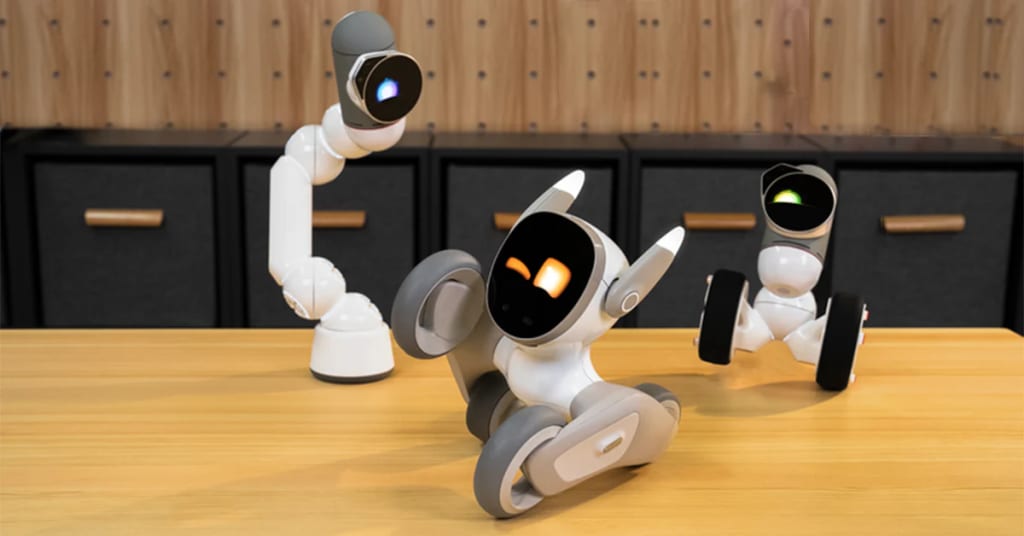
Rising adoption of STEM education, increasing integration of AI and robotics in classrooms, and growing demand for hands-on, interactive learning tools are fueling the educational robot market, supported by government initiatives, technological advancements, and expanding use of e-learning models. According to IMARC Group's latest data, The global educational robot market size was valued at USD 1.86 Billion in 2024. Looking forward, IMARC Group estimates the market to reach USD 5.9 Billion by 2033, exhibiting a CAGR of 13.6% from 2025-2033.
Educational robots are transforming how students learn by providing practical, hands-on experiences that complement digital lessons. These intelligent machines help develop critical skills in programming, robotics, and problem-solving across K-12 schools, universities, and training centers worldwide. The market includes everything from programmable humanoid robots to modular non-humanoid units that can roll, navigate obstacles, and execute automated tasks. With hardware components like sensors, actuators, and control systems working alongside sophisticated software platforms, these tools are becoming essential for preparing students for technology-driven careers. Schools are embracing them not just as teaching aids but as gateways to STEM mastery, fostering creativity and computational thinking in learners of all ages.
Educational Robot Market Growth Drivers:
- Increasing Focus on STEM Education and Digital Literacy Programs
Schools and governments worldwide are prioritizing science, technology, engineering, and mathematics curriculum to prepare students for future workforce demands. Educational robots provide tangible platforms for teaching coding, logic, and engineering principles that abstract concepts alone cannot deliver. Government funding programs are accelerating adoption organizations like the National Science Foundation in the United States have awarded millions in grants specifically for robotics integration in classrooms. States like Michigan allocated funds through their Robotics Competition Grant program in early 2026 to increase STEM engagement across public schools.
- Rapid Growth of E-Learning and Hybrid Education Models
The shift toward online and blended learning environments has created demand for tools that provide hands-on engagement outside traditional classrooms. Educational robots bridge the gap between virtual instruction and practical application, allowing students to test programming concepts in real time even when learning remotely. The global e-learning market was valued at USD 342.4 Billion in 2024 and continues expanding at a strong pace, according to industry data. As digital platforms proliferate, educators need complementary physical tools that translate screen-based lessons into tangible learning experiences. Robotics kits with cloud connectivity and virtual simulation capabilities fit seamlessly into this model, letting students code at home and see immediate results.
Get Your Free Copy of the “Educational Robot Market” Insights Report
- Advancements in AI and Sensor Technologies Making Robots More Accessible
Modern educational robots incorporate artificial intelligence, machine learning, and advanced sensor arrays that enable adaptive learning experiences tailored to individual student progress. These technological improvements have made robots more intuitive and user-friendly, lowering barriers for educators and students alike. AI-powered platforms can now provide real-time feedback, analyze student performance, and adjust difficulty levels automatically. Research shows that AI adoption among students surged dramatically, with 92% of university students utilizing AI tools by early 2025. Integration of voice recognition, computer vision, and natural language processing allows robots to interact more naturally with learners.
Educational Robot Market Trends:
- Expansion of Government Funding and Grant Programs for Robotics Education
Federal, state, and local governments are launching dedicated funding initiatives to bring robotics into more classrooms and after-school programs. Organizations like the Robotics Education & Competition Foundation report substantial support from both public agencies and private partners including Google, NASA, and Tesla for team grants and teacher training. Multiple states have introduced robotics competition grants with application windows opening throughout 2025 and 2026. Programs like TechPoint Youth in Indiana and NextWaveSTEM offer subsidized pilot programs where schools receive curriculum, equipment, and teacher training for as little as USD 2,500. Title IV-A funding in the United States explicitly includes technology like robotic kits for enrichment activities.
- Strategic Partnerships Between EdTech Companies and Educational Institutions
Robotics manufacturers are forming alliances with schools, universities, and research centers to co-develop curriculum-aligned solutions and provide ongoing technical support. In November 2025, OpenMind partnered with Robostore to launch the world's first full-scale university curriculum for humanoid robots, specifically designed around the Unitree G1 platform. Such collaborations ensure that products meet actual classroom needs rather than just technical specifications. Companies are also working with third-party training platforms Universal Robots announced expanded investments in educational partnerships to build a robust robotics ecosystem. These relationships create feedback loops where educators influence product development while companies gain direct access to institutional buyers.
- Rising Demand for Affordable, Modular Non-Humanoid Platforms
While humanoid robots generate interest, non-humanoid designs—wheeled units, modular kits, and programmable platforms—account for 68% of the market due to their practicality and cost-effectiveness. These simpler mechanical structures allow students to focus on core programming and engineering concepts without the complexity of mimicking human movement. Non-humanoid robots are safer, more durable, and easier to maintain in classroom settings with repeated student handling. Their versatility supports diverse educational objectives from line-following exercises to obstacle navigation and automated task execution. Schools with limited budgets favor these platforms because they deliver essential STEM learning experiences at lower price points.
Recent News and Developments in Educational Robot Market
- August 2025: NAMTECH officially opened its Robotics School, a specialized center designed for individuals interested in operating at the intersection of artificial intelligence, mechanical systems, and electronics. The state-of-the-art facility came equipped with numerous sophisticated AI-driven tools, simulation technologies, and robotic machinery to provide comprehensive hands-on training for future robotics professionals.
- August 2025: The MBD Group launched the 'Robotics Lab on Wheels' program to deliver STEM education to underserved schools in both urban and rural regions across India. Through its mobile robotics kits and various technologies, this initiative aimed to bridge educational gaps by offering hands-on learning experiences directly to communities with limited access to advanced educational resources.
- July 2025: The School of Business and Public Administration (SBPA) unveiled a new concentration in AI and Robotics (AIR). The AIR specialization blended artificial intelligence, robotics, STEM, and business disciplines, providing students with the cross-functional expertise needed to adapt, collaborate across fields, and thrive in an increasingly digital and automated business environment.
Note: If you require specific details, data, or insights that are not currently included in the scope of this report, we are happy to accommodate your request. As part of our customization service, we will gather and provide the additional information you need, tailored to your specific requirements. Please let us know your exact needs, and we will ensure the report is updated accordingly to meet your expectations.
About the Creator
Andrew Sullivan
Hello, I’m Andrew Sullivan. I have over 9+ years of experience as a market research specialist.
Keep reading
More stories from Andrew Sullivan and writers in Futurism and other communities.
Ovarian Cancer Market Analysis: Clinical Trials Surge, Targeted Drug Innovation & Forecast to 2033
Rising incidence of ovarian cancer, advances in personalized medicine and targeted therapies, and expanding government initiatives for awareness and early detection are driving market growth, supported by innovative treatment developments, enhanced genetic screening programs, and collaborative research efforts. According to IMARC Group's latest data, the global ovarian cancer market size was valued at USD 2.3 Billion in 2024. Looking forward, IMARC Group estimates the market to reach USD 5.5 Billion by 2033, exhibiting a growth rate (CAGR) of 9.59% during 2025-2033.
By Andrew Sullivan2 days ago in Futurism
Saudi Arabia Oral Hygiene Industry Trends: Whitening Products, Electric Toothbrush Adoption & Market Expansion
According to IMARC Group's latest research publication, Saudi Arabia oral hygiene market size reached USD 501.6 Million in 2025. The market is projected to reach USD 649.8 Million by 2034, exhibiting a growth rate (CAGR) of 2.92% during 2026-2034.
By Kishan Kumar7 days ago in Futurism
Saudi Arabia Wood Pellets Market: Renewable Energy Shift, Biomass Demand & Growth Outlook
Saudi Arabia's wood pellets sector is quietly gaining ground, supported by an ambitious national push to diversify the energy mix, cut carbon emissions, and reduce industrial dependence on fossil fuels. From power plants co-firing biomass to commercial heating facilities shifting away from conventional fuels, wood pellets are finding their footing as a practical, scalable renewable option. According to IMARC Group's latest data, the Saudi Arabia wood pellets market size was valued at USD 0.13 Billion in 2024. Looking forward, IMARC Group estimates the market to reach USD 0.21 Billion by 2033, exhibiting a CAGR of 5.70% from 2025-2033.
By Kishan Kumara day ago in Futurism
'Till Death We Do Art
There would be nothing divine in this world without art. Nature may surpass the divine to all intents and purposes, but like everything it absorbs and is absorbed by, it remains here, stuck on the surface of this world, ever-present, physically bound to the universe.
By Avocado Nunzella BSc (Psych) -- M.A.P a day ago in Art



Comments
There are no comments for this story
Be the first to respond and start the conversation.