
Europe SEO Market Size and Forecast 2026–2034
How Search Optimization Is Powering Europe’s Digital Economy

Introduction
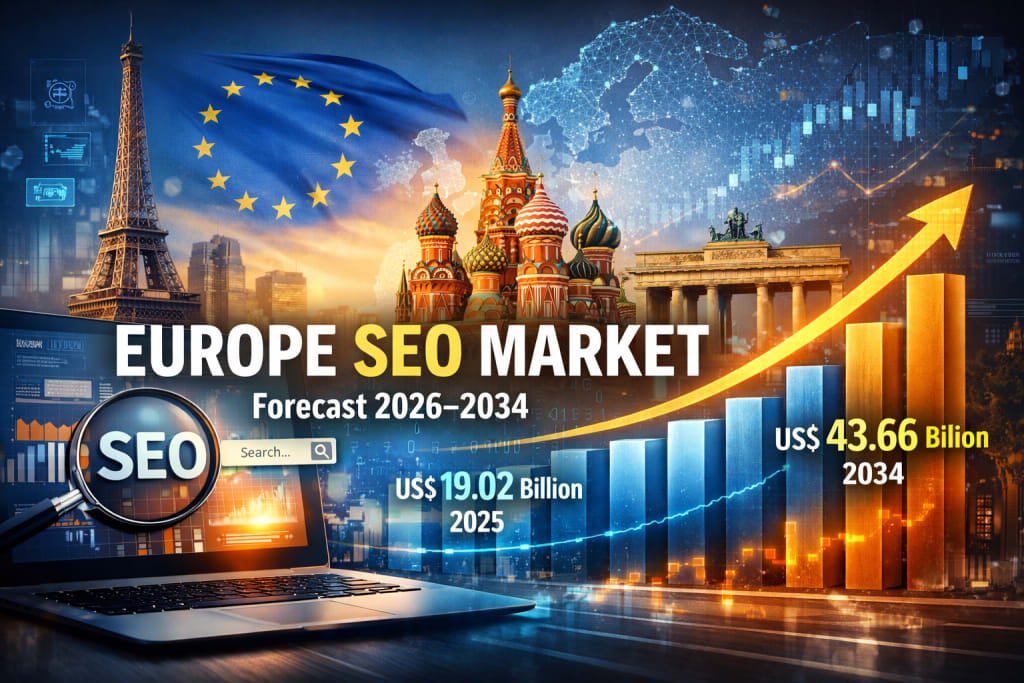
The Europe Search Engine Optimization (SEO) market is entering a decisive growth phase as businesses across industries prioritize organic visibility and long-term digital performance. According to Renub Research, the Europe SEO Market is expected to expand from US$ 19.02 Billion in 2025 to US$ 43.66 Billion by 2034, registering a strong CAGR of 9.67% during the forecast period 2026–2034.
This growth is driven by accelerating digitalization, increasing competition for online visibility, and the widespread adoption of e-commerce across the region. As European enterprises move toward data-driven marketing and customer-centric digital strategies, SEO has become a foundational pillar of sustainable brand growth rather than an optional marketing tool.
Overview of the SEO Market in Europe
Search Engine Optimization (SEO) refers to the systematic process of improving a website’s visibility on search engine results pages (SERPs). It combines technical optimization, content quality enhancement, keyword strategy, user experience improvements, and authoritative backlink development. Unlike paid advertising, SEO focuses on building long-term organic traffic, credibility, and digital trust.
In Europe, SEO adoption has surged due to rapid digital transformation across industries such as retail, hospitality, IT, telecom, finance, and healthcare. European consumers actively rely on search engines to compare products, research services, and validate purchasing decisions. This behavior compels businesses to invest consistently in SEO to remain discoverable and competitive.
Additionally, Europe’s strong regulatory framework around data privacy, user consent, and digital transparency encourages ethical, user-focused SEO practices. With diverse languages, cultures, and search behaviors across countries, the region presents a unique opportunity for highly localized and market-specific SEO strategies.
Growth Drivers of the Europe SEO Market
Rapid Digitalization and Changing Consumer Behavior
Europe’s SEO market growth is strongly supported by the rapid digitization of consumer interactions. Search engines have become the primary gateway for product discovery, service evaluation, and purchasing decisions. Businesses that fail to maintain strong organic visibility risk losing market share in increasingly competitive digital environments.
The rise of e-commerce, online reservations, digital entertainment, and remote work has intensified competition for search rankings. From startups to multinational enterprises, organizations across Europe are increasingly viewing SEO as a cost-effective strategy for long-term traffic acquisition without over-reliance on paid advertising.
Improved internet penetration, increased smartphone usage, and multilingual search demand further reinforce the need for localized SEO strategies across European markets.
Growing Emphasis on User Experience and Website Quality
Search engine algorithms now heavily prioritize user experience metrics, driving demand for advanced SEO practices. Factors such as page loading speed, mobile responsiveness, secure browsing, intuitive navigation, and accessibility compliance play a critical role in ranking performance.
European consumers expect seamless digital experiences, which pushes companies to optimize technical performance, content relevance, structured data, and internal site architecture. Compliance with GDPR and trust-building signals has also become central to SEO strategies in the region.
As a result, businesses increasingly rely on professional SEO services to meet evolving technical standards, protect rankings, and sustain organic traffic growth.
Expansion of Multilingual and Market-Specific SEO
Europe’s linguistic and cultural diversity significantly influences SEO adoption. Companies operating across borders must optimize content for multiple languages, local search habits, and country-specific regulations. This complexity has increased demand for professional SEO services that go beyond basic keyword targeting.
Cross-border e-commerce, tourism, and international B2B services are major contributors to multilingual SEO growth. Businesses invest heavily in localized content creation, region-specific keyword research, and localized link-building to ensure relevance and visibility in each market.
Challenges in the Europe SEO Market
Constant Algorithm Updates and Technical Complexity
One of the biggest challenges in Europe’s SEO market is the continuous evolution of search engine algorithms. Frequent updates require ongoing optimization, technical audits, and performance monitoring. Advanced requirements such as schema markup, crawl optimization, and mobile-first indexing demand specialized expertise.
For smaller businesses, managing these complexities—especially across multiple languages and regions—can be resource-intensive and costly. Maintaining consistent visibility requires continuous investment in tools, skilled professionals, and up-to-date SEO knowledge.
High Competition and Rising SEO Costs
As more European businesses recognize the value of organic visibility, competition for top rankings has intensified. Industries such as retail, finance, travel, and technology face especially high competition, making sustained SEO success more expensive.
Large enterprises often outspend smaller firms on content production, digital PR, and link acquisition, making it difficult for SMEs to compete. This competitive landscape increases the overall cost of SEO services and raises entry barriers for smaller players.
Europe On-Page SEO Market
The on-page SEO segment continues to grow as European businesses focus on improving content relevance, user engagement, and search intent alignment. On-page optimization helps search engines accurately interpret content while improving metrics such as dwell time and click-through rates.
Given Europe’s linguistic diversity, on-page SEO must adapt to regional language nuances and cultural search patterns. Businesses increasingly prioritize high-quality, informative content over keyword stuffing, driving sustainable SEO performance across the region.
Europe Local and Hyperlocal SEO Market
Local and hyperlocal SEO adoption is rising rapidly due to increased demand for location-based search results. Businesses in hospitality, healthcare, retail, and home services benefit significantly from optimized local listings, customer reviews, and geo-targeted content.
Mobile search growth has further accelerated “near me” queries across Europe, making local SEO essential for physical businesses and tourist-focused destinations. Hyperlocal strategies targeting neighborhoods and city districts are particularly effective in densely populated European cities.
Europe Hospitality and Travel SMEs SEO Market
Europe’s hospitality and travel SMEs rely heavily on SEO to attract tourists and reduce dependency on third-party booking platforms. Hotels, travel agencies, and tour operators invest in multilingual content, city-specific landing pages, and seasonal keyword strategies.
Mobile SEO plays a critical role, as travelers frequently use smartphones for accommodation and activity searches. The growing demand for experiential and personalized travel has increased the importance of long-tail keywords and SEO-optimized travel content.
Europe IT and Telecom SEO Market
The IT and telecom sector in Europe uses SEO to generate high-quality leads and communicate complex technologies to informed audiences. Companies in cybersecurity, cloud computing, software development, and telecom services depend on SEO-driven content marketing.
B2B SEO strategies focus on long-form content, technical documentation, structured data, and authoritative link profiles. As Europe accelerates adoption of 5G, AI, and IoT, SEO has become a critical channel for establishing thought leadership and digital authority.
Europe E-Commerce and Retail SEO Market
E-commerce remains one of the fastest-growing SEO application areas in Europe. Online retailers optimize product pages, category structures, site speed, and mobile usability to improve organic visibility and reduce customer acquisition costs.
Localized product descriptions, reviews, and pricing strategies are essential in Europe’s multilingual environment. Increasing consumer interest in sustainable products has also driven demand for detailed, informative content that supports ethical purchasing decisions.
Europe Project-Based SEO Market
Project-based SEO services are increasingly popular among European businesses seeking targeted optimization for specific needs such as website migrations, redesigns, or market expansion initiatives. These services typically include technical audits, content optimization, and local SEO deployment.
SMEs favor project-based SEO due to its cost efficiency and measurable outcomes. Demand for high-impact, short-term SEO projects continues to rise as companies adapt quickly to changing digital strategies.
Europe Desktop Search SEO Market
Despite the dominance of mobile search, desktop SEO remains relevant in Europe, particularly for B2B research, academic use, and high-value purchasing decisions. Desktop users tend to consume longer, more detailed content, making comprehensive optimization essential.
Businesses optimize layouts, navigation, and internal linking structures for desktop users to support in-depth research behavior. Desktop SEO continues to play a vital role in professional and institutional digital ecosystems.
Country-Level Insights
France SEO Market
France’s SEO market is expanding steadily across retail, finance, food & beverage, and professional services. Localized content, technical optimization, and compliance with strict digital regulations drive ethical, user-centric SEO adoption.
Germany SEO Market
Germany’s advanced digital economy and strong data privacy culture support high demand for technical SEO and structured data. The Mittelstand sector significantly contributes to SEO service adoption for domestic and international outreach.
United Kingdom SEO Market
The UK represents one of Europe’s most mature SEO markets, driven by intense competition and a thriving digital startup ecosystem. SEO is central to customer acquisition across finance, media, education, and technology sectors.
Market Segmentation Overview
Service Type:
On-Page SEO, Off-Page SEO, Technical SEO, Local SEO, E-commerce SEO, Voice & Visual Search SEO
Organization Size:
Small & Medium Enterprises, Large Enterprises
End-Users:
E-commerce, IT & Telecom, Hospitality & Travel, Healthcare, BFSI, Education, Media
Service Model:
Subscription, Project-Based, Hourly, Performance-Based
Access Channel:
Desktop Search, Mobile Search, Voice Search
Competitive Landscape
Key companies shaping the Europe SEO market include Semrush Holdings Inc., Ahrefs Pte Ltd, Moz Group LLC, Screaming Frog Ltd, Surfer SEO Sp. z o.o., Webflow Inc., BrightEdge Technologies Inc., Conductor LLC, and SpyFu Inc..
Each company is analyzed across five viewpoints: overview, key personnel, recent developments, SWOT analysis, and revenue insights.
Final Thoughts
The Europe SEO market is poised for sustained growth as digital competition intensifies and businesses prioritize organic visibility and customer trust. With a projected rise from US$ 19.02 Billion in 2025 to US$ 43.66 Billion by 2034, SEO has evolved into a strategic necessity across industries.
As algorithms advance and user expectations rise, organizations that invest in ethical, data-driven, and localized SEO strategies will gain long-term competitive advantages. SEO is no longer just about rankings—it is about building meaningful, lasting digital presence across Europe’s diverse and dynamic markets.
About the Creator
Sakshi Sharma
Content Writer with 7+ years of experience crafting SEO-driven blogs, web copy & research reports. Skilled in creating engaging, audience-focused content across diverse industries.
Keep reading
More stories from Sakshi Sharma and writers in Futurism and other communities.
Europe Pen Needles Market Poised for Steady Expansion, Reaching US$1.10 Billion by 2031 Amid Diabetes Growth and Home-Care Shift
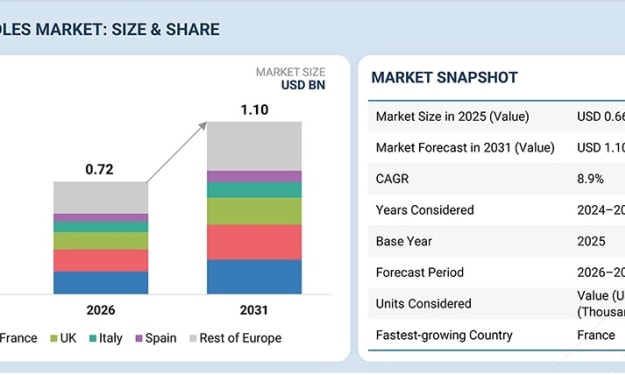
Europe’s pen needles market is entering a period of sustained, value-driven growth as chronic disease burden, demographic shifts, and home-based care adoption reshape injectable therapy delivery across the region. Valued at US$0.66 billion in 2025, the market increased to US$0.72 billion in 2026 and is projected to expand at a resilient CAGR of 8.9% from 2026 to 2031, reaching a forecasted US$1.10 billion by 2031.
By Juan Martinez7 days ago in Futurism
One Hard Thing
Stop me if you’ve heard this one before: You have the number, you know your schedule- you’ve even picked out the perfect day and time to make this appointment. Shoot, you’ve even picked out alternative days and times just in case their schedules can’t accommodate you!
By Taylor Rigsby8 days ago in Motivation



Comments
There are no comments for this story
Be the first to respond and start the conversation.