
Exoplanet Atmospheres: Unexpected Discoveries That Are Changing Astronomy
Space

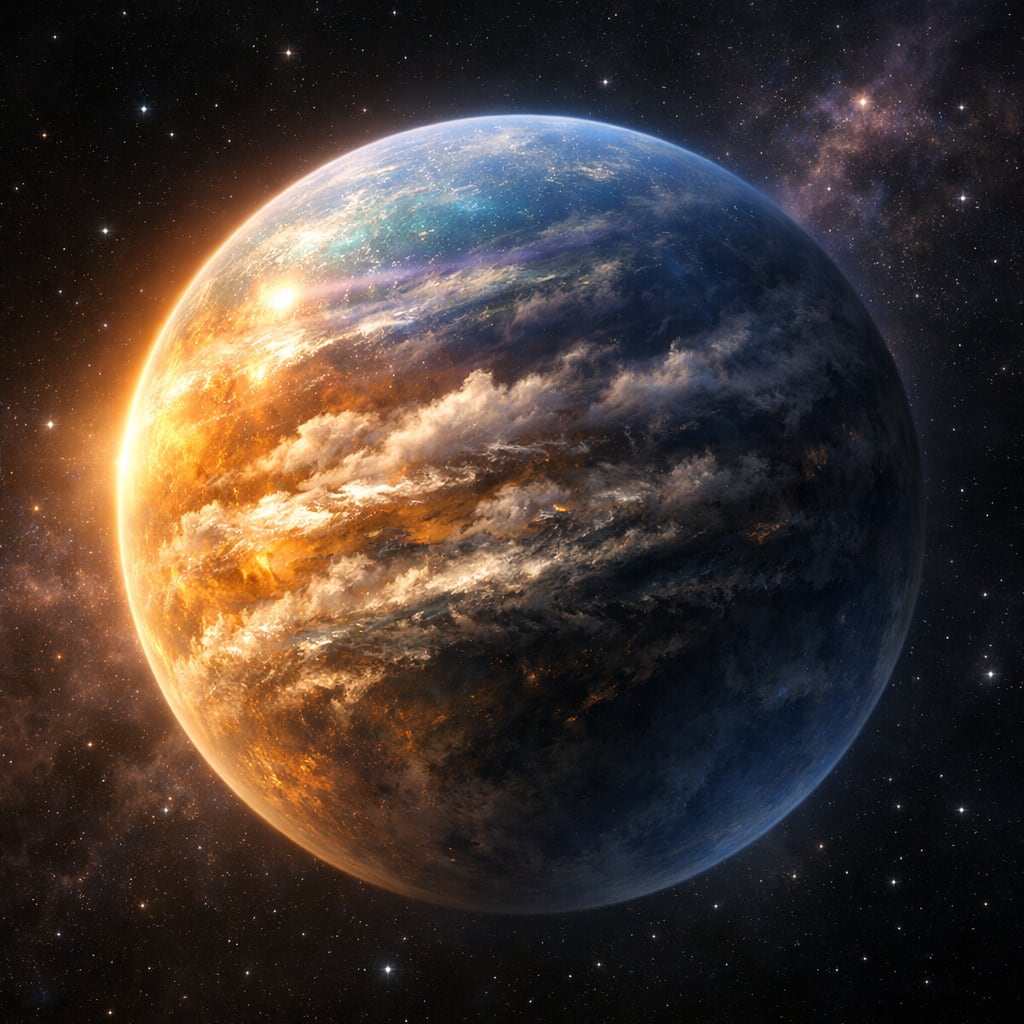
For most of human history, planets beyond our Solar System were the stuff of speculation. Even after the first exoplanets were confirmed in the 1990s, they remained distant abstractions—numbers in databases, shadows in starlight, or subtle gravitational wobbles. Today, however, astronomers are doing something that once seemed impossible: directly probing the atmospheres of worlds orbiting other stars. And what they are finding is far stranger and more diverse than anyone expected.
Thanks to powerful new telescopes and refined observational techniques, exoplanet atmospheres have become one of the most exciting frontiers in modern astrophysics. Each discovery is reshaping how we think about planetary formation, climate, and even the potential for life beyond Earth.
How Scientists Detect Alien Atmospheres
Studying an exoplanet’s atmosphere is an extraordinary technical challenge. These planets are tiny compared to their host stars and are often billions of times fainter. To overcome this, astronomers rely on a technique known as transit spectroscopy.
When an exoplanet passes in front of its star, a small fraction of the starlight filters through the planet’s atmosphere before reaching Earth. Molecules in the atmosphere absorb specific wavelengths of light, leaving behind distinctive fingerprints in the spectrum. By analyzing these patterns, scientists can identify atmospheric gases such as water vapor, carbon dioxide, methane, and sodium.
The launch of the James Webb Space Telescope (JWST) marked a turning point. Its sensitivity in the infrared range allows astronomers to detect atmospheric features with unprecedented clarity, revealing details that were completely hidden before.
Water Vapor in Extreme Worlds
One of the first major surprises came from hot Jupiters—gas giants that orbit extremely close to their stars. These planets experience surface temperatures exceeding 1,000 degrees Celsius (1,800 degrees Fahrenheit), conditions once thought too harsh for stable water molecules.
Yet observations repeatedly detected water vapor in their atmospheres. In some cases, it appears to be abundant. This discovery challenged long-standing assumptions about atmospheric chemistry under extreme heat and forced scientists to update their models of molecular stability and circulation.
The presence of water does not mean these planets are habitable, but it does demonstrate that planetary atmospheres can retain complex molecules even in environments far more hostile than previously believed.
Clouds Made of Glass and Metal
Perhaps the most visually striking discoveries involve alien clouds. On Earth, clouds are composed of water droplets or ice crystals. On exoplanets, clouds can be made of materials that sound more like science fiction than meteorology.
On some ultra-hot worlds, temperatures are high enough for silicate minerals to vaporize. As atmospheric winds transport this material to cooler regions, it condenses into tiny particles—essentially forming clouds of glass. In other cases, clouds may consist of iron, titanium oxide, or magnesium compounds.
These exotic clouds are not just curiosities. They significantly affect how light moves through the atmosphere, often flattening spectral features and making chemical analysis far more difficult. Understanding them has become essential for correctly interpreting atmospheric data.
Chemical Imbalances That Defy Expectations
Another unexpected trend is the discovery of chemical disequilibrium in several exoplanet atmospheres. Scientists have detected unusual ratios of gases that should not coexist in stable conditions without continuous replenishment.
For example, some planets show surprising combinations of methane and carbon monoxide at temperatures where one should dominate over the other. Others contain excess ammonia or unexpected traces of sulfur-based compounds.
While such imbalances do not imply biology, they reveal that atmospheric chemistry is driven by complex processes such as vertical mixing, photochemistry, and interactions with a planet’s interior. These findings highlight how incomplete earlier, simpler models of exoplanet atmospheres truly were.
New Atmospheric Types on Super-Earths and Mini-Neptunes
One of the biggest revelations has come from planets that fall between Earth and Neptune in size. These so-called super-Earths and mini-Neptunes do not exist in our Solar System, leaving astronomers without familiar examples for comparison.
Observations show that some of these planets possess thick hydrogen-helium envelopes, while others appear to have steam-rich atmospheres dominated by water vapor. Still others may have lost their atmospheres almost entirely due to stellar radiation.
This diversity suggests that planet size alone does not determine atmospheric composition. Instead, formation history, distance from the star, and stellar activity all play crucial roles.
Atmospheres That Are Actively Escaping
In some cases, astronomers have observed exoplanets literally losing their atmospheres. Strong ultraviolet radiation from their host stars heats the upper layers, causing gases to escape into space. The result can be enormous comet-like tails of hydrogen or helium trailing behind the planet.
These observations provide direct evidence that planetary atmospheres are not static. Over millions or billions of years, a planet can transform dramatically—shrinking from a gas-rich mini-Neptune into a bare rocky core. This process may explain why certain planet sizes are surprisingly rare in exoplanet surveys.
Implications for the Search for Life
The growing complexity revealed in exoplanet atmospheres has important consequences for astrobiology. Scientists once hoped that detecting a single gas—such as oxygen or methane—might serve as a clear sign of life. We now know that reality is far more nuanced.
Many potential biosignatures can be produced by non-biological processes under the right conditions. As a result, researchers are shifting toward studying combinations of gases, atmospheric context, and long-term stability rather than searching for a single “smoking gun.”
Looking Ahead
The study of exoplanet atmospheres is still in its early stages, yet it has already overturned decades of assumptions. Upcoming missions like the Ariel space telescope and next-generation ground-based observatories will extend these studies to smaller, cooler planets—possibly even Earth-like worlds.
Each new atmosphere observed adds another chapter to a rapidly evolving story. One thing is now clear: the universe is far more inventive than our early theories imagined, and the skies of distant planets may hold clues not only about alien worlds, but about our own place in the cosmos.
About the Creator
Keep reading
More stories from Holianyk Ihor and writers in Futurism and other communities.
Why Most Potentially Habitable Planets Do Not Look Like Earth
When scientists and science fiction writers imagine habitable planets, they often picture something very similar to Earth: blue oceans, green continents, a breathable atmosphere, and a familiar sky. For decades, the search for life beyond our planet has been guided by this image of a “second Earth.” Yet modern astronomy is steadily revealing a surprising truth: most potentially habitable planets in the universe look nothing like Earth at all.
By Holianyk Ihor5 days ago in Futurism
Saudi Arabia Power Extension Cord Market: Rising Electrification, Safety Standards & Growth Outlook
Market Overview According to the latest report by IMARC Group, the Saudi Arabia power extension cord market was valued at USD 42.69 Million in 2024. The market is expected to reach USD 74.74 Million by 2033, expanding at 6.42% annually from 2025 to 2033. This growth reflects the Kingdom's digital transformation, where 33.6 million internet users are driving e-commerce adoption and making power accessories more accessible than ever before. Modern retail formats—from specialty electronics stores in shopping malls to online marketplaces offering product comparisons and fast delivery—are putting surge-protected models, multi-socket designs, and USB-integrated extension cords within easy reach of both budget-conscious shoppers and premium buyers.
By Jeffrey Wilson4 days ago in Futurism
Irrigation Controllers Market: Precision Farming Demand, Automated Scheduling & Market Forecast
According to IMARC Group's latest research publication, global irrigation controllers market size reached USD 1.9 Billion in 2024. Looking forward, IMARC Group expects the market to reach USD 5.7 Billion by 2033, exhibiting a growth rate (CAGR) of 13.07% during 2025-2033.
By sujeet. imarcgroup2 days ago in Futurism
A Love Forboding
The chipped stone slope caused unbearable footing. I slid, skirting on my heels. I cast my shield, relinquishing my guard to stay upright. Left with my double-edge and a prayer to the maker, I skated toward my objective. The earthly stubble gave way to solid ground. I found myself restored, a trail of dust in my wake.
By James U. Rizzi3 days ago in Fiction


Comments
There are no comments for this story
Be the first to respond and start the conversation.