
Food Safety Testing Market Insights: Microbial Testing, GMO Analysis & Forecast to 2034
How advancements in microbial, allergen, and chemical residue testing are reshaping quality standards, operational efficiency, and risk management across food production ecosystems.

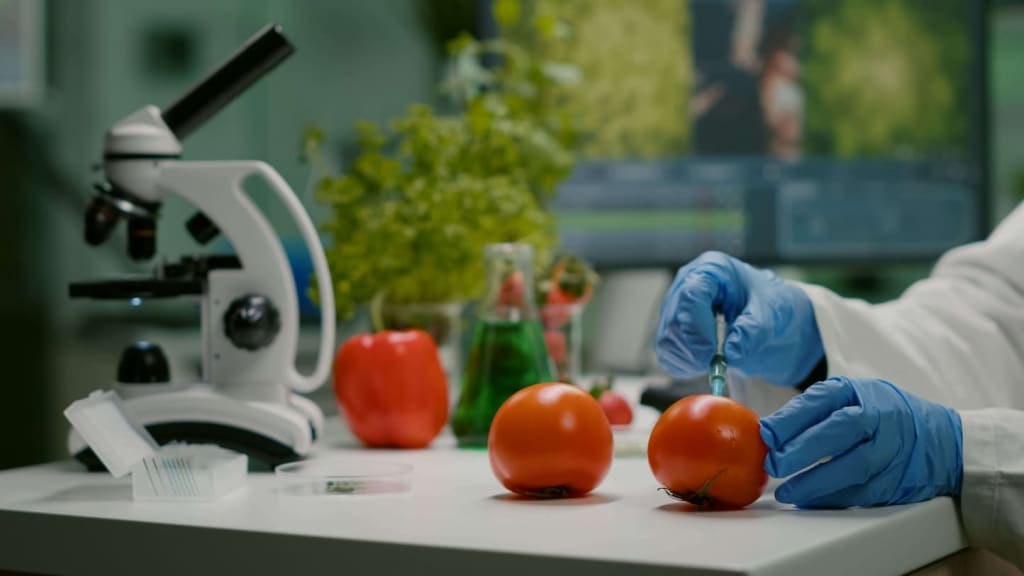
Rising awareness about foodborne illnesses, stringent regulatory standards, and the growing global food trade are accelerating demand for comprehensive food safety testing. The market is further supported by technological advancements in testing methods, increased consumer consciousness about food quality, and expanding testing infrastructure across developed and emerging economies. According to IMARC Group's latest data, the global food safety testing market size was valued at USD 27.2 Billion in 2025. Looking forward, IMARC Group estimates the market to reach USD 53.6 Billion by 2034, exhibiting a CAGR of 7.85% from 2026-2034.
Food safety testing now represents a rapidly expanding global industry driven by the urgent need to prevent foodborne illnesses and ensure compliance with increasingly strict regulations worldwide. The market encompasses a wide range of testing services, including pathogen detection, chemical residue analysis, allergen testing, and GMO verification across various food categories. Major industry segments include microbiological testing for pathogens like Salmonella and E. coli, chemical contaminant screening for pesticides and heavy metals, and advanced molecular diagnostics using PCR technology. The sector is experiencing strong momentum from both regulatory mandates and voluntary quality assurance initiatives, with food manufacturers, processors, and testing laboratories investing heavily in automation and rapid testing technologies to meet evolving safety standards and consumer expectations.
Receive Your "Food Safety Testing Market" Research Sample PDF
Food Safety Testing Market Growth Drivers:
- Rising Incidence of Foodborne Illness Cases
The alarming frequency of foodborne disease outbreaks worldwide is pushing governments and food companies to prioritize safety testing throughout the supply chain. In the United States alone, over 48 million people suffer from foodborne illnesses annually, resulting in 128,000 hospitalizations and approximately 3,000 deaths, according to the CDC. These statistics highlight the critical importance of comprehensive testing protocols to identify pathogens, toxins, and contaminants before products reach consumers. Food manufacturers are implementing more rigorous testing programs to protect public health and avoid costly recalls that can damage brand reputation and financial performance.
- Stringent Regulatory Standards and Compliance Requirements
Governments worldwide are implementing increasingly rigorous food safety regulations that mandate systematic testing throughout production, processing, and distribution. In the United States, the FDA's Food Safety Modernization Act requires preventive controls and verification testing across the food supply chain. Similarly, Europe's General Food Law and directives from the European Food Safety Authority enforce strict testing protocols for contaminants, allergens, and pathogens. India's Food Safety and Standards Authority has also strengthened standards with science-based testing requirements and expanded laboratory infrastructure. These regulatory frameworks create steady demand for accredited testing services as compliance becomes non-negotiable for market access.
- Global Food Trade and Supply Chain Complexity
The globalization of food supply chains has dramatically increased the need for comprehensive safety testing at multiple points from farm to table. Countries importing over 90 percent of their food supply, like many Gulf Cooperation Council nations, must verify that incoming products meet their safety standards. International trade organizations like the Codex Alimentarius Commission are working to harmonize testing protocols across borders to facilitate safe commerce. Food exporters must navigate diverse regulatory requirements in different markets, driving demand for testing services that can certify compliance with multiple international standards. The complexity of modern supply chains, with ingredients sourced from numerous countries and processed in different facilities, creates multiple contamination risk points.
Food Safety Testing Market Trends:
- Government Investment in Testing Infrastructure
Governments across major markets are making substantial investments in food testing infrastructure to strengthen their regulatory capacity and protect public health. In 2024, the Food Safety and Standards Authority of India and the Andhra Pradesh government signed an agreement to establish food testing facilities costing ₹40 crore in Tirumala and Kurnool, with the overall 2024-25 plan allocated ₹88.41 crore for testing samples and raising awareness. India has also announced plans to establish 100 additional food testing laboratories nationwide to ensure consistent food quality through regular surveillance and monitoring. The Indian Export Inspection Council is integrating IoT-based sampling techniques to modernize testing infrastructure and streamline export processes.
- Rapid Testing Technology Innovation
The food safety testing industry is experiencing a technological revolution with rapid testing methods that deliver results in minutes rather than days. In 2024, NOMADX Holdings launched a rapid biological and chemical detection platform using SERS technology that provides PCR-level sensitivity with results in 1-2 minutes for contaminants like Salmonella, E. coli, and PFAS. Neogen Corporation introduced the Petrifilm Automated Feeder, which reduces hands-on enumeration time from 4 hours to just 1 minute while processing up to 300 plates in 33 minutes. Bio-Rad launched the XP-Design Assay Salmonella Serotyping Solution in March 2025, enabling rapid and accurate identification using real-time PCR technology.
- Automation and Digital Integration in Testing Laboratories
Testing laboratories are increasingly adopting automated systems and digital platforms to handle higher sample volumes with improved accuracy and efficiency. Automation reduces manual handling errors, standardizes testing procedures, and enables real-time data tracking throughout the testing process. In 2024, Neogen Corporation's Petrifilm Automated Feeder demonstrated how automation can dramatically reduce processing time while maintaining accuracy in microbial enumeration. Digital systems are integrating with laboratory information management systems to provide seamless data flow from sample receipt through results reporting. In November 2024, FSSAI launched the digital Food Import Rejection Alert portal, enabling swift action by food authorities when imported products fail safety tests.
Recent News and Developments in Food Safety Testing Market
- September 2025: Eurofins Scientific SE introduced a new product-certification program for dietary supplements and functional foods, under which brands are permitted to use a certification mark following analytical testing. This initiative addresses the growing demand for third-party verification of supplement quality and purity, providing consumers with greater confidence in product safety and compliance with regulatory standards.
- June 2025: bioMérieux announced the acquisition of Day Zero Diagnostics, indicating a strategic push into advanced sequencing and molecular diagnostics capabilities. This acquisition augments bioMérieux's existing portfolio of rapid food safety solutions like GENE-UP and TEMPO, positioning the company to offer more comprehensive pathogen detection capabilities using cutting-edge genomic technologies.
- March 2025: Bio-Rad launched the XP-Design Assay Salmonella Serotyping Solution to enable rapid and accurate identification of Salmonella serotypes in food and environmental samples. The assay uses real-time PCR technology with fluorescent probes to ensure high specificity, supporting quick decision-making during outbreaks and enhancing ongoing food safety monitoring with its ready-to-use format that allows easy integration into existing testing workflows.
Note: If you require specific details, data, or insights that are not currently included in the scope of this report, we are happy to accommodate your request. As part of our customization service, we will gather and provide the additional information you need, tailored to your specific requirements. Please let us know your exact needs, and we will ensure the report is updated accordingly to meet your expectations.
About the Creator
Andrew Sullivan
Hello, I’m Andrew Sullivan. I have over 9+ years of experience as a market research specialist.
Keep reading
More stories from Andrew Sullivan and writers in Futurism and other communities.
Stainless Steel Market Trends: Green Steel Innovation, Demand Surge & Industry Outlook to 2034
Growing demand from construction, automotive, and industrial sectors is fueling stainless steel adoption worldwide, driven by urbanization, infrastructure expansion, and technological innovation in manufacturing processes. According to IMARC Group's latest data, the global stainless steel market size was valued at USD 163.72 Billion in 2024. Looking forward, IMARC Group estimates the market to reach USD 261.54 Billion by 2033, exhibiting a CAGR of 5.08% during 2025-2033.
By Andrew Sullivan2 days ago in Futurism
Saudi Arabia High-Brightness LED Industry: Advanced Display Technologies & Energy Savings Trends
According to IMARC Group's latest research publication, Saudi Arabia high-brightness LED market size reached USD 274.5 Million in 2025. The market is projected to reach USD 420.3 Million by 2034, exhibiting a growth rate of 4.85% during 2026-2034.
By Kishan Kumar3 days ago in Futurism
Why Fruits and Vegetables Are Central to the UK’s Healthy Eating Movement?
UK Fruits and Vegetables and Their Growing Importance Eating habits in the United Kingdom are changing as consumers place greater attention on nutrition, freshness, and overall well-being. Among the most noticeable developments in recent years is the increasing importance of fruits and vegetables in daily diets. Once viewed simply as meal components, they are now seen as essential building blocks of a healthier lifestyle.
By deepanshu Thakur3 days ago in Futurism
I Don't Need My Phone... Wait, Is That Actually True?
My parents gave me my first cell phone when I was twelve years old. It wasn't a fancy iPhone or anything, not even close. Just a simple black flip phone for when I needed to call or text them after school.
By Madison "Maddy" Newtona day ago in Humans


Comments
There are no comments for this story
Be the first to respond and start the conversation.