
GCC Cheese Market Analysis: Industry Trends, Competitive Landscape & Growth Forecast
How Premiumization Trends and Western Dietary Influence Are Driving Growth in the GCC Cheese Market

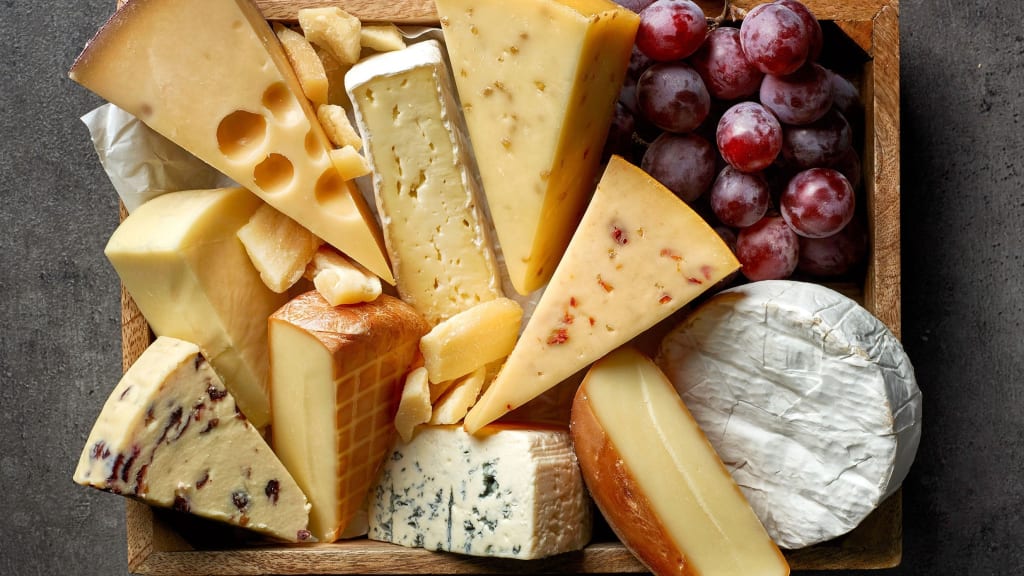
According to IMARC Group's latest research publication, the GCC cheese market size reached 827,246.7 Tons in 2024. The market is projected to reach 1,092,912.25 Tons by 2033, exhibiting a growth rate (CAGR) of 2.89% during 2025–2033.
How AI is Reshaping the Future of GCC Cheese Market
- Yield Optimization and Waste Reduction: AI-powered platforms like Ever.Ag's Cheese Yield Optimization tool analyze plant data to deliver actionable recipe changes, boosting cheese yields and cutting undergrade production—delivering measurable results for manufacturers within 90 days of deployment.
- Smart Coagulation Monitoring: Machine learning systems monitor milk coagulation in real time, adjusting temperature and acidity automatically to produce consistent curd structures—reducing batch variability and ensuring uniform texture and flavor across large-scale GCC dairy operations.
- AI-Driven Livestock and Milk Quality Management: Wearable sensors and AI algorithms track herd health metrics, detect disease early, and monitor milk composition changes, ensuring premium raw material quality. Bahrain's 2024 Smart Agri Policy actively supports AI adoption across regional dairy farms.
- Blockchain Traceability and Cold-Chain Integrity: Firms like Almarai and Baladna have deployed blockchain-based milk tracking systems, improving supply chain transparency and export-readiness while IoT-enabled cold-chain monitoring reduces spoilage in GCC's extreme temperature conditions.
- Demand Forecasting and Retail Analytics: Advanced analytics help GCC cheese producers predict category demand shifts, optimize SKU assortments for hypermarkets and online platforms, and manage inventory more efficiently—reducing overproduction and supporting profitability across the distribution network.
Access the Sample Report for Current Insights and Forecasts
How Vision 2030 is Revolutionizing the GCC Cheese Industry
Vision 2030 is directly reshaping the GCC cheese landscape by embedding dairy self-sufficiency into national economic agendas. Saudi Arabia has already achieved 129% dairy self-sufficiency—turning the Kingdom from a net importer into a net exporter—while Almarai's SAR 18 billion five-year expansion underpins this ambition with new processing capacity and automated distribution. The UAE's Operation 300bn initiative identifies food manufacturing as a priority subsector, with Abu Dhabi investing AED 10 billion to double manufacturing capacity and Sharjah inaugurating the Mleiha Dairy Factory producing 100,000 liters daily. Government food security programs are driving localization of cheese production across the region, reducing import dependence and creating domestic supply chains for mozzarella, cheddar, and processed variants. Saudi Arabia's agricultural GDP reached approximately SAR 114 billion, reflecting the scale of food-sector investment. Qatar's Baladna, backed by government support, reported record revenues of USD 316 million and is actively expanding its premium cheese range—clearly demonstrating how Vision-aligned investment is building world-class, export-ready dairy industries across the GCC.
GCC Cheese Market Trends & Drivers:
Population growth and shifting dietary habits are the twin engines powering cheese consumption across the GCC. The region's population is approaching 59.7 million, with a young, urban demographic actively embracing Western food culture—pizza, burgers, wraps, and gourmet sandwiches—all of which depend heavily on cheese. Cheddar currently commands the largest product share, while mozzarella demand surges alongside the hospitality sector's rapid expansion. Hotels, restaurants, and airline catering services are placing large-volume cheese orders as the UAE's hospitality market alone is valued at USD 25.17 billion. Saudi Arabia's religious tourism to Makkah and Madinah brings millions of visitors annually, driving institutional dairy procurement to record levels. The GCC food market is expected to reach 63.46 million metric tons by 2030, with dairy holding a consistent share driven by rising per-capita incomes and growing preference for protein-rich diets.
Health-conscious consumers are pushing manufacturers to innovate rapidly across the natural and processed cheese segments. Demand for low-fat, high-protein, lactose-free, probiotic-enriched, and organic cheese variants is climbing steeply among urban millennials and fitness-focused demographics. Baladna added 39 new products in 2024—including an enhanced cheese range—while Al Ain Farms launched lactose-free dairy lines targeting UAE's health-aware consumers. Processed cheese remains popular for its convenience and long shelf life, particularly in busy households and food service settings, but the premium natural cheese segment is growing faster as disposable incomes rise. Consumers in Riyadh, Dubai, and Doha are increasingly browsing specialty and online platforms for artisan, imported, and functional cheese options, reflecting a broader premiumization trend seen across the GCC food market.
Modern retail expansion and the e-commerce boom are making cheese far more accessible to consumers across the six GCC nations. Supermarkets and hypermarkets remain the dominant distribution channel, but online grocery platforms are gaining rapidly—supported by cold-chain upgrades and same-day delivery services rolling out across major cities. The GCC food sector recorded 27 M&A deals since 2022, including Almarai's strategic acquisitions in Egypt and Jordan, reflecting industry consolidation and a push to build robust cross-border supply chains. Baladna's partnership with France's Bel Group to produce The Laughing Cow cheese locally in Qatar is a strong example of international collaboration driving premium product availability. Lulu Qatar's launch of a premium British dairy collection in partnership with the UK's AHDB and DBT further highlights how retailers are actively diversifying their cheese assortments to meet a growing appetite for variety and quality.
GCC Cheese Market Industry Segmentation:
The report has segmented the market into the following categories:
Source Insights:
- Cow Milk
- Buffalo Milk
- Goat Milk
- Others
Type Insights:
- Natural
- Processed
Product Insights:
- Mozzarella
- Cheddar
- Feta
- Parmesan
- Roquefort
- Others
Distribution Channel Insights:
- Supermarkets and Hypermarkets
- Convenience Stores
- Specialty Stores
- Online
- Others
Format Insights:
- Slices
- Diced/Cubes
- Shredded
- Blocks
- Spreads
- Liquid
- Others
Country Insights:
- Saudi Arabia
- UAE
- Qatar
- Oman
- Kuwait
- Bahrain
Competitive Landscape:
The competitive landscape of the industry has also been examined along with the profiles of the key players.
Recent News and Developments in GCC Cheese Market
- January 2025: Almarai (Saudi Arabia) unveiled a USD 4.8 billion five-year investment plan focused on farm expansion, automated processing upgrades, and electrification of its distribution fleet—directly strengthening the regional cheese supply chain and reinforcing Saudi Arabia's dairy self-sufficiency under Vision 2030.
- February 2025: Lulu Qatar launched a premium British dairy collection in collaboration with the UK's Agriculture and Horticulture Development Board (AHDB) and the Department for Business and Trade (DBT), introducing an expanded market-leading range of dairy products including specialty cheese across its larger stores in Qatar.
- April 2025: Saudi Arabia unveiled a large-scale dairy industrial cluster in Al-Kharj—approximately 90 km southeast of Riyadh—spanning nearly 1 million square meters, purpose-built for dairy processing and value-chain industries, creating significant new capacity for domestic cheese production and reducing import dependency.
- August 2025: Sawani (backed by Saudi PIF, owner of the NOUG brand) collaborated with GEA, a German specialist in modern milking systems, to establish its model farm—bringing advanced European dairy technology to Saudi Arabia and setting a new standard for milk quality that directly benefits downstream cheese manufacturing.
- December 2025: Sharjah (UAE) inaugurated the Mleiha Dairy Factory and Farm—a 20,000-square-meter facility capable of producing 100,000 liters of milk daily—with Tetra Pak investing USD 11.5 million in sustainable packaging and processing automation, strengthening the UAE's local dairy supply for cheese production.
Note: If you require specific details, data, or insights that are not currently included in the scope of this report, we are happy to accommodate your request. As part of our customization service, we will gather and provide the additional information you need, tailored to your specific requirements. Please let us know your exact needs, and we will ensure the report is updated accordingly to meet your expectations.
About the Creator
Abhay Rajput
I am working in market research company that provides market and business research intelligence across the globe.
Keep reading
More stories from Abhay Rajput and writers in Futurism and other communities.
GCC Cat Food Market Analysis: Industry Overview, Key Players & Growth Outlook
According to IMARC Group's latest research publication, the GCC cat food market size reached USD 124.0 Million in 2024. The market is projected to reach USD 202.0 Million by 2033, exhibiting a growth rate (CAGR) of 5.60% during 2025-2033.
By Abhay Rajput3 days ago in Futurism
Robotic Vacuum Cleaner Market Analysis: IoT Connectivity, Mapping Technology & Industry Forecast to 2034
Global automation trends, busy lifestyles, and growing demand for smart home technologies are driving robust expansion in the robotic vacuum cleaner market, supported by innovations in AI navigation, obstacle detection, and expanding online and offline retail channels. According to IMARC Group’s latest data, the global robotic vacuum cleaner market size was valued at USD 10.6 Billion in 2025. Looking forward, IMARC Group estimates the market to reach USD 40.7 Billion by 2034.
By Andrew Sullivan5 days ago in Futurism
Saudi Arabia Generic Drug Market: Healthcare Expansion, Cost-Effective Therapies & Growth Outlook
According to IMARC Group's latest research publication, Saudi Arabia generic drug market size reached USD 4.1 Billion in 2025. The market is projected to reach USD 8.1 Billion by 2034, exhibiting a growth rate (CAGR) of 7.88% during 2026-2034.
By Faisal Al-Harbi4 days ago in Futurism
When True Love Never Questions Your Soul
“And she’s going to learn that this life will hit you, hard, in the face, wait for you to get back up, just so it can kick you in the stomach but getting the wind knocked out of you is the only way to remind your lungs how much they like the taste of air.” — Sarah Kay’s Poem — If I Should Have a Daughter
By Chantal Christie Weiss7 days ago in Humans



Comments
There are no comments for this story
Be the first to respond and start the conversation.