
Graphic Film Market: Vehicle Wraps Expansion, Outdoor Media & Market Forecast
Graphic films gain traction for vibrant, durable, and customizable designs.


According to IMARC Group's latest research publication, global graphic film market size reached USD 30.14 Billion in 2024. Looking forward, IMARC Group expects the market to reach USD 42.82 Billion by 2033, exhibiting a growth rate (CAGR) of 3.57% during 2025-2033.
How AI is Reshaping the Future of Graphic Film Market
- Intelligent Print Workflow Automation: AI systems now automate asset preparation, real-time production tracking, and quality control across print formats.
- Predictive Maintenance and Production Optimization: Machine learning analyzes equipment data patterns to forecast maintenance needs before failures occur, minimizing downtime and production disruptions.
- AI-Powered Color Management and Quality Control: Computer vision technology detects color inconsistencies, surface defects, and registration errors in real-time during printing.

Graphic Film Industry Overview:
The graphic film market is experiencing robust growth driven by expanding advertising budgets, vehicle customization trends, and architectural enhancement projects. The U.S. advertising industry is projected to reach USD 455.9 Billion by the end of this year, with digital advertising claiming 80% of total spend by 2029. This shift toward visually compelling marketing solutions is fueling demand for high-quality graphic films across signage, vehicle wraps, and promotional displays.
Graphic Film Market Trends & Drivers
The advertising and marketing explosion, particularly through digital channels, stands as the primary market catalyst. Global digital ad spending is projected to exceed USD 700 Billion, representing over 65% of total advertising investment. Influencer marketing specifically is expanding rapidly, expected to reach USD 6.24 Billion with an annual growth rate of 8.79%.
Sustainability initiatives and regulatory pressures are reshaping product development across the industry. European regulations promoting circular economy principles have accelerated innovation in biodegradable and recyclable films, particularly for packaging applications. The European Commission allocated nearly €340 Million to support creative sectors, including audiovisual industries that increasingly utilize graphic films for temporary installations and cultural exhibitions.
The automotive industry's customization boom combined with e-commerce packaging expansion creates dual growth engines. Vehicle wrapping has evolved from commercial fleet branding into mainstream personalization, with consumers treating cars as personal expression canvases. The automotive sector's production growth China projects reaching 35 million vehicle units while India's automotive industry expects to hit USD 251.4-282.8 Billion—expands the addressable market substantially.
Leading Companies Operating in the Global Graphic Film Industry:
- 3M Company
- Achilles Corporation
- Arlon Graphics LLC (FLEXcon Company Inc.)
- Avery Dennison Corporation
- CCL Industries Inc.
- Constantia Flexibles Group
- Drytac Corporation
- DUNMORE Corporation (API Group)
- DuPont de Nemours Inc.
- FDC Graphic Films Inc.
- Hexis S.A.
- Kay Premium Marking Films Ltd. (ORAFOL Europe GmbH)
Graphic Film Market Report Segmentation:
By Polymer:
- Polyvinylchloride (PVC)
- Polypropylene (PP)
- Polyethylene (PE)
- Others
Polyvinylchloride (PVC) represents the largest segment due to its versatility, durability, and cost-effectiveness across diverse applications.
By Film Type:
- Reflective
- Opaque
- Transparent
- Translucent
Opaque films dominate the market owing to their superior light-blocking properties and vibrant color reproduction for high-impact visual displays.
By Printing Technology:
- Rotogravure
- Flexography
- Offset
- Digital
Flexography leads the segment as it offers cost-efficiency, high-speed production capabilities, and excellent versatility across various substrates.
By End Use:
- Promotional and Advertisement
- Automotive
- Others
Promotional and advertisement applications command the largest share, driven by relentless demand for visually compelling branding across retail, events, and outdoor media.
Regional Insights:
- North America (United States, Canada)
- Asia Pacific (China, Japan, India, South Korea, Australia, Indonesia, Others)
- Europe (Germany, France, United Kingdom, Italy, Spain, Russia, Others)
- Latin America (Brazil, Mexico, Others)
- Middle East and Africa
Asia Pacific exhibits clear dominance in the graphic film market, supported by rapid urbanization, expanding advertising sectors, and cost-effective manufacturing capabilities.
Recent News and Developments in Graphic Film Market
- April 2025: Innovia Films UK launched its 40-meter Rayoart coating line at its Wigton plant to produce PVC-free graphic films using water-based coatings. The new equipment enables industrial-scale production of recyclable PP-based Rayoart films, offering an eco-friendly alternative to traditional PVC, aligning with sustainability goals, and enhancing recyclability for graphic applications.
- February 2025: Shiva Polymers launched a 3.5-micron PVC lamination film for kela patta printing and dona plate making. The film, made from recycled materials, offers competitive strength and length, reinforcing India's growing demand for sustainable graphic and packaging applications.
Note: If you require specific details, data, or insights that are not currently included in the scope of this report, we are happy to accommodate your request. As part of our customization service, we will gather and provide the additional information you need, tailored to your specific requirements. Please let us know your exact needs, and we will ensure the report is updated accordingly to meet your expectations.
About the Creator
sujeet. imarcgroup
With 2 years of hands-on experience at IMARC Group, I have conducted in-depth market research and analysis across diverse industries including technology, healthcare, agriculture, and consumer goods.
Keep reading
More stories from sujeet. imarcgroup and writers in Futurism and other communities.
Laminate Flooring Market: Urbanization Impact, Modern Interior Design & Growth Outlook
According to IMARC Group's latest research publication, the global laminate flooring market size reached 1,109.04 Million Sq. Metres in 2024. Looking forward, IMARC Group expects the market to reach 1,374.68 Million Sq. Metres by 2033, exhibiting a growth rate (CAGR) of 2.38% during 2025-2033.
By sujeet. imarcgroupabout 2 hours ago in Futurism
Why Speed Alone Doesn’t Define Long-Term Success in Blockchain Networks?
In the early years of blockchain adoption, performance metrics like transaction speed and low fees dominated market discussions. Faster networks were often assumed to be better positioned for long-term success. Over time, however, the industry has learned that speed alone rarely determines whether a blockchain network remains relevant.
By Muhammad Irfan Afzal3 days ago in Futurism
Australia Luxury Cosmetics Market: Premium Demand, Retail Expansion & Brand Innovation
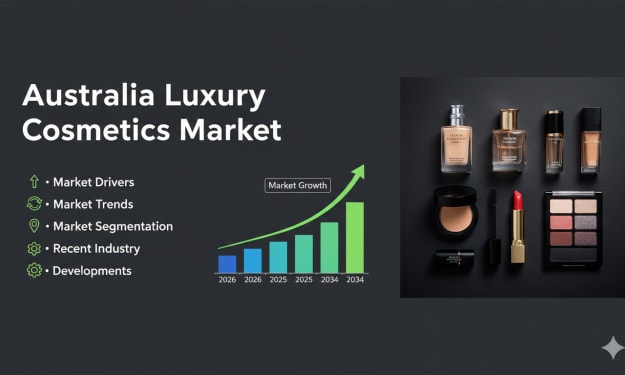
According to IMARC Group, the Australia luxury cosmetics market reached USD 1.6 Billion in 2025 and is projected to expand to USD 2.3 Billion by 2034, exhibiting a compound annual growth rate (CAGR) of 3.92% during 2026–2034. This steady growth reflects increasing consumer appetite for premium beauty products and aspirational brand experiences across Australia. Luxury cosmetics encompass high-end skincare, makeup, fragrances and specialty treatments positioned on the basis of quality, exclusivity and innovation. As disposable incomes rise and consumers prioritize self-care and wellness, the luxury beauty segment is evolving into a lifestyle-driven category supported by digital engagement and experiential retail strategies.
By Shrestha Royabout 3 hours ago in Futurism



Comments
There are no comments for this story
Be the first to respond and start the conversation.