
How Countries Are Positioning Themselves to Lead the Global AI Race
From India’s AI summits to CEO pledges on regulation, major events are shaping national strategies in 2026


Introduction
Interest in artificial intelligence often rises around major conferences, expos, and corporate announcements. When governments host AI summits or global technology leaders make public commitments, search trends and media coverage increase almost immediately. These spikes show that AI is no longer a niche topic. It has become central to economic planning, education reform, and international competition.
In 2026, the global AI conversation is shaped by high-profile gatherings, including the India AI Impact Summit, international research forums, and policy meetings in major capitals. At the same time, executives from companies such as OpenAI, Google, and Microsoft regularly outline their views on safety, leadership, and regulation.
These events are not only symbolic. They influence investment decisions, public opinion, and national strategies. The key question now is how countries are positioning themselves in what many describe as a global AI race.
Why AI Events Trigger Public Attention
Large AI events attract policymakers, researchers, startup founders, and investors. Announcements about funding programs, partnerships, and regulatory frameworks often occur during these gatherings. As a result, journalists and analysts publish summaries and expert commentary, which drive further interest.
Search data typically shows spikes during three types of moments:
Government summits on AI policy
Corporate earnings calls or keynote speeches mentioning AI leadership
International conferences focused on research and safety
When a CEO speaks about artificial general intelligence or national competitiveness, it often becomes headline news. These moments shape public perception about which countries and companies are leading.
India’s Push for AI Leadership
India has increased its focus on AI as part of its broader digital strategy. Events such as the India AI Impact Summit highlight government plans to support research, startups, and public sector adoption.
The Indian government has emphasized three areas:
1. Building domestic computing infrastructure
2. Expanding AI education and skills training
3. Encouraging responsible innovation
India’s large population and growing digital economy provide a strong base for AI adoption. The country also benefits from a large pool of software engineers and data professionals. However, challenges remain, including access to high-performance chips and consistent regulatory enforcement.
By hosting global events, India signals that it wants to be seen not only as a technology services provider but also as a developer of original AI systems.
The United States and Corporate Influence
The United States remains a central player in AI development. Many of the leading AI firms are headquartered there. Corporate announcements from executives at OpenAI, Google, and Microsoft often shape global conversations.
When CEOs testify before lawmakers or speak at major forums, they address issues such as safety testing, data governance, and global competition. These statements can influence both domestic policy debates and international partnerships.
The United States has focused on maintaining leadership through private sector innovation combined with federal research funding. At the same time, policymakers discuss export controls on advanced chips and collaboration with allies.
Public interest increases whenever there is discussion of new AI regulations or federal guidelines. Citizens and businesses want to understand how rules might affect development and access.
Europe’s Regulatory Approach
The European Union has taken a structured approach to AI governance. European policymakers aim to balance innovation with consumer protection and ethical standards.
Major AI conferences in Europe often include sessions on compliance, transparency, and accountability. Companies operating in the EU must consider regulatory requirements from the early design stage.
This regulatory leadership shapes global standards. Firms that want access to the European market often align their practices with EU rules. As a result, Europe exerts influence even if it does not host as many large AI firms as the United States.
Spikes in search traffic frequently follow announcements about new compliance deadlines or enforcement actions. Businesses seek clarity on how to adapt.
China’s State-Driven Model
China approaches AI development through strong state coordination. National strategies outline goals for research leadership, industrial integration, and data utilization.
Chinese AI conferences often emphasize industrial applications such as manufacturing automation, smart cities, and surveillance technologies. Government-backed funding programs support domestic firms.
China’s model differs from the market-driven approach seen in the United States. However, both systems aim for global influence. International observers closely watch developments in chip production and research output.
Whenever new policies or breakthroughs are announced, global media coverage increases. This reinforces the perception of AI as a strategic competition.
The Role of Global Conferences
Beyond national summits, global gatherings such as research forums and technology expos provide neutral ground for collaboration. These conferences bring together scientists, regulators, and industry leaders.
Panels often address shared concerns, including misinformation, cybersecurity, and job displacement. Joint statements or voluntary safety commitments sometimes emerge.
These events also allow smaller countries to present their strategies. Nations in Southeast Asia, the Middle East, and Africa increasingly host regional AI forums to attract investment.
Public attention rises because these conferences offer insight into future directions. Announcements about open-source models, funding pools, or academic partnerships can shift the landscape quickly.
CEOs and the Language of Leadership
Statements from corporate leaders play a significant role in shaping the AI narrative. When a CEO describes their company as leading in responsible AI or calls for global standards, the message travels widely.
These statements serve multiple purposes:
Reassuring investors
Addressing regulatory concerns
Influencing public debate
During earnings calls or keynote speeches, executives often discuss investment in data centers, talent acquisition, and partnerships with universities. Each claim about leadership or innovation feeds into the broader global race narrative.
Journalists analyze these remarks carefully. Search spikes often follow major product launches or public commitments to safety testing.
Investment and Infrastructure
Behind the public events lies a focus on infrastructure. AI development requires data centers, advanced chips, and reliable power supply. Governments frequently announce funding for national computing facilities during summits.
Infrastructure investment signals long-term commitment. Countries that lack domestic chip production may seek partnerships or subsidies to strengthen supply chains.
Public interest grows when new facilities open or when governments announce large-scale funding packages. Citizens often want to know how these investments affect local jobs and education opportunities.
Education and Workforce Strategy
AI leadership depends not only on hardware but also on human capital. Many countries now include AI in national education strategies. Universities expand machine learning programs, while vocational schools offer data science training.
During AI summits, education ministers and university leaders outline plans for scholarships and research grants. These announcements attract students and professionals seeking career growth.
Search patterns show increased interest in AI courses after major policy speeches. This reflects a link between national ambition and individual opportunity.
Responsible Development and Public Trust
As AI systems become more capable, concerns about safety and misuse increase. Conferences often dedicate sessions to responsible development. Topics include bias mitigation, transparency, and oversight.
Public trust is critical for long-term success. If citizens fear misuse, adoption may slow. Governments and companies therefore emphasize testing standards and ethical guidelines.
Announcements about safety frameworks often generate as much attention as product launches. People want assurance that innovation will not compromise privacy or fairness.
The Media’s Role in Amplifying Spikes
Media coverage amplifies the impact of AI events. News articles summarize key speeches, analyze policy proposals, and compare national strategies.
Opinion pieces debate whether the idea of a “race” is helpful or misleading. Some experts argue that cooperation on safety is as important as competition.
Online platforms also feature explainers and fact-checks. Balanced reporting helps readers understand both progress and limitations.
Looking Ahead
Spikes in interest around AI summits and CEO statements show that artificial intelligence has become a global priority. Countries are not only investing in technology but also shaping narratives about leadership and responsibility.
India seeks to expand its innovation base. The United States leverages corporate strength and research institutions. The European Union focuses on regulation and standards. China advances through coordinated national planning.
These strategies reflect different political and economic systems, yet all aim to secure influence in a rapidly changing field.
Future conferences will likely address deeper questions about global cooperation, trade, and safety oversight. Public attention will continue to rise whenever major announcements occur.
For readers and citizens, understanding these events helps make sense of the broader picture. AI is not only a technical issue. It is a policy, economic, and social matter that affects education, employment, and governance.
As 2026 unfolds, the pattern is clear: each summit and statement shapes both national ambitions and global expectations. The race for AI leadership is not decided by a single event, but by sustained investment, transparent policy, and informed public dialogue.w
About the Creator
Saad
I’m Saad. I’m a passionate writer who loves exploring trending news topics, sharing insights, and keeping readers updated on what’s happening around the world.
Australia Electric Vehicle Charging Market: Infrastructure Expansion, Policy Support & Technology Advancement
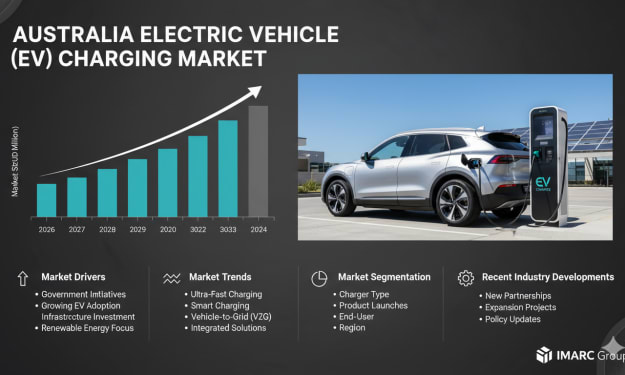
According to IMARC Group, the Australia electric vehicle (EV) charging market reached a value of USD 304.4 Million in 2025 and is projected to expand rapidly to USD 1,692.2 Million by 2034, exhibiting a strong compound annual growth rate (CAGR) of 21.00% during 2026–2034. This exceptional growth reflects the accelerating shift toward electric mobility and the critical role charging infrastructure plays in enabling large-scale EV adoption. As transport electrification becomes a central pillar of national decarbonization strategies, charging networks are evolving from early-stage infrastructure into a core component of Australia’s energy and mobility ecosystem. Expansion across urban centers, regional corridors and remote areas is improving accessibility and consumer confidence, positioning EV charging as a strategic growth market across Australia.
By Shrestha Roy8 days ago in Futurism
How Much Does it Cost to Build an App in San Diego? (2026 Prices)
When businesses begin planning a new app, one of the first questions they ask is straightforward: how much will it cost? Yet the answer is rarely simple. Two companies can build similar-looking apps and spend dramatically different amounts, not because of inefficiency but because the cost of app development reflects dozens of hidden variables.
By Nick William6 days ago in Futurism



Comments
There are no comments for this story
Be the first to respond and start the conversation.