
How the Tiangong Space Station Works: China’s Orbital Harbor of the Future
Space

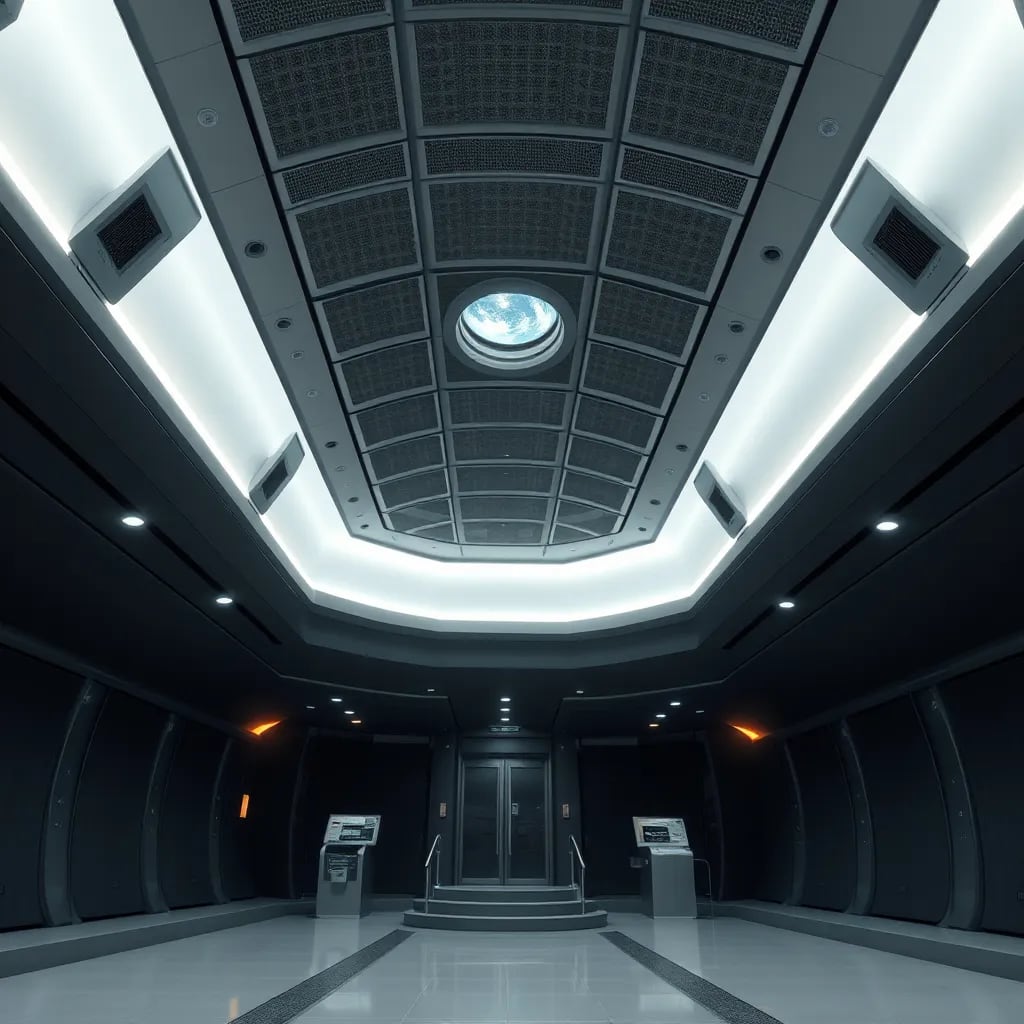
China’s Tiangong space station is one of the most ambitious projects in modern space exploration, marking a confident leap toward autonomous presence in Earth’s orbit. The name “Tiangong” (天宫) translates to “Heavenly Palace,” and though it’s not made of gold or jade, it is a palace of cutting-edge technology, aluminum, and solar panels orbiting high above us. This station is the third long-term orbital laboratory in human history after the International Space Station (ISS) and Russia’s Mir, and notably, the first to be built solely by one country in the 21st century.
The Station’s Modular Design
Tiangong—officially known as the Chinese Orbital Space Station (COS)—follows a modular design similar to the ISS. It consists of three main modules, each serving a unique purpose:
The Core Module, Tianghe (“Harmony of the Heavens”)
Launched in April 2021, Tianghe is the heart of the station. It houses command and control systems, life support, living quarters for three astronauts (known as taikonauts), a kitchen, bathroom, and exercise equipment. The module measures about 17.9 meters in length, weighs over 22 tons, and is equipped with two powerful solar arrays that supply the station with energy.
The Laboratory Modules, Wentian (“Quest for Heavenly Truth”) and Mengtian (“Dream of the Heavens”)
Added in 2022, these two lab modules are designed for scientific research. They contain equipment for experiments in physics, biology, medicine, and materials science. Wentian also includes an additional control console and backup life-support systems.
The station further features docking ports, airlocks for spacewalks, and a robotic arm akin to the Canadarm on the ISS, used for moving modules and assisting astronauts during extravehicular activities.
Life on Board
Taikonauts typically stay aboard Tiangong for missions lasting up to six months. The interior is engineered for comfort and efficiency. Each crew member has a private sleeping capsule with personalized lighting. Advanced systems recycle water and air, ensuring sustainability on long missions. Real-time communication with mission control on Earth keeps the crew connected with family and scientists.
Taikonauts use tablets for work and leisure, maintain their physical health with daily exercise on specially designed equipment, and even grow plants in small onboard gardens. This not only supports nutrition but also helps study how plants respond to microgravity.
Food aboard Tiangong reflects China’s rich culinary heritage, adapted for space. Meals include rehydratable and thermo-stabilized dishes inspired by traditional Chinese cuisine—rice, noodles, and meat—alongside space-friendly versions of delicacies like Peking duck. Imagine enjoying a taste of home while orbiting 400 kilometers above the Earth!
Cutting-Edge Technology
Tiangong was developed with the latest engineering innovations:
- Full Autonomy: All vital systems, such as water purification and oxygen generation, are independently controlled by China. This self-reliance ensures smooth operations without dependence on foreign partners.
- Flexible Architecture: Its modular design allows future expansion or replacement of components, making the station adaptable to new missions.
- Robotic Systems: The station’s robotic arm can relocate modules and assist astronauts during spacewalks, increasing operational safety and efficiency.
- International Cooperation: Although China built Tiangong independently, it is open to international partnerships. The station is poised to host scientists from other countries and accommodate joint experiments.
Scientific Endeavors
Tiangong is not just a technological marvel—it is a vibrant laboratory in orbit. Researchers conduct experiments exploring microgravity effects, cosmic radiation, plant growth, fluid dynamics, advanced materials, and medical innovations.
For example, in the Mengtian module, scientists have cooled superconducting materials to unprecedented levels and grown crystals in microgravity conditions. These experiments hold promise for developing new technologies on Earth and preparing for future interplanetary missions.
Geopolitical Significance
The creation of Tiangong marks a major milestone in China’s space ambitions. After political reasons prevented China from joining the ISS program, the country took a bold step to build its own station. Tiangong represents a fully independent, homegrown platform in orbit, showcasing China’s growing capabilities and strategic vision.
China has already invited other nations to participate in research aboard Tiangong. This openness may lead to Tiangong becoming a new international space hub—a sort of “Eastern International Space Station”—fostering collaboration in science and technology.
What Lies Ahead for Tiangong
Tiangong is expected to remain operational at least until 2031, with possibilities to extend its life further. Future plans include adding more modules, deploying telescopes connected to the station, and launching crewed and cargo missions to support scientific or deep-space exploration goals.
Conclusion
The Tiangong space station is more than an orbital outpost—it’s a symbol of China’s rapid advancement in space exploration. No longer a follower, China is setting its own course among the stars. And perhaps very soon, Tiangong will be the launching point for humanity’s next giant leap—towards the Moon, Mars, and beyond.
About the Creator
Keep reading
More stories from Holianyk Ihor and writers in Futurism and other communities.
Astronomy for Kids: Simple Experiments and Observations to Inspire Young Minds
Astronomy is a fascinating science that can captivate children from an early age. It combines the wonder of the night sky, the mysteries of the universe, and the thrill of discovery. The key is to make it accessible and fun. In this article, we’ll explore how simple experiments and observations can ignite a child’s interest in space and science, sparking a lifelong passion for learning.
By Holianyk Ihor8 months ago in Futurism
AI in Fintech Market: Fraud Detection Innovation, Risk Analytics & Market Forecast
According to IMARC Group's latest research publication, the global AI in fintech market size reached USD 17.64 Billion in 2025. Looking forward, IMARC Group expects the market to reach USD 97.70 Billion by 2034, exhibiting a growth rate of 19.90% during 2026-2034.
By sujeet. imarcgroup6 days ago in Futurism
Australia Insurtech Market: Digital Innovation, Customer Experience & Regulatory Adoption
According to IMARC Group, the Australia insurtech market reached USD 376.7 Million in 2025 and is projected to surge to USD 4,186.9 Million by 2034, exhibiting a remarkable compound annual growth rate (CAGR) of 30.68% during 2026–2034. This exponential growth underscores the accelerating digital transformation of the insurance sector across Australia. Insurtech—where technology-driven startups and digital platforms modernize underwriting, claims processing and customer engagement—is reshaping how insurers operate and interact with policyholders. As customer expectations evolve toward faster, more transparent and personalized services, insurtech firms are becoming critical drivers of innovation within Australia’s financial services ecosystem.
By Kevin Cooperabout 20 hours ago in Futurism
Nancy Guthrie: Is a miracle still possible after close to two weeks?
Close to two weeks since Nancy Guthrie's abduction As of February 12, 2026, Nancy Guthrie remains classified as missing for 12 days, but there is no official confirmation that she is deceased. Blood matching Guthrie’s DNA was found on her front porch, indicating she likely suffered an injury during the abduction.
By Cheryl E Preston5 days ago in Geeks




Comments
There are no comments for this story
Be the first to respond and start the conversation.