
Life in 2105: How People Start Their Day on Mars
In 2105, the red horizon of Mars glows through the transparent domes of New Ares City—


In 2105, the red horizon of Mars glows through the transparent domes of New Ares City—the first fully self-sustaining Martian colony. Over 2 million humans live here now, and their lifestyle looks nothing like what our ancestors imagined back in the 21st century.
This is a glimpse into a typical morning in the life of Safa Noor, a 34-year-old climate systems analyst, born on Mars but raised by Earth-born parents.
Waking Up to an AI Sunrise
Instead of a blaring alarm, Safa wakes up to a soft simulated sunrise projected on the ceiling of her sleep pod. Her AI assistant, LYRA, gently increases the light intensity to match Earth’s dawn rhythms—a practice proven to help circadian health in low-gravity environments.
“Good morning, Safa. Today’s external temperature is -82°C, oxygen levels are optimal, and your nutrition module has prepared a protein-rich Martian pancake.”
No coffee. Caffeine was banned after 2098 due to its effects in low gravity. Instead, people now drink “Neurodew”, a warm, algae-based beverage enhanced with memory-boosting peptides.
Gravity-Assist Workouts in the Spin Gym
Since Mars has only 38% of Earth’s gravity, bone and muscle health are constant concerns. Every resident spends at least 30 minutes a day in the Spin Gym—a rotating room that simulates Earth gravity through centrifugal force.
Safa steps into her spin suit, gets strapped in, and begins a low-impact jog while watching a holographic news feed of Earth’s latest updates: Apparently, sea levels have finally stabilized in 2105 thanks to orbital weather regulators.
Work Life in a Post-Earth Economy
Safa’s job revolves around managing artificial climate systems inside the bio-domes. Mars’ climate is still too hostile for outdoor life, so every breath of air is engineered.
She reviews humidity data from her neural interface—there are no more screens in 2105. Instead, information flows directly to your visual cortex via a contact lens interface called ClearView.
She adjusts the humidity levels in Dome 4, where crops like quinoa, lunar spinach, and engineered mango trees grow. One glitch, and the food supply chain could suffer.
Meals from Molecular Printers
Lunch is no longer something you “cook.” Instead, Safa selects from a menu of options on her DNA-personalized food printer. Today, it’s Mars-basil pasta with engineered cheese, complete with vitamins designed for low-sunlight immunity.
Her food printer reads her biometrics and calculates exact caloric and nutrient needs. No over-eating, no under-nourishment. Every bite is optimized.
Social Life Through ThoughtCast
Humans in 2105 rarely use traditional phones or video calls. Instead, they connect through ThoughtCast, a neural-sharing platform that lets you feel the emotions and thoughts of another person for a limited time.
Safa connects briefly with her sister on Earth, who’s living in the floating city above the flooded remains of Bangladesh. They share 3 minutes of real-time joy, laughter, and a warm memory from their childhood—stored on the cloud and relived like virtual dreams.
Evening Hobbies in the Red Dust
After work, people often meet in Shared Realities—simulated environments where you can walk Earth’s forests, visit ancient cities, or fly across Saturn’s rings.
Safa prefers Mars’ own landscape. She puts on her nano-suit and walks outside the dome for 20 minutes—one of the few who enjoys actual Martian terrain. The sky is burnt orange. The silence is pure. Her boots leave light prints in the red dust.
Before Bed: Mind Sync and Dream Therapy
At night, everyone plugs into MindSync, a neural relaxation device that induces dream states tailored to your mental health. It can replay peaceful moments, simulate imaginary worlds, or even solve logical problems through lucid dreaming.
Safa’s dream tonight? A beach on ancient Earth, where oceans still existed.
Final Thoughts
Life on Mars in 2105 is a balance of advanced tech and human adaptability. The planet is still unforgiving, but humanity has carved out routines, peace, and purpose—even 250 million kilometers away from Earth.
Morning routines have changed. Communication is deeper. Food is smarter. But the core desire remains the same: to live fully, wherever we are.
Whether on Earth, Mars, or the moons of Jupiter—we still crave rhythm, connection, and calm beginnings to our days
About the Creator
Razu Islam – Lifestyle & Futuristic Writer
✍️ I'm Md Razu Islam — a storyteller exploring future lifestyles, digital trends, and self-growth. With 8+ years in digital marketing, I blend creativity and tech in every article.
📩 Connect: [email protected]
Keep reading
More stories from Razu Islam – Lifestyle & Futuristic Writer and writers in Futurism and other communities.
🌍 Year 2412: The Era of Atmospheric Sculptors — Designing the Sky, Controlling the Weather
☁️ Birth of a Weather-Crafted Civilization By 2412, Earth’s atmosphere is no longer a wild, unpredictable system. It is a fully programmable interface controlled by elite scientists known as Atmospheric Sculptors—individuals trained to engineer weather just as architects design buildings.
By Razu Islam – Lifestyle & Futuristic Writer9 months ago in Futurism
Contract Packaging Market Outlook: Sustainability, Cost Efficiency & Industry Forecast to 2033
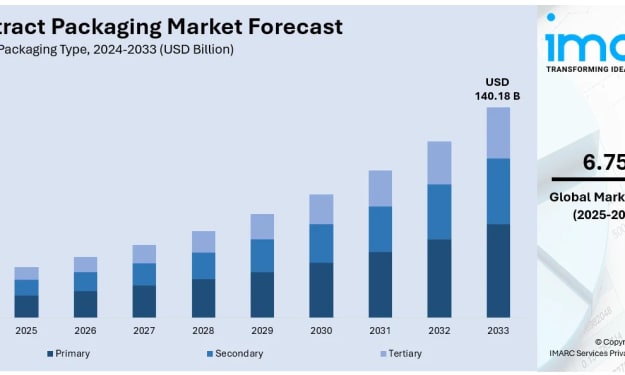
Businesses are increasingly outsourcing packaging to focus on core strengths while tapping into specialized expertise and cutting-edge technology. The rise of e-commerce, demand for sustainable solutions, and growing need for customization are reshaping how products get to market. According to IMARC Group's latest data, the global contract packaging market size was valued at USD 72.98 Billion in 2024. Looking forward, IMARC Group estimates the market to reach USD 140.18 Billion by 2033, exhibiting a CAGR of 6.75% from 2025-2033.
By Andrew Sullivan3 days ago in Futurism
Parking Management Market Outlook: Smart City Development and Mobility Growth Opportunities
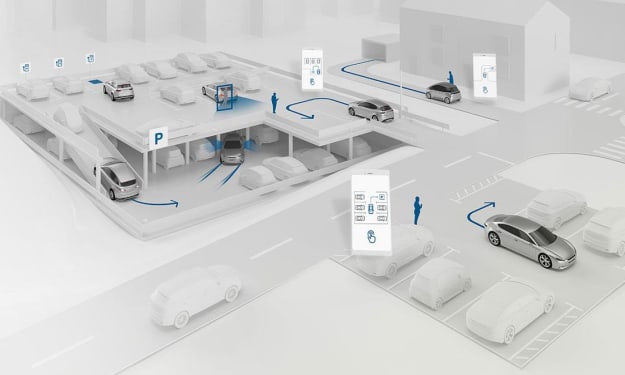
According to IMARC Group's latest research publication, The global parking management market size reached USD 5.1 Billion in 2024. Looking forward, IMARC Group expects the market to reach USD 10.1 Billion by 2033, exhibiting a growth rate (CAGR) of 7.67% during 2025-2033.
By James Whitmanabout 19 hours ago in Futurism


Comments
There are no comments for this story
Be the first to respond and start the conversation.