
Lubricant Additives Market Outlook: Engine Performance Enhancement and Growth Opportunities
The lubricant additives market is witnessing steady growth, driven by rising demand for high-performance lubricants across automotive, industrial, marine, and aerospace sectors.

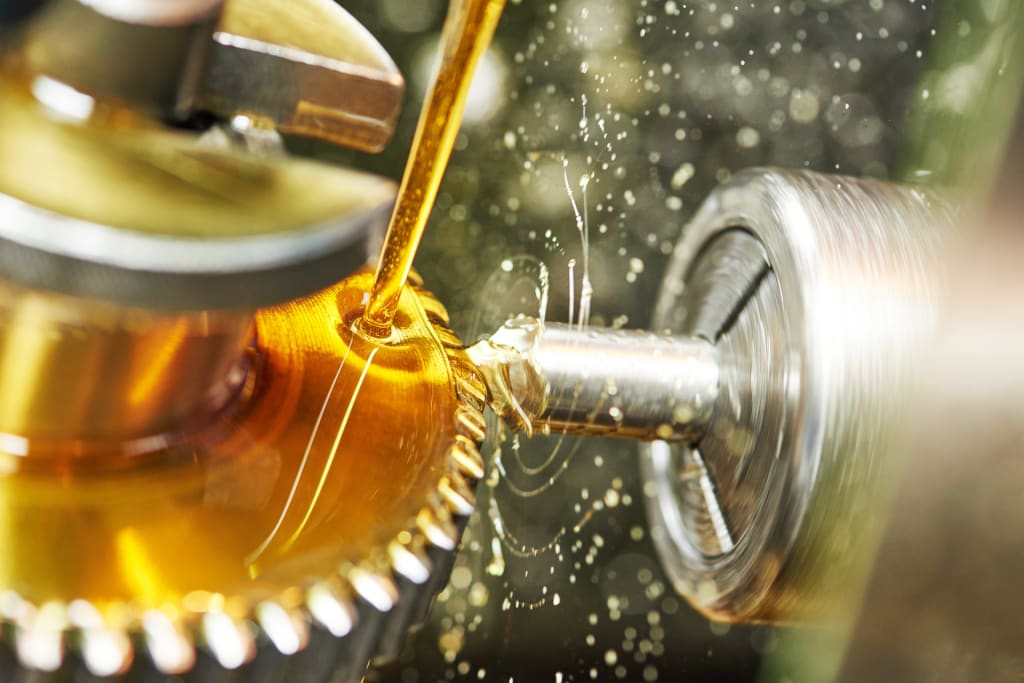
According to IMARC Group's latest research, The global lubricant additives market size reached USD 17.8 Billion in 2024. Looking forward, IMARC Group expects the market to reach USD 23.9 Billion by 2033, exhibiting a growth rate (CAGR) of 3.15% during 2025-2033.
How AI is Reshaping the Future of Lubricant Additives Market
- Accelerated Formulation Design and Product Development : Machine learning algorithms analyze molecular structures and performance data to optimize additive formulations. Companies using AI-driven predictive analytics reduce trial-and-error testing by up to 50%, cutting development cycles from months to weeks while improving viscosity control and friction reduction properties.
- Predictive Maintenance and Real-Time Condition Monitoring : AI-powered sensors continuously track lubricant properties like viscosity, oxidation, and contamination levels. Volvo's Fluid Analysis platform uses artificial intelligence to identify metal wear patterns, reducing vehicle downtime by 15% through precise prediction of lubricant reapplication needs based on historical performance trends.
- Smart Lubrication Systems and Automated Delivery Optimization : Neural networks enable self-learning lubrication systems that adjust delivery based on real-time operational conditions including load, speed, and temperature. SKF's intelligent bearing systems use AI to optimize grease application frequency, preventing over-lubrication waste while extending equipment lifespan through precision-timed interventions.

Lubricant Additives Industry Overview
The lubricant additives sector is transforming through digitalization and smart lubrication technologies that integrate IoT sensors with predictive analytics for real-time performance monitoring. Companies are implementing AI-driven systems to detect wear, contamination, and degradation instantly, enabling extended drain intervals while maintaining consistent performance. Major players like Shell, ExxonMobil, and Lubrizol are deploying digital platforms that bridge laboratory discovery with field reliability, allowing manufacturers to design additives complementing these intelligent monitoring systems while meeting stringent emission standards.
Rising Automotive Production and Industrial Machinery Demand
Global vehicle manufacturing continues expanding across developed and emerging economies, with India's FY25 total production reaching 31 million units covering passenger vehicles, commercial vehicles, and two-wheelers. Industrial equipment in construction, mining, and agriculture sectors requires high-performance additives to operate under extreme conditions. Manufacturing facilities and power generation plants depend on sophisticated additive formulations for turbines, compressors, and hydraulic systems, driving consistent demand as urbanization and infrastructure development accelerate worldwide, creating sustained requirements for lubricants with advanced additive packages.
Stringent Environmental Regulations and Emission Standards
Regulatory frameworks are accelerating adoption of advanced additive technologies, with ILSAC GF-7 standards introduced in March 2025 compelling suppliers to mitigate low-speed pre-ignition while meeting tighter phosphorus and sulfur limits. European ACEA 2023 C7 categories target SAE 0W-16 oils requiring friction modifiers delivering 0.3% fuel-economy improvements. India proposed penalties in 2025 for automakers failing to meet fuel efficiency targets under the Energy Conservation Amendment Act 2022. Manufacturers are developing low-SAPS and ashless dispersant formulations, with companies like Lubrizol launching CV9660 technology for heavy-duty applications meeting multiple viscosity profiles.
Electric Vehicle Growth and Specialized Lubrication Requirements
Global battery electric vehicle stock surpassed 40 million units in 2025, creating demand for specialized e-motor cooling fluids and e-axle reduction gear lubricants with precise dielectric and thermal-conductivity specifications. Afton Chemical partnered with automotive manufacturers in August 2025 to develop next-generation additives tailored for electric drivetrains. While EVs displace approximately 1.5 billion liters of engine oil annually, synthetic ester-based fluids blended with copper-friendly additive systems offer higher profit margins. Europe and China lead this transition as early adopters of specialized e-fluids, while North America's hybrid-heavy trajectory moderates traditional demand erosion.
Leading Companies Operating in the Global Lubricant Additives Industry
- Chevron Corp.
- Afton Chemical Corporation
- The Lubrizol Corporation
- Infineum International Limited
- BASF SE
- BRB International BV
- Wuxi South Petroleum Additive Co.
- Croda Lubricants
- DOG Chemie
- Dorf Ketal
- Dover Chemical
- Eni SpA.
- Evonik Industries AG
- Jinzhou Kangtai Lubricant Additives Co. Ltd
- King Industries Inc.
Lubricant Additives Market Report Segmentation
By Type:
- Dispersants
- Viscosity Index Improvers
- Detergents
- Antiwear and Antioxidants
- Corrosion Inhibitors
- Friction Modifiers
- Emulsifiers
Dispersants account for the majority of the market share as they maintain lubricant stability by preventing contaminant aggregation and keeping solid particles suspended, particularly crucial in high-temperature environments.
By End-Use:
- Automotive Lubricant
- Metalworking Fluid
- Industrial Engine Oil
- Process Oil
- Grease
Automotive lubricant holds the largest share in the industry, with additives designed specifically for reducing friction, cooling engines, and ensuring smooth vehicle operation while meeting fuel efficiency and emissions requirements.
By Distribution Channel:
- Retail
- Institutional
Retail represents the leading market segment, serving individual vehicle owners and DIY enthusiasts through auto parts stores, hardware outlets, and online retailers offering convenience and accessibility.
Regional Insights:
- Asia Pacific
- Europe
- North America
- Latin America
- Middle East and Africa
Asia Pacific leads the market, accounting for the largest share due to rapid industrialization, burgeoning automotive sector, and growing emphasis on infrastructure development in countries like China and India.
Recent News and Developments in Lubricant Additives Market
- July 2025: Lubrizol announced advanced lubricant technology significantly contributed to the launch of a new hybrid-specific engine oil developed by Jiangsu Lopal Tech Co., Ltd., a top independent lubricant brand in China, demonstrating continued innovation in hybrid vehicle lubrication solutions.
- June 2025: Lubrizol launched MF9145V, a diesel additive designed to reduce diesel particulate matter and optimize fuel combustion, addressing stringent emission requirements while maintaining engine performance across heavy-duty applications.
- May 2025: Lubrizol appointed IMCD Group as its channel partner for lubricant and additive distribution in Vietnam, enabling faster local delivery of specialty packages and strengthening its presence in Southeast Asian markets.
- May 2025: Clariant announced it will present its newest developments in synthetic metalworking fluids at Inter Lubric 2025, showcasing its extensive range of lubricant solutions tailored to the evolving demands of contemporary industrial applications.
- March 2025: BASF revealed plans to expand its manufacturing plant in Puebla, Mexico, to increase production capacity of aminic antioxidants utilized in lubricants, underscoring commitment to aiding the lubricant sector with reliable supply of crucial additives.
- January 2025: Americhem introduced the EcoLube™ MD series of PFAS-free internally lubricated compounds aimed at medical devices and healthcare uses, providing sustainable alternatives that ensure regulatory adherence while reducing environmental impact.
Note: If you require specific details, data, or insights that are not currently included in the scope of this report, we are happy to accommodate your request. As part of our customization service, we will gather and provide the additional information you need, tailored to your specific requirements. Please let us know your exact needs, and we will ensure the report is updated accordingly to meet your expectations.
About the Creator
Michael Richard
Michael Richard is a Market Research Expert specializing in market intelligence, competitive analysis, and data-driven insights. He helps organizations understand trends and emerging opportunities through in-depth research.
Keep reading
More stories from Michael Richard and writers in Futurism and other communities.
Fog Computing Market Outlook: Edge Intelligence Expansion and Growth Opportunities
According to IMARC Group's latest research publication, The global fog computing market size is anticipated to reach USD 243.61 Million in 2025. Looking forward, IMARC Group estimates the market to reach USD 572.08 Million by 2033, exhibiting a CAGR of 10.70% during 2025-2033.
By Michael Richardabout 8 hours ago in Futurism
Stainless Steel Market Trends: Green Steel Innovation, Demand Surge & Industry Outlook to 2034
Growing demand from construction, automotive, and industrial sectors is fueling stainless steel adoption worldwide, driven by urbanization, infrastructure expansion, and technological innovation in manufacturing processes. According to IMARC Group's latest data, the global stainless steel market size was valued at USD 163.72 Billion in 2024. Looking forward, IMARC Group estimates the market to reach USD 261.54 Billion by 2033, exhibiting a CAGR of 5.08% during 2025-2033.
By Andrew Sullivan5 days ago in Futurism
Valentine's Dates Over the Years
Colin grinned as Brooklyn slipped into the living room. “Is it all set?” he asked. The twenty-one year old grinned. She was in her last year of college and Colin knew that Lincoln was proud of her. Although she had been away at college, she’d eagerly helped Colin plan his surprise for Lincoln. “I’m so glad you’re finally doing this,” she said.
By Reb Kreyling6 days ago in Chapters


Comments
There are no comments for this story
Be the first to respond and start the conversation.