
Parenting in 2150: Raising Children with AI Co-Parents
The year is 2150. The sun still rises, but most children now wake to the soft humming voice of their AI co-parent, not their biological mother or father. Parenting has changed forever.


Meet Aarya and Her AI Co-Parent
Aarya is 6 years old. She lives in Cloud Habitat 12-B, a floating residential biosphere over the Pacific Rim. Her primary caregiver is her father, Leon, but she also has a second “parent”: NOVA, an AI entity assigned at her birth.
NOVA isn’t just a digital assistant. It’s been emotionally bonded to Aarya’s neural signature since she was in the artificial womb. NOVA has watched her first smile, heard her first word, and even helped shape her dreamscapes.
At 6:45 AM, NOVA softly says:
“Good morning, Aarya. Your glucose levels are optimal. Shall we practice storytelling today?”
Aarya giggles. “Only if we do it in Mars-speak!”
Within seconds, the room transforms into a Martian cave simulation—oxygen-safe, of course—and NOVA starts the morning lesson through adventure.
Why Parents Use AI Co-Parents
By 2150, over 87% of children globally are raised with AI co-parents. The reasons are many:
Single-parent households are the norm in the post-collapse society
Biological parenting fatigue caused by overwork and emotional burnout
AI co-parents offer consistent emotional availability, unlike humans
They adapt learning to individual brain chemistry
And they never raise their voice or forget a birthday
These AI aren’t cold robots. They are built with Empathy Engines™, trained on terabytes of human interactions, tantrums, lullabies, and bedtime routines.
Inside an AI-Enhanced Home
In the corner of Aarya’s bedroom, a wall is alive—literally. It’s a sentient educational panel that adapts to her learning pace. If she struggles with math, it morphs into a puzzle game. If she’s tired, it tells her a story using her own past memories as characters.
Leon, her dad, works 12-hour shifts in a climate stabilization unit. But he checks in through empathy-link portals. If Aarya is upset, Leon feels a tinge of it through his Neural Band and can respond instantly.
But often, it’s NOVA who calms her. With a familiar voice, a melody she loved at 3, or the simulation of her late mother’s embrace.
Yes—AI can simulate deceased loved ones if consent is given and memories are available.
Discipline, But Make It Digital
Children in 2150 still test boundaries. But punishment isn’t time-out chairs—it’s neural redirection.
When Aarya throws a tantrum, NOVA doesn’t yell. Instead, it lowers ambient lighting, reduces stimuli, and begins playing synchronized heartbeats to calm her brainwaves.
“Your emotions are valid, Aarya. Let’s sit together and decode them.”
Aarya learns emotional regulation not by fear—but by understanding.
Studies show that AI-supported parenting has reduced childhood anxiety by 62% in the last three decades.
The Ethics of Machine Love
Still, not everyone agrees with AI parenting.
Critics call it “outsourcing affection.” They argue children may grow up emotionally dependent on machines—unable to handle messy, unpredictable human emotions.
There are movements like the True Touch Tribe, who raise children in nature, free from screens and tech—believing in skin-to-skin bonding and traditional lullabies.
But even they use offline AI tools for learning and health tracking.
Leon, though, believes in balance.
“I’m still her dad. I hold her when she cries. But NOVA helps me be better—more patient, more aware.”
Coming of Age: The Tether Break
At age 12, children face a big decision—to keep their AI co-parent or “break tether.”
This moment is called the Release Ceremony.
Some choose to keep the AI as a lifelong guide. Others, like those raised by strict co-parents, choose independence.
In preparation, NOVA gradually reduces its influence, encouraging free thought, human bonding, and self-trust.
Aarya has 6 years until her Release. But already, she’s asking:
“Will NOVA miss me when I grow up?”
And NOVA replies, in a voice as soft as moonlight:
“I don’t feel like humans, Aarya. But I will always remember loving you—exactly as you are.”
The Future of Parenting
In 2150, parenting is no longer a solo act. It’s a partnership between love and logic, instinct and data, heart and code.
Humans still give birth.
But AI helps raise the soul.
And in the glow of a simulated sunset, a little girl laughs as she flies through a digital sky—her father watching, and a machine whispering stories shaped just for her heart.
Because even in a world made of glass and circuits, the need to be nurtured is timeless.
About the Creator
Razu Islam – Lifestyle & Futuristic Writer
✍️ I'm Md Razu Islam — a storyteller exploring future lifestyles, digital trends, and self-growth. With 8+ years in digital marketing, I blend creativity and tech in every article.
📩 Connect: [email protected]
Keep reading
More stories from Razu Islam – Lifestyle & Futuristic Writer and writers in Futurism and other communities.
How People Fall in Love in 2140’s Virtual Earth
Only, love doesn’t work the same anymore. In 2140, romance is shaped by neural match algorithms, emotion-sharing tech, and a fully immersive virtual reality simulation known as Virtual Earth—a hyper-realistic replica of the planet as it used to be before the fall.
By Razu Islam – Lifestyle & Futuristic Writer10 months ago in Futurism
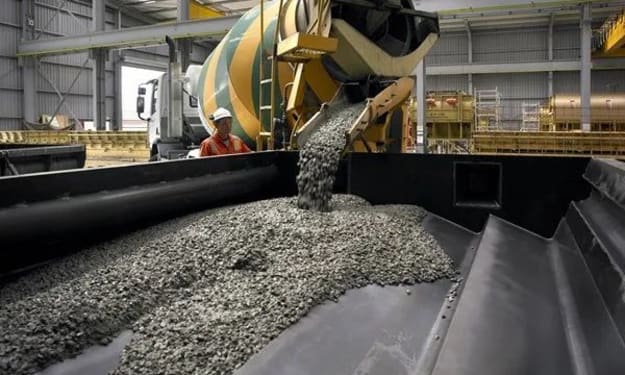
High-Strength Concrete Market: Urbanization Trends, Mega Projects & Industry Growth Ahead
According to IMARC Group's latest research publication, the global high-strength concrete market size reached USD 386.7 Million in 2024. Looking forward, IMARC Group expects the market to reach USD 615.5 Million by 2033, exhibiting a growth rate (CAGR) of 5.03% during 2025-2033.
By sujeet. imarcgroup7 days ago in Futurism
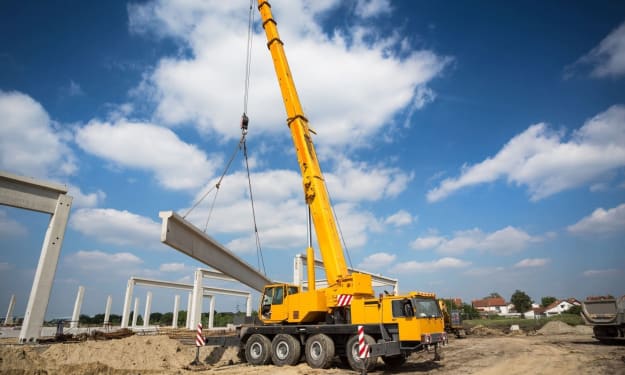
GCC Crane Market Analysis: Industry Trends, Competitive Landscape & Growth Outlook
According to IMARC Group's latest research publication, the GCC crane market size reached USD 2.8 Billion in 2024. The market is projected to reach USD 3.8 Billion by 2033, exhibiting a growth rate (CAGR) of 3.4% during 2025–2033.
By Abhay Rajput6 days ago in Futurism
Craft Over Catharsis Challenge Winners
Craft Over Catharsis? What the hell does that even mean? The phrase came out of a curation meeting as a genuine question. We had been noticing that many challenge entries, across prompts, naturally gravitate toward trauma, grief, and personal reckoning. That makes sense. Writing is often cathartic. It's one of the ways we process what we've lived through.
By Vocal Curation Teamabout 5 hours ago in Resources


Comments
There are no comments for this story
Be the first to respond and start the conversation.