
Possible New Exoplanet May Be Colder Than Mars
Early observations suggest a distant world with surface temperatures lower than those found on the coldest regions of the Red Planet.

A Discovery That Expands the Range of Known Worlds
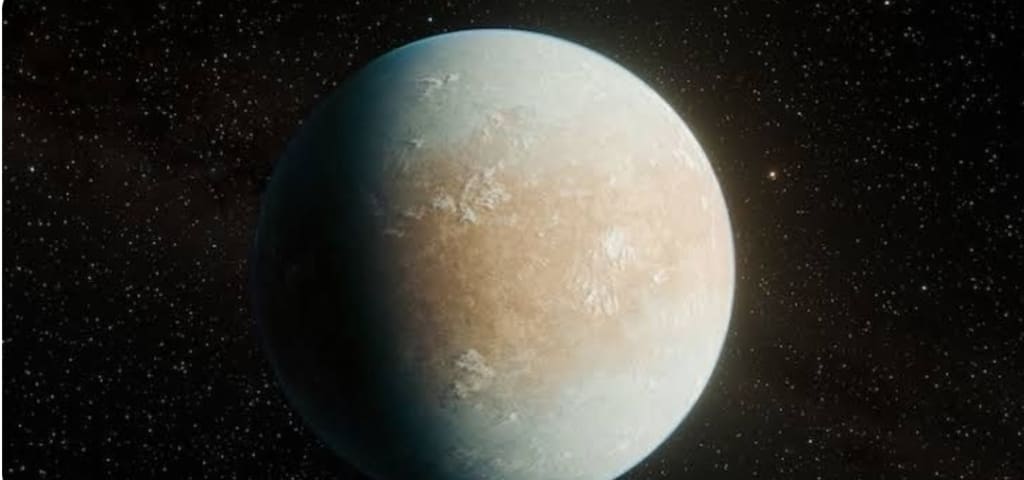
Astronomers have identified a possible new exoplanet that could be colder than Mars, adding another example of the wide range of planetary environments beyond our solar system. While the planet has not yet been confirmed, early data suggests it orbits far from its host star and receives very little heat.
This potential discovery highlights how much remains unknown about planetary systems. While much attention often focuses on planets that might support life, cold and distant worlds offer important insight into how planets form and survive under extreme conditions.
What Makes This Planet So Cold
The candidate exoplanet appears to orbit its star at a much greater distance than Earth or Mars orbit the Sun. Because of this separation, the amount of energy reaching the planet is very limited.
Mars already has an average surface temperature far below freezing, largely due to its thin atmosphere and distance from the Sun. Models indicate the newly identified planet could experience even lower average temperatures, depending on its surface properties and atmospheric makeup.
How Scientists Detect Distant Planets
Most exoplanets are detected using indirect methods. In this case, astronomers observed small changes in the motion or brightness of a distant star. These changes can indicate the presence of an orbiting planet whose gravity affects the star.
Since the planet has not been directly imaged, it remains classified as a candidate. Continued observations will be required to confirm its existence and determine its physical characteristics with greater accuracy.
Why Mars Is Used as a Comparison
Mars provides a familiar reference point when discussing cold planetary environments. With average temperatures around minus 80 degrees Fahrenheit, Mars is one of the coldest solid-surface planets in the solar system.
By comparing the candidate exoplanet to Mars, scientists can better explain the scale of the conditions involved. If confirmed, a planet colder than Mars would likely lack liquid water on its surface under present conditions.
Possible Planetary Composition
Based on available data, researchers believe the planet could be rocky or ice-rich. Its mass and size estimates suggest it may be similar to Earth or larger, though uncertainties remain high.
Cold planets often contain large amounts of ice or frozen gases. Without direct measurements, scientists cannot yet determine whether the planet has a solid surface, thick ice layers, or a mix of both.
The Role of Atmospheres in Extreme Cold
A planet’s atmosphere has a strong influence on its temperature. Thick atmospheres can trap heat, while thin or absent atmospheres allow heat to escape quickly.
At this stage, scientists do not know whether the candidate planet has an atmosphere. If it does, even a modest greenhouse effect could raise surface temperatures slightly. Without one, conditions would likely be extremely cold and stable.
Challenges in Observing Cold Exoplanets
Cold exoplanets are difficult to detect because they emit little heat and reflect minimal light. Instruments are often more sensitive to planets that orbit close to their stars.
As a result, many cold worlds may go unnoticed. Advances in telescope sensitivity and data analysis are helping researchers identify these distant objects more effectively.
Why Cold Planets Are Scientifically Important
Even though cold exoplanets are unlikely to support life, they play an important role in planetary science. They help scientists understand how planets form across a wide range of environments.
Studying cold worlds also improves knowledge of the outer regions of planetary systems, which are often less studied than inner regions where warmer planets are found.
Comparing Exoplanets to Solar System Objects
Astronomers often use objects in the solar system as models. Mars, Pluto, and icy moons such as Europa provide examples of cold environments that can be studied directly.
These comparisons allow scientists to test theories about planetary climate and structure. Observations of distant exoplanets are interpreted through the lens of this existing knowledge.
Technology Used in the Discovery
The candidate planet was detected using advanced telescopes and long-term monitoring. Precise measurements of starlight variations allowed astronomers to identify a possible planetary influence.
Future space missions may provide improved tools for studying such distant and faint objects. These missions could help confirm the planet and determine whether it has an atmosphere.
Next Steps in Research
Researchers plan to continue observing the star system to confirm the planet’s presence. Repeated measurements can help rule out alternative explanations such as stellar activity.
If confirmed, the planet may become a target for follow-up studies using next-generation observatories capable of measuring temperature and composition more directly.
Implications for Planet Formation Models
The possible existence of a planet colder than Mars supports theories that planets can form and remain stable far from their stars. This challenges earlier models that focused mainly on planets forming closer to stars.
Understanding how such planets develop may help explain the full range of planetary systems in the galaxy.
Public Interest and Scientific Communication
Cold exoplanets often receive less attention than potentially habitable ones, but they are still important to understanding the universe. Public interest in these discoveries helps support ongoing research and exploration.
Clear communication ensures that findings are understood in context and not overstated.
Limits of Current Understanding
Scientists stress that current conclusions are based on limited data. Temperature estimates rely on models that may change as new observations become available.
Until the planet is confirmed and studied further, its true nature will remain uncertain.
Conclusion
The possible discovery of an exoplanet colder than Mars adds to the growing diversity of known planetary environments. While confirmation is still needed, early findings suggest a world shaped by extreme cold and minimal stellar energy.
Such discoveries broaden understanding of planetary systems and remind researchers that the universe contains many types of worlds, far beyond those similar to Earth.
---
About the Creator
Saad
I’m Saad. I’m a passionate writer who loves exploring trending news topics, sharing insights, and keeping readers updated on what’s happening around the world.
The Clockmaker’s Apprentice
In the heart of the old city, between narrow streets and bustling marketplaces, there was a small shop where time seemed to move differently. The sign read Marcellus & Sons: Clockmakers, but to most passersby, it appeared to be little more than a curiosity. Intricate gears spun behind glass, pendulums swung with mesmerizing rhythm, and the faint ticking of countless clocks created a symphony of precision and patience.
By Sudais Zakwan3 days ago in Futurism
UAE Health and Fitness Club Market Trends: Growth Drivers and Key Factors
According to IMARC Group's latest research publication, UAE health and fitness club market size reached USD 484.4 Million in 2024. The market is projected to reach USD 742.9 Million by 2033, exhibiting a growth rate of 4.37% during 2025-2033.
By Abhay Rajputa day ago in Futurism




Comments
There are no comments for this story
Be the first to respond and start the conversation.