
Pouches Market Outlook: Flexible Packaging Demand and Sustainable Growth Opportunities
The pouches market is experiencing strong growth, driven by rising demand for lightweight, convenient, and cost-effective packaging solutions across food & beverage, personal care, and pharmaceutical industries.

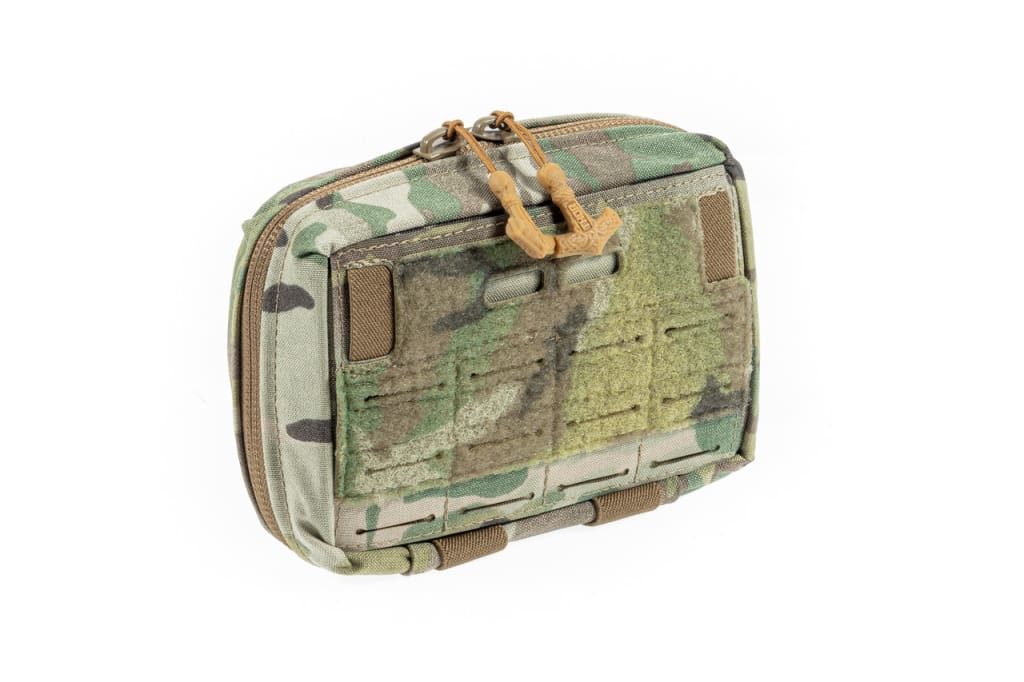
According to IMARC Group's latest research publication, The global pouches market size reached USD 54.7 Billion in 2024. Looking forward, IMARC Group expects the market to reach USD 83.2 Billion by 2033, exhibiting a growth rate (CAGR) of 4.53% during 2025-2033.
How AI is Reshaping the Future of Pouches Market
- Smart Quality Control Systems: AI-powered vision systems detect packaging defects, seal integrity issues, and contamination during production. These automated inspection systems analyze pouch materials at high speeds, identifying variations in color, thickness, and printing quality that human inspectors might miss.
- Demand Prediction and Supply Chain Optimization: Machine learning analyzes consumer buying patterns, seasonal demand fluctuations, and retail inventory data to optimize production schedules. AI forecasting helps manufacturers reduce excess inventory, minimize waste, and ensure timely delivery to meet market demands efficiently.
- Intelligent Material Selection and Design: AI algorithms evaluate material combinations to enhance barrier properties, reduce environmental impact, and improve recyclability. These systems test thousands of configurations virtually, accelerating development of pouches that meet both performance standards and sustainability goals while optimizing costs.

Pouches Industry Overview:
The pouches market is experiencing robust growth driven by e-commerce expansion and regulatory shifts toward sustainable packaging. Online retail, which reached over $1 trillion in U.S. sales alone, demands lightweight, durable packaging that reduces shipping costs and environmental impact. Pouches address these needs while offering brands space-efficient solutions for warehousing and distribution. Seven U.S. states have now enacted Extended Producer Responsibility legislation for packaging, requiring companies to fund recycling programs and meet specific sustainability standards. California's SB 54 mandates all single-use packaging be recyclable or compostable by 2032 with a 25% plastic reduction target, while Colorado, Oregon, Minnesota, Maryland, Maine, and Washington have implemented similar programs with compliance deadlines between 2025-2026. These regulations are accelerating industry-wide adoption of recyclable mono-material pouches and paper-based alternatives, fundamentally reshaping product development priorities across food and beverage, personal care, and pharmaceutical sectors.
Pouches Market Trends & Drivers
The surge in sustainable packaging regulations is fundamentally transforming pouch manufacturing and material selection. California's SB 54, effective for producers who submitted baseline 2023 data in November 2025, requires all single-use packaging to be recyclable or compostable by 2032 while achieving a 25% reduction in plastic packaging. Oregon collected its first round of EPR fees in July 2025, establishing a uniform statewide recycling list and eco-modulation fee structures that incentivize better packaging design. Colorado producers began reporting packaging volumes in August 2025, with fees due by January 2026. In February 2024, Amcor partnered with Stonyfield Organic to launch the first all-polyethylene spouted pouch, designed for recyclability while maintaining barrier properties. In October 2024, Accredo Packaging introduced the market's first 100% biobased resin pouch with zipper closure, derived from renewable materials. These regulatory frameworks and material innovations are driving manufacturers to prioritize mono-material structures, paper-based alternatives, and recyclable designs.
E-commerce growth and evolving retail dynamics are creating unprecedented demand for flexible packaging formats. U.S. flexible packaging represented approximately $41.5 billion in market value, with pouches showing particularly strong growth due to their efficiency advantages. Stand-up pouches occupied 46% of flexible beverage packaging applications, driven by their self-supporting design, resealability features, and superior shelf visibility. In November 2025, Amcor announced significant North American capacity expansion for its protein packaging operations, installing state-of-the-art equipment through the first half of 2026 to support growing demand. The company's AmPrima line demonstrates the economic benefits, with one dairy application achieving an 82% lighter-weight package compared to paperboard alternatives, dramatically reducing material usage and shipping costs. In July 2024, Mondi introduced its FlexiBag Reinforced mono-PE recyclable bag line for pet food and similar applications across Europe. Online shopping platforms favor pouches because their compact dimensions reduce dimensional weight charges, lower carbon emissions during transport, and provide tamper-evident seals that ensure product integrity upon delivery.
Consumer preference for convenience and premium product experiences is accelerating pouch adoption across multiple industries. The personal care and cosmetics segment is projected to grow at 6.11% as beauty brands embrace flexible packaging for refill concepts, travel-friendly formats, and premium presentations. In May 2024, Amcor and AVON launched the AmPrima Plus refill pouch in China, which reduces carbon emissions by 83%, water usage by 88%, and renewable energy consumption by 79% compared to legacy containers. In March 2025, Amcor introduced the AmFiber Performance Paper stand-up pouch tailored for dry beverage items and instant coffee, expanding its recyclable paper-based packaging range. In February 2025, Mondi partnered with Proquimia to launch paper-based stand-up pouches for dishwashing tabs in Spain and Portugal, with internal assessments showing significantly lower CO2 emissions from cradle to gate compared to previous plastic packaging. Zipper closures captured 28.75% of the market, offering simple resealability for snacks and dry goods, while spout-and-cap systems are expanding at 5.86% annually, driven by liquid products ranging from household cleaner refills to beverages.
Leading Companies Operating in the Global Pouches Industry:
- Amcor plc
- Constantia Flexibles
- Coveris
- Goglio SpA
- Guala Pack S.p.a.
- Huhtamäki Oyj
- Korozo
- Mondi Plc
- Proampac
- Sealed Air
- Smurfit Kappa Group Plc
- Sonoco Products Company
- Wipf Holding AG
Pouches Market Report Segmentation:
By Material:
- Plastic
- Metal
- Paper
- Bioplastics
Plastic dominates the market due to its versatility, barrier properties, and cost-effectiveness across diverse applications.
By Treatment Type:
- Standard
- Aseptic
- Retort
- Hot-fill
Standard treatment represents the largest segment, as it serves the widest range of non-perishable products with straightforward sealing requirements.
By Product:
- Flat
- Stand-up
Flat pouches hold the largest market share due to their space efficiency, simplicity, and suitability for single-serving and thin product formats.
By Closure Type:
- Tear Notch
- Zipper
- Spout
Spout closures account for the largest segment, driven by growing demand for liquid packaging and controlled dispensing applications.
By End Use:
- Food and Beverages
- Healthcare
- Personal Care and Cosmetics
- Homecare
- Others
Food and beverages dominate the market owing to widespread adoption across snacks, condiments, ready-to-eat meals, and beverage categories.
Regional Insights:
- North America (United States, Canada)
- Asia Pacific (China, Japan, India, South Korea, Australia, Indonesia, Others)
- Europe (Germany, France, United Kingdom, Italy, Spain, Russia, Others)
- Latin America (Brazil, Mexico, Others)
- Middle East and Africa
Asia Pacific exhibits clear dominance in the pouches market due to expanding packaged goods consumption, growing e-commerce penetration, and robust manufacturing infrastructure.
Recent News and Developments in Pouches Market
- March 2025: Amcor launched the AmFiber Performance Paper stand-up pouch, a refill pack designed for dry beverage items and instant coffee. This innovation expands Amcor's recyclable paper-based packaging portfolio, offering brands a sustainable alternative for dry goods packaging with improved environmental performance.
- February 2025: Mondi partnered with Proquimia to introduce paper-based stand-up pouches for dishwashing tabs in Spain and Portugal. Internal assessments indicate the new packaging delivers significantly lower CO2 emissions from cradle to gate compared to the previous plastic packaging solution.
- November 2025: Amcor announced a significant expansion of printing, lamination, and converting capabilities at existing North American facilities to support the protein market. The installation of state-of-the-art equipment will increase production capacity through the first half of 2026.
- October 2024: Accredo Packaging unveiled the industry's first 100% biobased resin pouch with a zipper closure. This sustainable packaging solution, developed for food and consumer products industries, represents a significant advancement in renewable material applications for flexible packaging.
- February 2024: Amcor and Stonyfield Organic collaborated to create the first spouted pouch made entirely of polyethylene (PE). The new packaging design replaced the prior multilayered structure, offering improved recyclability while maintaining necessary barrier properties for chilled yogurt products.
Note: If you require specific details, data, or insights that are not currently included in the scope of this report, we are happy to accommodate your request. As part of our customization service, we will gather and provide the additional information you need, tailored to your specific requirements. Please let us know your exact needs, and we will ensure the report is updated accordingly to meet your expectations.
About the Creator
James Whitman
With years of experience in analyzing global industries, I specialize in delivering actionable market insights that help businesses stay ahead in an ever-changing landscape.
Keep reading
More stories from James Whitman and writers in Futurism and other communities.
Geriatric Care Services Market Outlook: Aging Population Demand and Growth Opportunities
According to IMARC Group's latest research publication, the global geriatric care services market size reached USD 1,239.8 Billion in 2024. Looking forward, IMARC Group expects the market to reach USD 2,200.3 Billion by 2033, exhibiting a growth rate (CAGR) of 6.25% during 2025-2033.
By James Whitman6 days ago in Futurism
Oyster Market: Foodservice Industry Demand, Fine Dining Expansion & Industry Growth
According to IMARC Group's latest research publication, global oyster market size reached 7.47 Million Tons in 2024. Looking forward, IMARC Group expects the market to reach 8.86 Million Tons by 2033, exhibiting a growth rate (CAGR) of 1.90% during 2025-2033.
By sujeet. imarcgroup3 days ago in Futurism
Electric Vehicle Market Analysis: Fast-Charging Networks, Consumer Demand & Industry Outlook to 2033
Tightening emission regulations, breakthroughs in battery technology, and a clear shift in consumer preferences are all converging to make electric vehicles one of the fastest-growing segments in the global automotive industry. According to IMARC Group's latest data, the global electric vehicle market size was valued at USD 755 Billion in 2024. Looking forward, IMARC Group estimates the market to reach USD 4,360 Billion by 2033, exhibiting a CAGR of 21.5% from 2025–2033.
By Andrew Sullivanabout 23 hours ago in Futurism



Comments
There are no comments for this story
Be the first to respond and start the conversation.