
Qatar Carbon Capture and Storage Market: Decarbonization Strategies, Energy Transition & Growth Outlook
How decarbonization targets, LNG expansion projects, and industrial emission regulations are accelerating investment and infrastructure development in the Qatar carbon capture and storage market

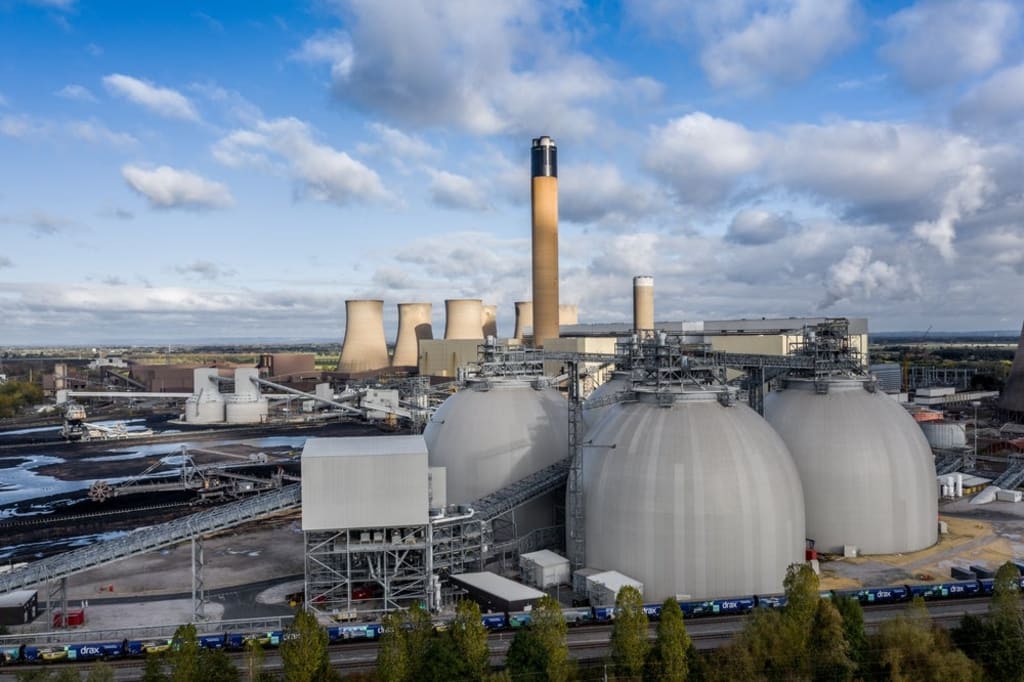
According to IMARC Group's latest research publication, Qatar carbon capture and storage market size reached USD 6.51 Million in 2025. The market is projected to reach USD 12.69 Million by 2034, growing at a CAGR of 7.69% during 2026-2034.
How AI is Reshaping the Future of Qatar Carbon Capture and Storage Market
- QatarEnergy partners with tech leaders like C3 AI and Shell to deploy enterprise AI platforms that optimize CO₂ injection rates, monitor storage sites in real time, and ensure long-term integrity of underground reservoirs, making large-scale CCS operations far more reliable and cost-effective.
- AI-driven reservoir analysis tools, developed through collaborations such as with QASR Technologies and Shell, help predict and manage CO₂ plume behavior underground, boosting confidence in storing millions of tons annually while minimizing risks in Qatar's key geological formations.
- Machine learning algorithms now enhance predictive maintenance and process efficiency in CCS facilities tied to LNG production, cutting operational downtime and energy use, which supports QatarEnergy's push to capture and store over 11 million tons of CO₂ each year.
Qatar Carbon Capture and Storage Market Trends & Drivers:
Qatar's Carbon Capture and Storage market is experiencing rapid expansion driven by the integration of large-scale CCS facilities into major LNG production expansions, particularly around the North Field developments. This trend reflects a strategic focus on incorporating advanced capture and sequestration technologies directly into new and existing gas processing operations to significantly reduce emissions intensity. As Qatar positions itself as a supplier of lower-carbon liquefied natural gas to global markets, the emphasis on building some of the world's largest CCS installations underscores a commitment to sustainable hydrocarbon production. Collaborative efforts with international engineering firms further accelerate project timelines and technological deployment, fostering innovation in compression, transport, and permanent storage solutions tailored to the region's geology.
International climate commitments and mounting pressure to lower greenhouse gas emissions are compelling Qatar to prioritize CCS as a core element of its energy strategy. Global buyers increasingly demand responsibly sourced energy with minimized carbon footprints, pushing the adoption of sequestration to maintain competitiveness in export-oriented markets. This driver aligns with broader decarbonization goals, where CCS enables continued reliance on natural gas while addressing environmental concerns through proven mitigation techniques. Enhanced focus on reducing emissions across the LNG supply chain supports long-term market access and strengthens Qatar's role in the transition toward cleaner energy systems without abrupt shifts away from fossil fuels.
Technological advancements and substantial investments in CCS infrastructure are propelling market growth by improving efficiency and scalability of capture processes in high-emission industrial settings. Qatar leverages its abundant geological storage capacity in depleted reservoirs and saline formations to enable safe, long-term sequestration, making large-volume projects economically viable. Government-backed initiatives and partnerships with technology providers facilitate the rollout of integrated systems that capture CO₂ from gas processing and ammonia production, contributing to national sustainability objectives. This combination of innovation, resource availability, and policy support positions CCS as a transformative tool for balancing energy security with environmental responsibility in the region.
Qatar Carbon Capture and Storage Industry Segmentation:
The report has segmented the market into the following categories:
Analysis by Service:
- Capture
- Transportation
- Storage
Analysis by Technology:
- Post-combustion Capture
- Pre-combustion Capture
- Oxy-fuel Combustion Capture
Analysis by End Use Industry:
- Oil and Gas
- Coal and Biomass Power Plant
- Iron and Steel
- Chemical
- Others
Analysis by Region:
- Ad Dawhah
- Al Rayyan
- Al Wakrah
- Others
Competitive Landscape:
The competitive landscape of the industry has also been examined along with the profiles of the key players.
Recent News and Developments in Qatar Carbon Capture and Storage Market
- November 2025: QatarEnergy awards a major EPC contract to Samsung C&T Corporation for a landmark CCS project at Ras Laffan Industrial City, targeting capture and sequestration of up to 4.1 million tons of CO₂ per annum from existing LNG facilities, positioning it as one of the world's largest single-site CCS initiatives.
- February 2026: Worley secures a detailed engineering contract from Samsung C&T for the QatarEnergy LNG Carbon Dioxide Sequestration Project, supporting permanent storage of approximately 4.3 million metric tons of CO₂ per year and advancing execution with multi-office expertise from Qatar, India, and Australia.
- November 2025: QatarEnergy reaffirms integration of CCS across all North Field LNG expansions, including dedicated projects for North Field East (2.1 MTPA CO₂) and North Field South (1.2 MTPA CO₂), building on the existing 2.2 MTPA facility to drive large-scale deployment.
- February 2026: Progress accelerates on the Ras Laffan CCS facility with Worley's detailed engineering phase underway, enhancing compression, transport, and injection technologies for CO₂ from multiple LNG trains to achieve significant emissions reductions in Qatar's core energy operations.
- October 2025: QatarEnergy outlines expanded CCS ambitions, with ongoing projects set to contribute over 5.5 MTPA from North Field developments, reinforcing direct CO₂ capture from natural gas streams and underground saline aquifer storage as key innovations for lower-carbon LNG production.
Note: If you require specific details, data, or insights that are not currently included in the scope of this report, we are happy to accommodate your request. As part of our customization service, we will gather and provide the additional information you need, tailored to your specific requirements. Please let us know your exact needs, and we will ensure the report is updated accordingly to meet your expectations.
About the Creator
Fatimah
Market research writer at IMARC Group, turning data into engaging stories. Passionate about trends, insights & real-world impact. Join me on Vocal!
Unexpected Properties of Dark Matter Revealed in 2026
For decades, dark matter has remained one of the most persistent enigmas in modern astrophysics. Invisible to telescopes and undetectable through direct electromagnetic interaction, it nonetheless shapes the Universe on the largest scales. Galaxies rotate faster than their visible mass allows, galaxy clusters remain gravitationally bound, and the cosmic web itself depends on an unseen framework. Until recently, dark matter was largely treated as a silent, passive component—cold, inert, and interacting only through gravity. However, research published and analyzed in 2026 significantly challenged this simplified view.
By Holianyk Ihor7 days ago in Futurism
Saudi Arabia Construction Market: Mega Projects, Vision 2030 & Growth Outlook
According to IMARC Group's latest research publication, Saudi Arabia construction market size was valued at USD 101.4 Billion in 2025. The market is projected to reach USD 138.4 Billion by 2034, exhibiting a growth rate of 3.52% during 2026-2034.
By Faisal Al-Harbi5 days ago in Futurism


Comments
There are no comments for this story
Be the first to respond and start the conversation.