
Saudi Arabia Metal Fabrication Market: Infrastructure Projects & Growth Outlook
How real-time production data visibility, advanced predictive analytics, and enhanced operational resilience are transforming strategic decision-making across the Saudi Arabia Metal Fabrication Market

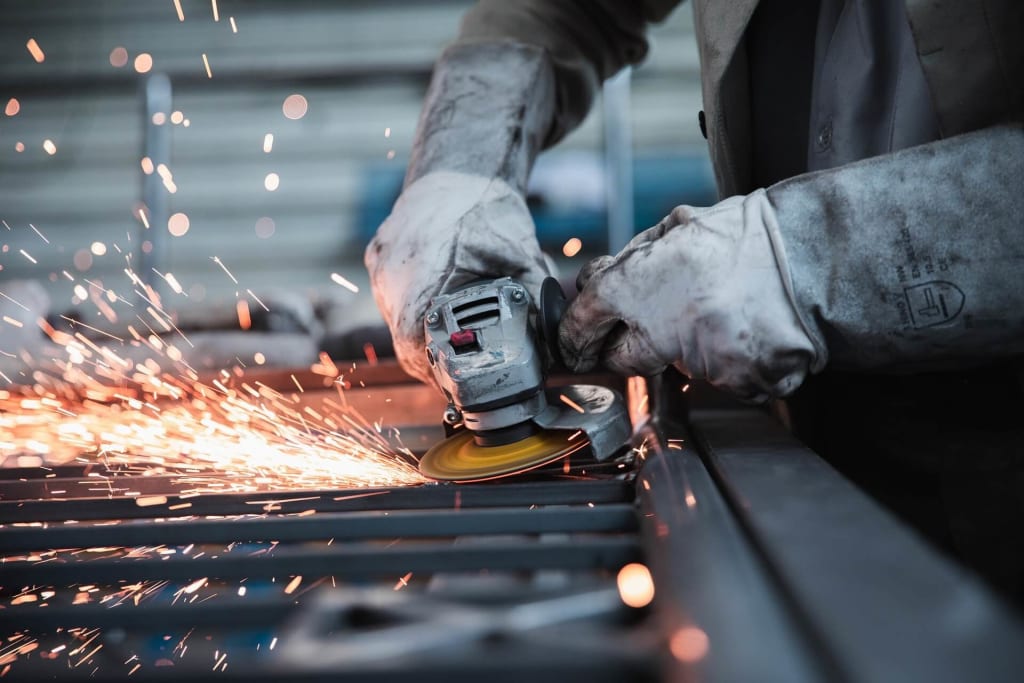
Saudi Arabia's metal fabrication industry is riding the wave of Vision 2030's ambitious economic transformation. With heavy investments pouring into industrial diversification, the Kingdom is positioning itself as a regional manufacturing powerhouse. From massive infrastructure builds like NEOM to expanding oil and gas operations and defense programs, fabricated metal components are becoming the backbone of industrial growth. According to IMARC Group's latest data, the Saudi Arabia metal fabrication market size reached USD 708.8 Million in 2025. Looking forward, IMARC Group expects the market to reach USD 983.3 Million by 2034, exhibiting a growth rate of 3.71% from 2026-2034.
Metal fabrication in Saudi Arabia covers a broad spectrum of capabilities. The market spans multiple material types including steel, aluminum, and specialty alloys, with service offerings ranging from casting and forging to machining, welding, and tubing. These fabricated products serve diverse end-use industries such as manufacturing, power and utilities, construction, oil and gas, and other industrial applications. Regionally, the Northern and Central Region, Western Region, Eastern Region, and Southern Region each play distinct roles in the Kingdom's fabrication ecosystem. What's driving this growth isn't just infrastructure—it's the deliberate push to build local manufacturing capacity, reduce import dependence, and create specialized industrial zones that can support everything from automotive assembly to heavy machinery production.
Saudi Arabia Metal Fabrication Market Growth Drivers:
- Vision 2030's Industrial Diversification Push
Vision 2030 has fundamentally reshaped Saudi Arabia's industrial landscape by steering investment away from oil dependency toward value-added manufacturing sectors. The National Industrial Development and Logistics Program actively channels capital into metal-intensive industries, creating sustained demand for structural frames, storage vessels, and machinery parts. The Public Investment Fund backs specialized economic zones like King Salman Energy Park and NEOM, which require extensive fabrication capabilities. Since the program launched, the number of industrial facilities jumped 60%, growing from 7,206 in 2016 to 11,549 by 2023. In 2023 alone, authorities issued 1,379 industrial licenses with investments exceeding $21.5 billion, and 165 of these licenses specifically targeted formed metal production, demonstrating the sector's central role in economic transformation.
- Infrastructure Mega-Projects Creating Long-Term Demand
The Kingdom's infrastructure expansion is generating massive, sustained requirements for fabricated metal products. Projects like the King Salman International Airport in Riyadh—set to become the world's largest airport spanning 57 square kilometers with six parallel runways—will increase passenger capacity from 29 million to 120 million by 2030 and further to 185 million by 2050. The Riyadh Metro, NEOM, Red Sea Development, and expanding port facilities all demand structural steel, mechanical systems, and support components. Saudi Arabia has earmarked over $500 billion for infrastructure investments, with approximately $200 billion dedicated to transportation and urban development alone. These aren't short-term projects—they represent decades of continuous fabrication work, from initial construction through ongoing maintenance and expansion phases.
- Expanding Local Manufacturing Base and Localization Policies
The manufacturing sector propelled industrial growth to 2.1% in 2024, driven by deliberate localization policies and financial incentives. The Saudi Authority for Industrial Cities and Technology Zones offers favorable lease rates, utility subsidies, and regulatory support to manufacturers within industrial cities. Priority sectors like automotive assembly, industrial equipment, renewable energy components, and heavy machinery depend heavily on customized fabricated metal inputs including brackets, panels, sub-assemblies, and enclosures. The Made in Saudi program promotes local products, while policies encourage using locally sourced materials in manufacturing projects. This gradual substitution of imported components with domestically produced fabricated parts is creating pan-GCC export opportunities for Saudi-based manufacturers, adding substantial volume and driving investments in automation and precision capabilities.
Saudi Arabia Metal Fabrication Market Trends:
- Foreign Direct Investment in Fabrication Infrastructure
International manufacturers are establishing local fabrication facilities to tap into Saudi Arabia's growing industrial market. Indian steel pipe manufacturer MAN Industries invested approximately $72 million to build a pipe manufacturing and coating plant in Dammam, adding 400,000 to 500,000 tonnes of production capacity. The facility focuses on LSAW and HSAW line pipes involving cutting and forming steel plates into cylindrical shapes—core metal fabrication processes. Recently, MAN Industries also signed a memorandum of understanding with Aramco Asia to explore establishing additional high-end steel pipe production capabilities. These foreign investments bring advanced technologies, improve local expertise through knowledge transfer, and strengthen Saudi Arabia's position as a regional fabrication hub serving markets across the Middle East and North Africa.
- Integration of Advanced Manufacturing Technologies
Saudi fabricators are adopting Industry 4.0 technologies to compete globally and meet demanding quality standards. CNC machining, laser cutting, robotic welding, and automated material handling are becoming standard in modern facilities. The National Industrial Strategy unveiled in 2022 aims to raise the non-oil industrial sector's contribution to GDP from $88.26 billion in 2020 to $377.06 billion by 2035, with significant emphasis on technological innovation. The NIDLP promotes robotics, AI, and IoT-enabled production equipment to boost efficiency and precision. Companies serving sectors like oil and gas, aerospace, and defense require tight tolerances and certifications that demand advanced capabilities. This technology push is helping Saudi fabricators secure approvals from demanding clients like Saudi Aramco, SABIC, and international defense contractors.
- Sustainability and Green Manufacturing Adoption
Environmental considerations are increasingly shaping fabrication operations in Saudi Arabia. The government promotes green building initiatives that encourage sustainable materials and processes, increasing demand for eco-friendly fabricated metal products. Projects like NEOM emphasize sustainability with renewable energy integration and natural lighting, requiring fabricated components that meet environmental standards. Metal fabricators are responding by optimizing energy consumption, reducing waste through precision cutting, and implementing recycling programs for scrap materials. Steel's inherent recyclability makes it attractive for sustainable construction projects. As the Kingdom targets leadership in renewable energy and commits to circular economy practices, fabricators that demonstrate environmental responsibility are gaining competitive advantages in securing contracts for major developments, particularly in tourism, residential, and commercial projects aligned with Vision 2030's sustainability goals.
Recent News and Developments in Saudi Arabia Metal Fabrication Market
- August 2024: India's MAN Industries (India) Ltd. announced it would invest approximately INR 600 Crore (about USD 72 Million) to establish a new pipe manufacturing and coating plant in Dammam, Saudi Arabia. The facility will focus on producing LSAW and HSAW line pipes, which involve key metal fabrication processes such as cutting and forming steel plates into cylindrical shapes. It also includes a coating unit, aiming to add 0.4–0.5 million tonnes to the company's existing 1.1 million tonne capacity. The project is slated for completion within 12 months.
- 2023: The National Industrial Development and Logistics Program reported the issuance of 1,379 industrial licenses with investments exceeding $21.5 billion. Production began in 1,058 factories with financial commitments reaching nearly $12 billion. These new permits spanned 25 industrial activities, with 165 licenses specifically issued for formed metal production—the third-highest category after food processing and non-metallic mineral goods manufacturing. An additional 123 licenses were granted for rubber and plastic products manufacturing, sectors that frequently require metal fabrication inputs for molds, tooling, and structural components.
- 2022-2023: The number of industrial establishments in Saudi Arabia increased from 7,206 in 2016 to 11,549 in 2023, reflecting a 60% growth driven by Vision 2030 initiatives. Riyadh currently leads with 4,502 factories, followed by the Eastern Province with 2,618 and Makkah with 2,209 facilities. The Ministry of Industry and Mineral Resources reported a 10% annual increase in operational factories in 2023, representing total investment of approximately SR1.5 trillion. The activities of the NIDLP contribute 16% to total GDP and 36% to non-oil activity GDP, with the number of workers in program-related sectors reaching 1,655,000—an increase of more than 266,000 workers.
Note: If you require specific details, data, or insights that are not currently included in the scope of this report, we are happy to accommodate your request. As part of our customization service, we will gather and provide the additional information you need, tailored to your specific requirements. Please let us know your exact needs, and we will ensure the report is updated accordingly to meet your expectations.
About the Creator
Faisal Al-Harbi
Market research professional based in Saudi Arabia (KSA), focused on industry trends, market growth, and economic insights.
Writing data-driven articles on Saudi markets, business outlook, and Vision 2030–driven sectors.
Keep reading
More stories from Faisal Al-Harbi and writers in Futurism and other communities.
Saudi Arabia Truck Industry Trends Industrial Expansion, Smart Fleet Solutions & Future Opportunities
According to IMARC Group's latest research publication, Saudi Arabia truck market size reached USD 74.7 Billion in 2025. The market is projected to reach USD 136.1 Billion by 2034, exhibiting a growth rate of 6.90% during 2026-2034.
By Faisal Al-Harbi4 days ago in Futurism
How Market Structure and Utility Influence Long-Term Crypto Valuations?
As the cryptocurrency market matures, discussions around value are becoming more nuanced. Early market cycles were often driven by speculation and short-term narratives, but today’s environment reflects a growing emphasis on structure, utility, and sustainability. Investors and observers alike are paying closer attention to how blockchain projects fit into broader economic and technological systems.
By Muhammad Talha Ahmadabout 21 hours ago in Futurism



Comments
There are no comments for this story
Be the first to respond and start the conversation.