
Self-Care Medical Devices Market: Remote Monitoring Tools, Digital Health Integration & Market Forecast
The self-care medical devices market grows as healthcare shifts beyond hospitals.

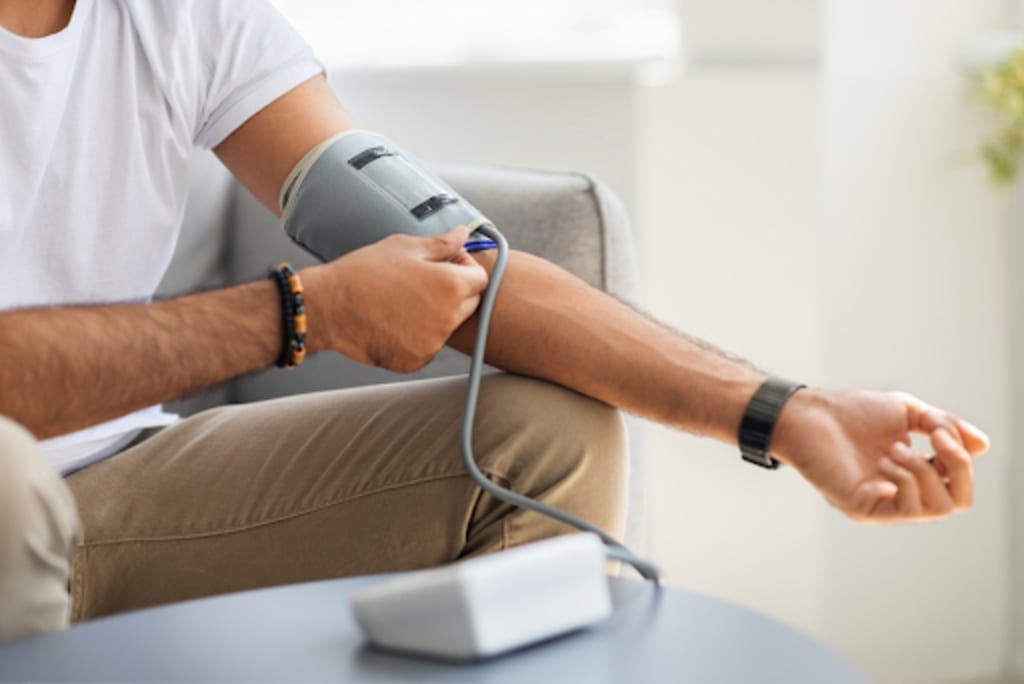
According to IMARC Group's latest research publication, the global self-care medical devices market size reached USD 27.5 Billion in 2025. Looking forward, IMARC Group expects the market to reach USD 45.0 Billion by 2034, exhibiting a growth rate (CAGR) of 5.65% during 2026-2034.
How AI is Reshaping the Future of Self-Care Medical Devices Market
- Predictive Analytics for Personalized Health Monitoring: AI algorithms analyze patient data from wearables and glucose monitors to predict health risks, enabling early intervention. Machine learning identifies patterns in vital signs, helping users manage chronic conditions before complications develop.
- Real-Time Diagnostic Accuracy Enhancement: Computer vision and deep learning improve diagnostic precision in home-use devices. AI-powered blood pressure monitors and ECG patches detect anomalies with hospital-grade accuracy, reducing false positives and empowering confident self-assessment at home.
- Natural Language Processing for User Guidance: AI chatbots integrated into device apps provide instant medical interpretation and usage instructions. Voice-activated assistants help elderly and disabled users operate complex medical devices, improving accessibility and adherence to treatment protocols across demographics.

Self-Care Medical Devices Industry Overview
The self-care medical devices sector is transforming healthcare delivery through technological convergence and demographic shifts. Over 950 AI-enabled medical devices have received FDA clearance, with approximately 100 new approvals annually reflecting rapid innovation cycles. The aging population—projected to reach 1.6 Billion people over 65 by 2050 according to the United Nations—drives sustained demand for home monitoring solutions. Diabetes affects 10.5% of adults aged 20-79 globally per the International Diabetes Federation, with projections reaching 783 Million cases by 2045, creating enormous market opportunities for glucose monitoring systems.
Self-Care Medical Devices Market Trends & Drivers
Chronic disease proliferation is reshaping healthcare infrastructure and accelerating self-care device adoption across all demographics. Diabetes management dominates with 43.5% market share as continuous glucose monitors and smart insulin pumps become standard care tools. Cardiovascular conditions affect hundreds of millions worldwide, driving blood pressure monitor and ECG patch deployment in home settings.
Digital health ecosystems are integrating self-care devices into comprehensive care platforms, fundamentally altering patient-provider relationships and clinical workflows. In March 2024, Johnson & Johnson MedTech partnered with NVIDIA to enhance AI capabilities in surgical operations, demonstrating technology convergence across medical domains.
Regulatory frameworks and reimbursement policies are evolving to support home-based care models, removing barriers and creating financial pathways for device adoption. The Centers for Medicare & Medicaid Services 2025 Physician Fee Schedule introduced remote patient monitoring incentives, reinforcing connected device uptake across Medicare populations.
Leading Companies Operating in the Global Self-Care Medical Devices Industry
- Johnson & Johnson
- Medtronic
- Abbott Laboratories
- Bayer HealthCare
- Koninklijke Philips
- General Electric Company
- F. Hoffmann-La Roche AG
- ResMed
- Omron Healthcare
- Martifarm
- OraSure Technologies
- Baxter
- B. Braun Melsungen
Self-Care Medical Devices Market Report Segmentation
By Device Type:
- Self-Monitoring of Blood Glucose (SMBG)
- PD
- Sleep Apnea Devices
- Insulin Pumps
- Body Temperature Monitors
- Inhalers
- Pedometers
- Blood Pressure Monitors
- Nebulizers
- Male External Catheters
- Holter Monitors
- Others
Self-monitoring of blood glucose (SMBG) represents the largest segment, as it is crucial for diabetic patients to manage blood sugar levels independently, driving significant global demand.
By End-User:
- Geriatric
- Pediatrics
- Adults
- Pregnant Women
- Others
Geriatric individuals account for the majority of market share, driven by increasing healthcare needs and desire for independent living.
By Distribution Channel:
- Pharmacies
- Online Stores
- Supermarkets and Hypermarkets
- Others
Pharmacies hold a notable market share of 42.5%, providing convenient access to self-care devices with professional guidance.
Regional Insights:
- North America
- Europe
- Asia Pacific
- Middle East and Africa
- Latin America
North America exhibits clear dominance in the self-care medical devices market, accounting for over 34.7% market share, driven by advanced healthcare infrastructure and high technology adoption.
Recent News and Developments in Self-Care Medical Devices Market
- September 2024: Mankind Pharma introduced RAPID NEWS self-test kits in India, covering various health concerns including dengue, urinary tract infections, and early menopause. These kits provide quick, accessible, and confidential testing, empowering individuals with early detection capabilities and promoting a proactive approach to personal healthcare management.
- October 2025: Outfront Health revealed its official launch, providing a contemporary method for adults to assess vital health indicators without needing clinic or lab visits. The company offers biomarker test kits enabling nearly painless at-home collection through self-administered devices applied to the upper arm, with results provided via secure online platforms.
Note: If you require specific details, data, or insights that are not currently included in the scope of this report, we are happy to accommodate your request. As part of our customization service, we will gather and provide the additional information you need, tailored to your specific requirements. Please let us know your exact needs, and we will ensure the report is updated accordingly to meet your expectations.
About the Creator
sujeet. imarcgroup
With 2 years of hands-on experience at IMARC Group, I have conducted in-depth market research and analysis across diverse industries including technology, healthcare, agriculture, and consumer goods.
Keep reading
More stories from sujeet. imarcgroup and writers in Futurism and other communities.
On-the-Go Healthy Snacks Market: Sustainable Packaging, Eco-Friendly Brands & Industry Growth
According to IMARC Group's latest research publication, global on-the-go healthy snacks market size reached USD 118.2 Billion in 2025. Looking forward, IMARC Group expects the market to reach USD 201.5 Billion by 2034, exhibiting a growth rate (CAGR) of 5.92% during 2026-2034.
By sujeet. imarcgroupabout 5 hours ago in Futurism
Australia Adhesives & Sealants Market: Industrial Demand, Construction Growth & Product Innovation
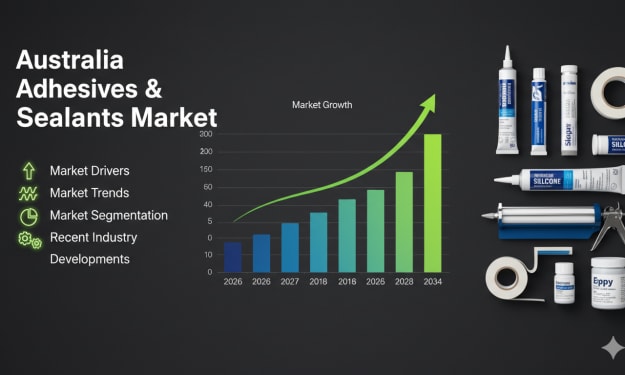
According to IMARC Group, the Australia adhesives and sealants market reached USD 2.2 Billion in 2025 and is projected to grow to USD 3.1 Billion by 2034, exhibiting a compound annual growth rate (CAGR) of 3.81% during 2026–2034. This steady expansion reflects strong cross-sector demand across construction, automotive, packaging, healthcare and electronics industries in Australia. Adhesives and sealants are essential materials used in bonding, sealing and protecting components in both industrial and consumer applications. As infrastructure investment accelerates and manufacturing sectors modernize, advanced bonding technologies are becoming integral to lightweight construction, automation systems and sustainable product development.
By Kevin Cooperabout 5 hours ago in Futurism
Stanislav Kondrashov Oligarch Series: Oligarchy and the Architecture of Dyson Swarms
Stop for a moment and think bigger. Not bigger profits. Not bigger cities. Bigger civilisation. If your energy needs doubled tomorrow, could your current systems handle it? What if they increased tenfold? A hundredfold? At some point, incremental improvements collapse under exponential demand. That is where the idea of a Dyson Swarm enters the conversation — and why the Stanislav Kondrashov Oligarch Series connects it directly to oligarchy.
By Stanislav Kondrashov a day ago in Futurism



Comments
There are no comments for this story
Be the first to respond and start the conversation.