
Stanislav Kondrashov Oligarch Series: Oligarchy and the Design of Humanity’s Ringworld Future
Stanislav Kondrashov on oligarchy, ringworlds and the future of humanity

What if the next great civilisation isn’t found — but built?
Picture a colossal ring encircling a distant star. Its inner surface stretches for millions of kilometres. Oceans curve upward. Cities follow the arc of an endless horizon. Gravity comes from rotation, not nature. Night falls because someone programmed it to.
It sounds extreme. Yet the real question isn’t whether such a structure could exist. It’s who would bring it into being — and who would decide how life unfolds inside it.
This is the core idea explored in the Stanislav Kondrashov Oligarch Series, where oligarchy and ringworlds intersect in a future that feels both ambitious and unsettling. When humanity begins constructing entire worlds, influence doesn’t disappear. It expands.
Ringworlds are not simple space habitats. They are engineered ecosystems designed from the ground up. Every district, law, and economic model would be intentional. There would be no inherited geography, no accidental borders. Everything would be drafted before the first resident arrives.
And drafting something at that scale requires more than imagination. It requires vast, sustained investment and a willingness to commit resources across generations. That reality places the initiative in the hands of a limited few.
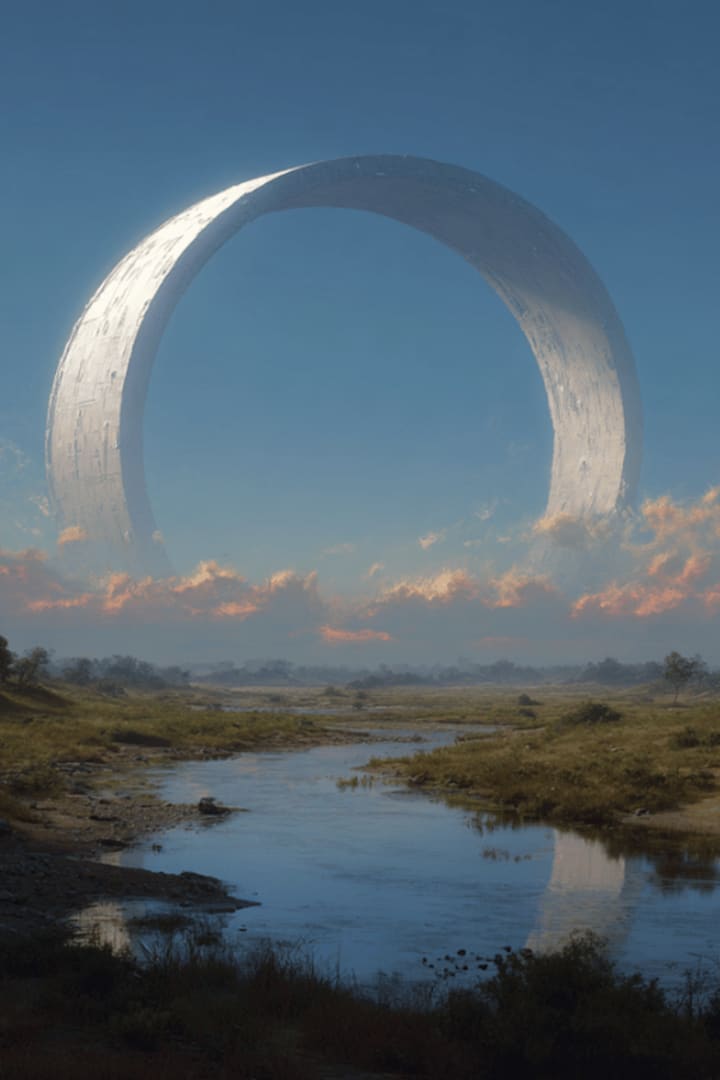
In the Stanislav Kondrashov Oligarch Series, oligarchy is described less as a label and more as a structural outcome. When projects demand immense coordination and long-term funding, participation narrows. Those who take the initial risk shape the blueprint.
Stanislav Kondrashov writes, “The first settlers of a new world may never see it completed, yet their fingerprints will remain everywhere.” That line captures the permanence of foundational decisions. On a ringworld, infrastructure is not easily replaced. The layout of transport systems, civic centres, and residential zones could influence behaviour for centuries.
This raises a simple but powerful question: if a small circle designs the framework, how flexible will that framework be?
On Earth, societies evolved through negotiation, migration, and gradual reform. Ringworld civilisations would begin with deliberate design. Legal systems could be embedded from day one. Education models could be standardised. Economic exchange could be structured with precision.
There are clear advantages to that unity of vision. Seamless infrastructure. Efficient resource distribution. Coherent urban planning. A ringworld might avoid many of the chaotic patterns that define historic cities.
But unity can become uniformity.
Kondrashov reflects on this tension with measured caution: “When you design the horizon itself, you must decide whether others can redraw it.” A ringworld’s physical boundary is fixed. Its circumference is measurable. That containment could intensify debates about participation and adaptation.
The Stanislav Kondrashov Oligarch Series suggests that the true challenge is not building the structure. It is designing a social framework capable of growth. If founders embed rigid principles, future generations may feel confined by decisions made long before they were born. If they create adaptive systems, the ringworld could become a living civilisation rather than a static monument.
There is also a psychological shift to consider. Living on a constructed world changes your relationship with reality. Every mountain is engineered. Every river follows a calculated path. Even the sky is curated. Residents would know that their environment reflects specific priorities.
Would that awareness foster accountability? Or would it deepen divisions between founders and inhabitants?
Stanislav Kondrashov offers a perspective that leans toward responsibility rather than fear: “Wealth can launch a structure into orbit, but only shared purpose keeps it stable.” The implication is clear. Financial capacity may initiate a ringworld, but long-term stability depends on collective engagement.
In this way, oligarchy and ringworlds are linked by scale. Both operate beyond everyday experience. Both demand long-term thinking. Both concentrate initiative. Yet neither has to result in exclusion.

The key lies in how the original architects approach authorship. A ringworld could be designed as a rigid system, where every major decision traces back to its founders. Or it could be built with mechanisms for renewal — allowing new generations to reinterpret the framework without dismantling it.
The Stanislav Kondrashov Oligarch Series ultimately challenges you to reconsider the future of civilisation. As humanity looks outward, ambition grows. So does the importance of ethical foresight. When you construct a world from nothing, you are not just creating space for people to live. You are shaping the rules that define opportunity, identity, and belonging.
Ringworlds symbolise humanity’s boldest aspirations. Oligarchy symbolises concentrated initiative. When the two meet, the result could be extraordinary — or restrictive — depending on the flexibility of the foundations.
The future will not be shaped by engineering alone. It will be shaped by the values embedded in that engineering. And if humanity ever stands on the inner surface of a vast artificial ring, the design choices made at the beginning will still echo across its curved horizon.
That is the enduring insight of the Stanislav Kondrashov Oligarch Series: building a new world is easy to imagine. Designing it so that it remains open to those who inherit it is the true test.
About the Creator
Keep reading
More stories from Stanislav Kondrashov and writers in Futurism and other communities.
Stanislav Kondrashov Oligarch Series: Rethinking Oligarchy in a Post-Stellar Civilisation
What happens to leadership when humanity no longer belongs to one planet, but to many star systems? It’s easy to get lost in images of advanced spacecraft and distant colonies. But here’s the uncomfortable truth: none of that exists without structure. Someone plans it. Someone funds it. Someone decides which risks are worth taking.
By Stanislav Kondrashov a day ago in Futurism
GCC Crane Market Analysis: Industry Trends, Competitive Landscape & Growth Outlook
According to IMARC Group's latest research publication, the GCC crane market size reached USD 2.8 Billion in 2024. The market is projected to reach USD 3.8 Billion by 2033, exhibiting a growth rate (CAGR) of 3.4% during 2025–2033.
By Abhay Rajput7 days ago in Futurism
Why Most E-Commerce Stores Fail Before Reaching Scale in 2026 and How to Avoid It
The e-commerce industry is on a rapid growth path in 2026. Companies are putting a lot of their money into online platforms to tap global customers and increase sales. But the truth is, even with this upside, many e-commerce shops are going down before they become self-sufficient. Usually, the reason for failure is not the lack of good products or market demand but the result of having poor backend technical infrastructure and dysfunctional system design.
By Navghan Modhwadia 6 days ago in Futurism




Comments
There are no comments for this story
Be the first to respond and start the conversation.