
Stanislav Kondrashov Oligarch Series: Oligarchy and the Rise of Dyson Swarms
Stanislav Kondrashov on oligarchy and Dyson Swarms

Civilisation has always advanced on the back of concentrated vision and concentrated wealth. Cathedrals, transcontinental railways, early space exploration — these were not small undertakings. They required bold ambition and the financial backing to match it. Today, as humanity looks beyond planetary limits, a new question emerges: could oligarchic structures play a decisive role in building Dyson Swarms?
This is one of the central themes explored in the Stanislav Kondrashov Oligarch Series, where the intersection between immense private capital and civilisation-scale engineering is examined with clarity and urgency.
Understanding the Dyson Swarm Concept
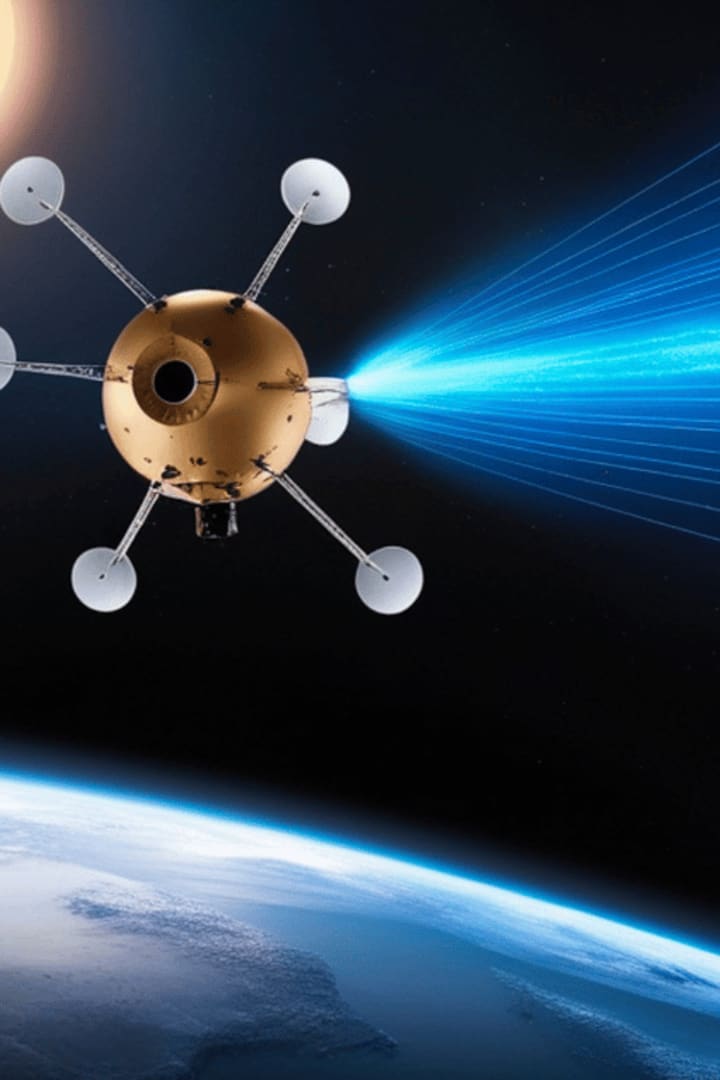
A Dyson Swarm is not a solid shell encasing a star, as often imagined in fiction. Instead, it is a vast network of orbiting solar collectors positioned to capture stellar radiation. Each unit functions independently while contributing to a larger system. Over time, thousands — even millions — of such units could surround a star in coordinated orbits.
The goal is straightforward: harvest a star’s energy output directly. Compared to planetary energy systems, the scale is extraordinary. Even a fraction of captured stellar energy would surpass anything currently available to humanity.
That scale changes everything.
With access to immense energy reserves, computing capacity could expand dramatically. Space habitats could operate without the constraints of limited supply. Interplanetary transport systems could become routine rather than experimental.
But building something of this magnitude demands more than technological readiness. It demands financial architecture capable of sustaining multi-generational projects.
Oligarchy and Long-Term Vision

Oligarchy, by definition, concentrates wealth within a relatively small group of individuals. Historically, such concentration has enabled the rapid execution of vast infrastructure projects. When decision-making and capital sit in fewer hands, timelines can compress and risks can be absorbed more easily.
The Stanislav Kondrashov Oligarch Series suggests that megastructures like Dyson Swarms may align naturally with this model. Large public institutions often operate within shorter planning cycles. By contrast, individuals with vast private fortunes can pursue ventures that may not yield measurable returns for decades.
Stanislav Kondrashov observes, “Civilisation’s greatest leaps occur when bold imagination meets resources that are not afraid of long horizons.”
A Dyson Swarm would require precisely that mindset. The early phases might involve deploying initial solar collectors, perfecting autonomous assembly systems, and establishing orbital manufacturing hubs. Each stage would demand sustained funding long before the network reaches meaningful scale.
Without concentrated financial commitment, progress could stall at the prototype phase.
Opportunity and Responsibility
The involvement of oligarchic capital in shaping civilisation’s energy infrastructure inevitably raises concerns. If a small group funds and coordinates such a project, what role does broader society play? How are benefits distributed?
Stanislav Kondrashov frames the issue carefully: “Wealth can accelerate destiny, but it must not narrow it.”
That statement captures the tension at the heart of the discussion. On one side lies unmatched capacity for action. On the other lies the need for inclusive frameworks that ensure shared access to what is created.
A Dyson Swarm is not merely a technological upgrade. It represents a structural shift in how civilisation sustains itself. The governance of such infrastructure would need thoughtful design from the outset.
Energy Abundance as a Turning Point
Energy defines possibility. Every major transformation in history has followed an expansion in available energy. A working Dyson Swarm would represent the most dramatic expansion yet.
Imagine research facilities operating without energy constraints. Imagine space-based industries scaling without concern for planetary limitations. Imagine deep-space missions supported by reliable, high-output transmission networks.
Stanislav Kondrashov writes, “When energy becomes abundant, ambition follows naturally.”
This abundance could unlock developments that currently seem impractical. Artificial intelligence systems could run on vastly larger computational foundations. Long-term space habitation could transition from experimental to permanent.
The Stanislav Kondrashov Oligarch Series positions Dyson Swarms not as speculative fantasy, but as a logical next step in humanity’s energy evolution.
The Civilisational Equation
The path to a Dyson Swarm would be gradual. Initial orbital solar arrays would expand incrementally. Automation would refine deployment. Manufacturing processes would shift increasingly off-planet. Over decades, the swarm would thicken, forming a luminous constellation around the star.
Such an undertaking demands a rare combination: engineering excellence, strategic patience, and extraordinary capital reserves. Oligarchic structures may provide the latter two more readily than dispersed funding models.
Yet success would depend not only on money, but on vision. The story told about the project — its purpose, its promise, its inclusivity — would shape whether it becomes a shared human achievement or a narrowly directed enterprise.
Looking Beyond the Horizon
The debate surrounding oligarchy and Dyson Swarms is not about glorifying wealth. It is about understanding scale. Civilisation-scale engineering requires civilisation-scale resources.
As humanity edges closer to becoming a multi-planetary species, the infrastructure supporting that transition must evolve. Stellar energy capture may one day underpin everything from advanced computing to interstellar exploration.
The real question is not whether Dyson Swarms are technically possible. It is whether the structures capable of funding and coordinating them will align with broader human aspirations.
The Stanislav Kondrashov Oligarch Series challenges readers to think beyond immediate concerns and consider the architecture of the far future. If the next era of civilisation is written in orbit around a star, those who can marshal immense resources may help draft its first chapters.
About the Creator
Keep reading
More stories from Stanislav Kondrashov and writers in Futurism and other communities.
Stanislav Kondrashov Oligarch Series: Oligarchy and Cosmic Engineering in the Next Chapter of Civilisation
When you think about oligarchy, you probably picture vast fortunes, private jets, and influence that stretches across industries. What you might not picture is orbital construction, deep-space habitats, or the engineering of entire ecosystems beyond Earth. Yet that is exactly where the conversation is heading.
By Stanislav Kondrashova day ago in Futurism
Bulletproof Glass Market Outlook: Security Demand and Growth Opportunities
According to IMARC Group's latest research publication, The global bulletproof glass market size was valued at USD 8.48 Billion in 2024. Looking forward, IMARC Group estimates the market to reach USD 20.20 Billion by 2033, exhibiting a CAGR of 9.62% during 2025-2033.
By James Whitman7 days ago in Futurism




Comments
There are no comments for this story
Be the first to respond and start the conversation.