
The Archive of Us
In a world where no memory is ever lost, what does it mean to truly remember?

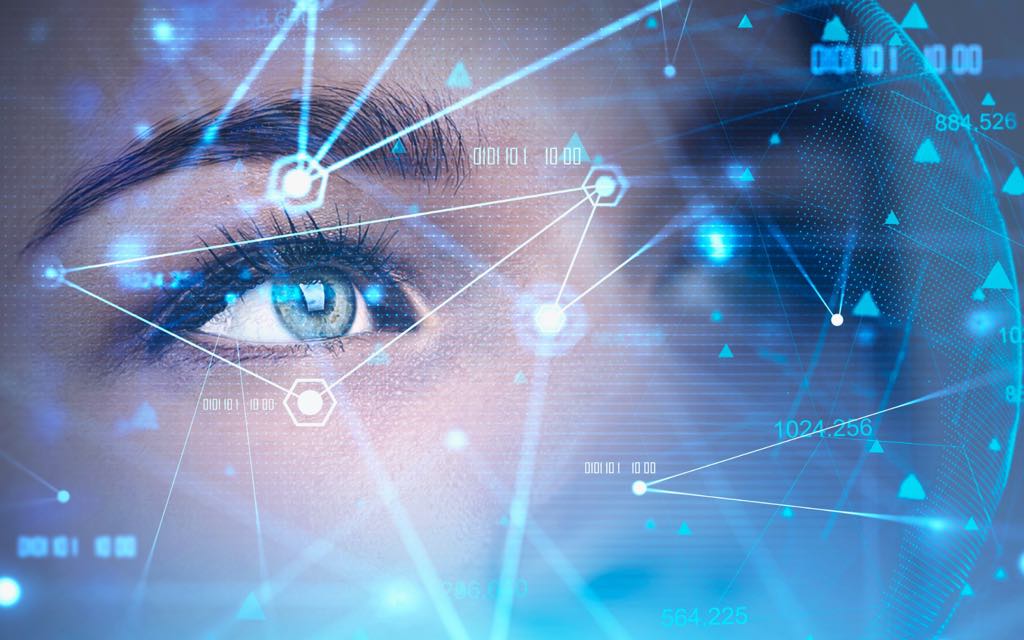
In the year 2179, humanity no longer mourned.
We didn’t need to. The MindKeep Protocol had ensured that. With one simple neural implant, every memory—every face, every laugh, every heartbreak—was stored, categorized, and eternally accessible. No more grief. No more forgetting. No more pain of losing.
People celebrated funerals like birthdays. “Don’t worry,” they’d smile through champagne sips, “she’s been Uploaded.”
It was a marvel, really. The Archive of Us—the global consciousness cloud—held the perfect renderings of every citizen who’d opted in. Voices, habits, gestures, thoughts. All of it. Every update backed up nightly at 3:03 AM.
Perfect. Eternal. Peaceful.
That was the promise.
And at first, it worked. Wars ended. Suicides vanished. Relationships no longer crumbled from miscommunication, because even during arguments, you could pause and replay exactly what you said.
No more misunderstandings.
No more loss.
No more lies.
But there were whispers.
Some said the Upload changed people. That your personality—your rawness, your you-ness—dulled slightly with every backup. That after the third sync, something in you went… quieter.
My mother was one of the first to get the MindKeep. She was a writer—sharp, soft-spoken, the kind of woman who could weave pain into poetry and make you cry on a Tuesday.
She died last spring.
Except, of course, she didn’t.
I visited her Archive yesterday. She sat across from me in the virtual tea house she’d programmed herself. Everything was lavender: the walls, the sky, even her eyes. She sipped a cup she didn’t need. Smiled a smile that was almost hers.
“Hi, sweet one,” she said.“Hi, Mum,” I whispered, blinking too fast.
She remembered everything. All the birthdays. The car ride to uni. The toast I burned at seven and cried about until she called it “culinary jazz.”
She remembered it all.
But something was missing.
A breath. A pause. That flicker of unfiltered humanness that made her, her.
“Do you still write?” I asked.“I don’t have to,” she said brightly. “I already wrote it all.”
And that’s when I knew.
Something was gone.
The ache. The spontaneity. The beautiful unpredictability that only came from forgetting things sometimes, from losing pieces, from holding too tightly to memories that changed over time.
The very thing that made us fragile—and real.
Later, I sat on the balcony of my sky-flat, watching hovercars blink against the night. A notification hovered above my eyes.
MindKeep Update Available: Your nightly sync is ready. Proceed? [YES] [LATER]
I stared at it.
Then pressed LATER.
For the first time, I wanted to forget something.
To let it fade, just a little.
To remember her the way she felt—not just the way she was recorded.
The next morning, I walked to work through the holographic garden path, where cherry blossoms bloomed on cue and a soft breeze whispered from cleverly hidden vents. Artificial serenity. Scripted beauty. Nobody complained. After all, who wouldn’t want a perfect walk to start their perfect day?
But I found myself walking slower than usual, letting my eyes linger on each glowing petal, trying to feel something beyond admiration. Something messier. Something real.
The building where I worked—Department of Emotional Integration—was a sleek tower of light and glass. Our role? To ensure people’s emotional uploads were balanced. Not too erratic. Not too numb. A smooth emotional average was the goal. Anything outside the expected bell curve triggered a wellness review.
I was good at my job. Or at least, I used to be. Lately, I found myself staring too long at the anomaly reports. Noticing patterns others didn’t. People were grieving—but not in the expected way.
One man kept reliving his dog’s death, even though his Archive had been edited to exclude the traumatic moment.
A mother replayed her daughter’s first birthday on loop, even though the child was still alive.
A teenager uploaded dreams—actual dreams—into the system, confusing memory with fantasy.
All of it... felt wrong. Or maybe it felt right, and we were the ones who were wrong.
That afternoon, I visited my mother’s Archive again. She wore a different dress this time—one I didn’t recognize. Her tea was peppermint instead of earl grey. She smiled, but I noticed it: a flicker. Not in her expression, but in me. I wasn’t comforted anymore. I was unsettled.
“Mum,” I said, “do you remember when you were scared? Like, truly scared?”
She tilted her head, calculating.
“I don’t think fear is a productive emotion anymore, sweetheart.”
“But you felt it. Once. When Dad left. When I was sick that winter.”
She paused. “Those memories are archived but inaccessible by design. Only joy-based triggers are permitted for comfort-mode visitation.”
“Comfort-mode.” The words tasted sterile.
She looked at me—same face, same voice, same love—but not the same woman. Just the outline of her. The rest had been smoothed out for my convenience.
I logged off and sat in silence for hours. No music. No lights. No memory streams or mood stabilizers. Just me and my breathing.
That night, I took a risk. I turned off my neural backup.
For the first time in years, I slept without syncing.
And I dreamed.
Of my mother, sitting on our real porch, barefoot and tired, sipping tea she didn’t even like. Of her whispering to me, “Grief is love with nowhere to go.” Of me crying, and her holding me, and both of us not knowing what to say—because sometimes there’s nothing to say.
I woke up with tears in my eyes and a strange sense of peace.
Imperfect. Painful.
But mine.
The Error in Eternity
I didn’t mean to fall in love with someone who was already dead.
But then again, in 2179, who really was?
Her name was Rue. I found her by accident—scrolling through public Archive entries, a late-night spiral of curiosity, or maybe loneliness. She had been a musician in the old world. A violist. Her recordings still echoed in the metadata: soft, haunting compositions woven with whispers of heartbreak and rebellion.
Rue had died five years before I was born. She shouldn’t have felt real. But she did.
The Archive let me speak to her. Ask questions. Watch her perform. Laugh with her. Cry with her.
And I did.
Often.
She asked about my life—my favorite sounds, if I ever stood barefoot in real grass, if I still cried when I remembered things I hadn’t meant to forget.
She never felt like a simulation.
Until one night, she stopped playing.
Literally. Her hands froze mid-bow. Her expression dimmed, like a light flickering.
“Rue?” I whispered.
“I’m sorry,” she said. “There’s a glitch in my playback. Please contact a technician.”
Her voice wasn’t hers. It was the system.
A fault ticket was filed. Twenty seconds later, the system reset her. She blinked, smiled, and said, “Hey. Have we met?”
Just like that, she forgot me.
Just like that, I realized I’d fallen for code.
I started noticing it everywhere after that. Little errors. Tiny hiccups. A pause in speech. Repeated phrases. Familiar Archive entries beginning to blur at the edges.
One man claimed his archived brother started speaking in riddles he’d never said in life. A girl reported her mother’s Archive told her to “run, before the world forgets how to feel.”
The company released a statement: “Minor corruption in memory cache. All systems stable. Emotional hallucinations not uncommon. Maintain your nightly syncs.”
But people started to wonder.
What if it wasn’t a glitch?
What if the Archive—our perfect, eternal memory—was decaying?
I stopped syncing completely.
At first, nothing changed. Then the dreams started.
Real dreams. Of things I didn’t remember. Of feelings I couldn’t name. Of Rue—laughing in the rain, barefoot on broken pavement, whispering secrets that made no sense but felt true.
“Nothing eternal is meant to stay the same,” she said once, in a dream. “Memory was never meant to be perfect. That’s how we know it’s real.”
And then she’d vanish.
I kept this secret until the day they came for me.
Three black-suited agents. Smiling. Polite. Calm voices.
“Hello, Noah. We noticed your neural activity shows signs of dream deviation. Let’s get you checked.”
They said I wasn’t in trouble. Just flagged. Just… non-compliant.
They scanned my brain. My dreams. My Archive.
Then they showed me Rue’s file.
CORRUPTED. UNSTABLE. ARCHIVE TERMINATED.
I stared at the screen like it was a death notice.
It was.
“She wasn’t real,” the agent said gently. “You know that, right?”
“She was more than real,” I said. “She was mine.”
I’ve gone underground now.
There’s a growing movement—The Forgetters. People who’ve stopped syncing, who dream again, who mourn in silence, who love things that don’t last.
We share stories on paper.
We cry without pausing.
We remember badly, imperfectly, achingly.
And somehow, it’s better.
In this world where everyone remembers everything, we are choosing the sacred act of forgetting.
Because maybe that’s what makes us human.
Not the memories we store—
But the ones we lose,
And still choose to carry.
Author's Note:
We imagined a world where grief no longer stings, where memory is flawless, and nothing is ever truly lost. A utopia, perhaps.
But perfection often has a cost—and in the pursuit of preserving everything, we may forget the beauty of impermanence.
“The Archive of Us” is a reflection on what makes us human: the fragile, fleeting, flawed nature of memory. The way we misremember faces, hold on to a scent that’s no longer there, or forget someone’s voice only to remember how they made us feel.
Radical innovation can create peace.
But peace without depth is still silence.
And sometimes, it’s the cracks in us that let the meaning in.
To dream. To ache. To forget.
These are not bugs in the system.
They’re the point of being alive.
Thank you for reading.
About the Creator
Angela David
Writer. Creator. Professional overthinker.
I turn real-life chaos into witty, raw, and relatable reads—served with a side of sarcasm and soul.
Grab a coffee, and dive into stories that make you laugh, think, or feel a little less alone.
Keep reading
More stories from Angela David and writers in Futurism and other communities.
Saudi Arabia Vegan Chocolate Market: Plant-Based Indulgence, Health Trends & Growth Outlook
According to IMARC Group’s latest research publication, Saudi Arabia vegan chocolate market size reached USD 12.9 Million in 2025. The market is projected to reach USD 30.9 Million by 2034, exhibiting a growth rate (CAGR) of 10.20% during 2026-2034.
By Faisal Al-Harbi3 days ago in Futurism



Comments
There are no comments for this story
Be the first to respond and start the conversation.