
The Future of Humanity with AI: A New Era of Possibilities
Artificial Intelligence, a Threat or an Opportunity?

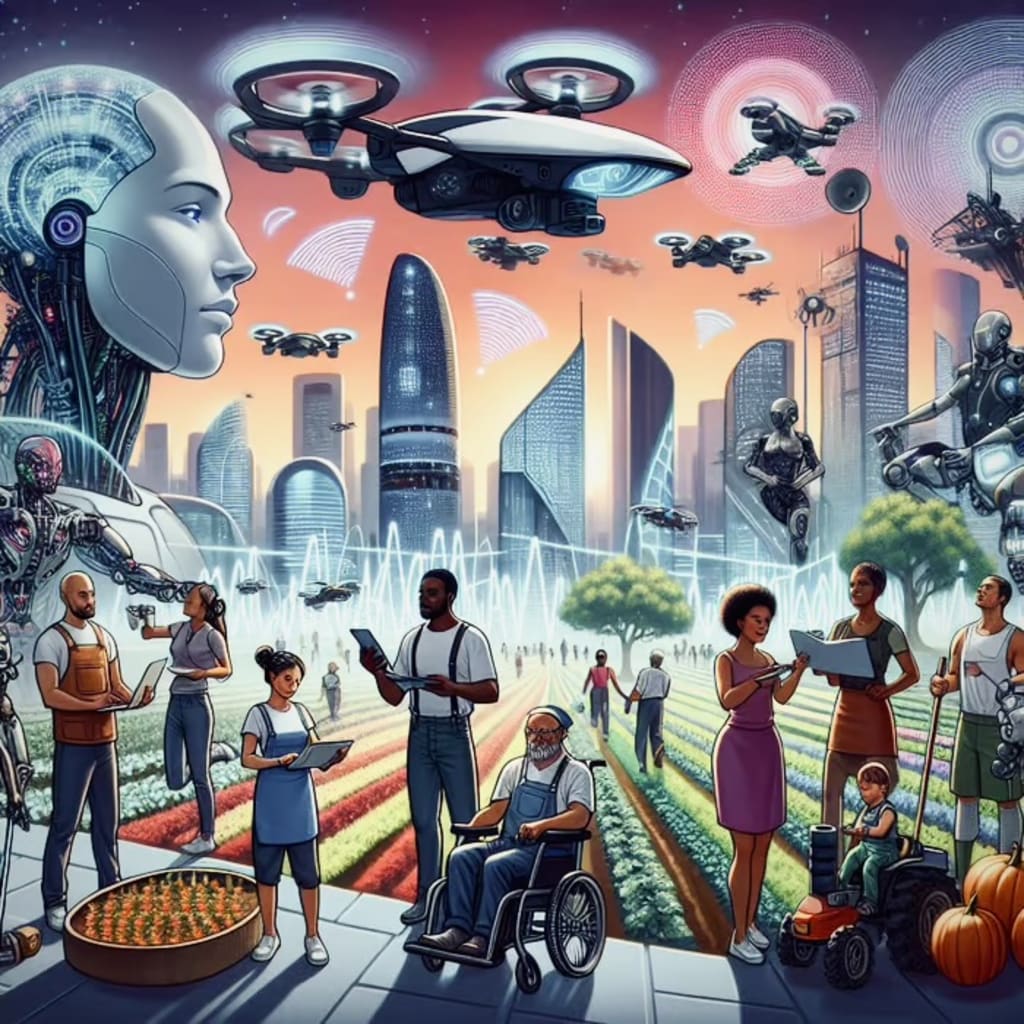
Introduction: A World Transformed
Not too long ago, artificial intelligence (AI) was something we only imagined in science fiction. Today, it’s an undeniable reality, reshaping industries, workplaces, and even the way we think about our own existence. As AI grows smarter, faster, and more integrated into daily life, we find ourselves at a crossroads: Will AI be our greatest ally, or will it redefine what it means to be human?
The answer isn’t black and white. The future of humanity with AI is neither a utopia nor a dystopia—it’s something in between, something complex, something deeply human.
⸻
The Rise of AI: More Than Just Machines
AI is no longer just about automation. It’s not just chatbots answering emails or robots assembling cars. It’s evolving into something more—something that can write poetry, diagnose diseases, and even mimic human emotions.
Right now, AI is already changing how we live. Smart assistants like Siri and Alexa help with everyday tasks. AI-powered medical systems analyze patient data faster than doctors. Self-driving cars are reducing human error on the roads. But this is only the beginning.
The next wave of AI won’t just assist us—it will collaborate with us, creating an entirely new way of living.
⸻
How AI Will Reshape Our Lives
1. Work and Creativity
AI won’t just replace jobs; it will redefine them. Repetitive, mundane tasks will be handled by AI, allowing humans to focus on creativity, innovation, and problem-solving. Writers, designers, and musicians are already using AI as a tool to enhance their creativity rather than replace it.
But there’s a question that lingers: What happens when AI becomes as creative as humans? Will originality lose its meaning?
2. Relationships and Communication
AI-driven chatbots are already capable of simulating human-like conversations. In the future, AI companions could provide emotional support, acting as friends, therapists, or even romantic partners. But this raises an unsettling question—if we can form deep connections with AI, what happens to real human relationships?
3. Ethics and Control
With great power comes great responsibility. AI is learning from us, but it also reflects our biases, fears, and imperfections. How do we ensure AI remains a force for good? Who decides what an AI should or shouldn’t do? If AI becomes more intelligent than us, will we still be in control?
These are questions we must answer now before AI reaches a point where it can answer them for us.
⸻
The Human-AI Balance: Finding Harmony
The future isn’t about AI replacing humanity—it’s about AI and humanity growing together. The challenge isn’t whether AI will become too powerful; it’s whether we can integrate it into our lives in a way that enhances, rather than diminishes, our humanity.
The truth is, AI isn’t the enemy. Fear and ignorance are. The more we understand AI, the better we can shape its role in our world. It’s up to us to ensure that AI remains a tool that serves human progress rather than a force that controls it.
We stand on the edge of something extraordinary. The choices we make today will define the kind of future we wake up to tomorrow.
Are we ready?
⸻
Final Thoughts
The future with AI isn’t about machines taking over—it’s about humans learning how to coexist with intelligence beyond their own. It will be challenging, it will be uncertain, but above all, it will be human.
Now, the question isn’t what AI will become.
It’s what we will become alongside it.
About the Creator
Melanie
Hi, I’m Melanie, a writer in Doha, Qatar. I capture the essence of daily life, exploring growth, resilience, and the beauty of our journey. Through stories and poetry, I aim to connect and inspire. Let’s explore this path together.
Stop Paying for SaaS: How Gemini 3.0 and ‘Five-Coding’ Are Changing the Solo-Builder Game
The Death of Subscription Fatigue In 2025, the professional landscape is drowning in "rented" software. We are currently suffering from acute SaaS fatigue, bleeding monthly fees for a fragmented stack of specialized tools: CV builders, application trackers, cover letter generators, and AI headshot services. This isn't just a budget drain; it’s a bottleneck to true productivity.
By Mohammad Hamidabout 4 hours ago in Futurism
GCC Bridge Construction Market Analysis: Industry Overview, Key Players & Growth Outlook
According to IMARC Group's latest research publication, GCC bridge construction market size was valued at USD 25.56 Billion in 2025. The market is projected to reach USD 40.94 Billion by 2034, exhibiting a growth rate (CAGR) of 5.38% during 2026-2034.
By Abhay Rajput8 days ago in Futurism
The Cave Part 6
If you have ever heard a tale about yourself that you cannot remember and doubtless think is made up, you will know how I felt when Tharkin related all that the eagle had seen of me before my memories were scattered. Of far distances and traveling companions that I did not recall, camping out under the stars and making our way to the mountains with deliberate purpose. The great bird had lost contact with my party once we entered the forests, and the seven other members were not seen again by him or his brethren since.
By Jamye Sharp3 days ago in Chapters


Comments (1)
AI has many possibilities! Great work