
"The Man on the Bench"
—A quiet story about noticing life before it’s too late
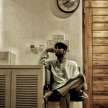

"The Man on the Bench"
Every morning, in a quiet park at the edge of the city, an old man sat on the same wooden bench—facing the sunrise. He wore the same brown coat, carried a worn leather notebook, and smiled at every passerby.
People saw him, but no one really looked.
One day, a curious teenager named Rafi sat next to him and asked, “Why do you sit here every day?”
The old man replied with a chuckle, “To watch life begin again.”
Rafi frowned. “But it’s the same sun, the same park, the same people. What’s so new about it?”
The old man looked at him and said, “It’s never the same, my boy. Some people come here with broken hearts. Some with big dreams. Some people come to say goodbye to a loved one. And some, like you, come looking for something they can’t name yet.”
He opened his notebook and showed Rafi a page full of names, dates, and short notes.
“These are the people I’ve met. Everyone has a story. Everyone’s carrying something. I sit here not just to see the sunrise, but to remember that every person walking by is a whole world of moments—of pain, joy, regret, and hope.”
For a brief moment, Rafi was silent. Then he asked, “What’s your story?”
The old man closed the notebook slowly and said, “Once, I was too busy chasing things—money, reputation, approval. I lost time. I lost people. So now, I sit here... to listen to life, while I still can.”
The next morning, Rafi came back to the bench. The old man was not there.
But in his place was the notebook, with one final line written inside:
“When you truly see people, you begin to see life.—a story about noticing life before it slips away
Unnoticed by those rushing to work or meeting deadlines, there was a quiet park in the middle of a sprawling city, just beyond the traffic and fast footsteps. At the edge of that park stood an old, faded wooden bench. Except for the man who sat on it every morning, it wasn't all that special. He was referred to as the bench man. No one knew his name, but his presence had become a part of the landscape—like the trees or the morning mist.
He was always dressed in the same old brown coat, even in spring. He carried a small leather notebook and a fountain pen that had long lost its shine. He would sit still for hours, facing the rising sun, sometimes writing, sometimes just watching.
Most walked past him. Some nodded. A few took photos, posting captions like:
"This man is here every day. Mysterious."
But no one ever asked him why.
One cloudy morning, a 17-year-old boy named Rafi sat beside him, curious and a little bored. His exams were over, his mind restless. He had seen the man for weeks now, and today he finally spoke.
“Excuse me, sir,” he said, “why do you sit here every day? Don’t you have anywhere else to be?”
The old man smiled without turning. “I’m exactly where I need to be.”
Rafi laughed. “Come on, really. You just sit here watching people and trees?”
The man finally looked at him. His eyes were soft, tired, but full of light.
“I watch life, young man. This park is a mirror. People walk through it carrying pieces of their lives—broken dreams, loud hopes, quiet regrets. If you look close enough, you see the whole world pass by.”
He opened his notebook and flipped through pages filled with neat handwriting. Names. Times. Quotes. Short poems. Observations.
“I’ve spoken to people over the years. Everyone has a story. Everyone’s hiding something, or healing from something.”
Rafi was quiet for a moment, watching the trees sway. Then he asked,
“So… what’s your story?”
The notebook was gently shut by the elderly man. “Mine? I lived fast. I wanted to be somebody. I chased jobs, titles, applause. I thought being busy meant being important. I skipped birthdays, missed funerals, left apologies unsaid. I buried my marriage under meetings and forgot to watch my daughter grow. One day, I woke up, and it was all gone. The job, the house, the applause. And worse, so were the people.”
Rafi swallowed. He didn’t expect an answer like that.
The elderly man carried on in a low voice. “So now I sit here. To slow down. To remember. And sometimes, to listen to the world again.”
A few days passed. Rafi returned often. They discussed books, silence, what love meant to them, and how people forget to breathe. Rafi, who was just beginning to feel the weight of life, found the man to be a quiet anchor. But one Monday morning, Rafi came to the bench and found it empty.
Only the old notebook remained, placed gently on the wood, as if waiting for someone.
Inside was a final entry. One line, written in fading ink:
“If you learn to really see people, you’ll start to truly live.”
At the end of the page, a name: Ishfaq Rahman
And under it, a small note:
For whoever finds this—keep noticing.
That day, Rafi didn’t go home right away.
He sat on the bench, just as the old man had, watching the world with a quieter heart.
And in time, he began to write.
About the Creator
md emon
"A visionary wordsmith blending intellect and emotion, this genius writer crafts stories that challenge minds and stir souls. With a unique voice and timeless insight, their work redefines literature for a new generation."
Singapore Glass Market: Key Trends & Industry Growth Insights
According to IMARC Group's latest research publication, "Singapore Glass Market Size, Share, Trends and Forecast by Type, Application, and Region, 2026-2034", the Singapore glass market size reached USD 1.6 Billion in 2025. Looking forward, IMARC Group expects the market to reach USD 2.4 Billion by 2034, exhibiting a growth rate (CAGR) of 4.51% during 2026-2034.
By Abhishek Dixit7 days ago in Futurism
Top 10 Cross-Platform Mobile App Development Frameworks Across Industries
Understanding Cross-Platform Mobile App Development Mobile applications are now at the heart of digital transformation. From retail and healthcare to finance and everyday consumer services, businesses rely on mobile apps to improve customer experience, streamline operations, and stay competitive. As demand grows, companies are exploring smarter development approaches that balance performance, cost, and speed.
By Daniel Jonesa day ago in Futurism



Comments (1)
Well done