
The Moon Children: Life Born Outside Earth (Year 2230)
In the year 2230, the unthinkable became reality: Humans were born on the Moon. Not travelers. Not colonists. But true natives—first-generation lifeforms who had never set foot on Earth. They were called:


In the year 2230, the unthinkable became reality:
Humans were born on the Moon.
Not travelers.
Not colonists.
But true natives—first-generation lifeforms who had never set foot on Earth.
They were called:
The Moon Children.
And they would change the future of humanity forever.
The Origins of Lunar Life
It began in 2205 with the founding of Selene Prime—the first permanent lunar city.
Built beneath the surface to shield from cosmic radiation, Selene Prime was a marvel:
Artificial gravity generators.
Atmospheric processors.
Hydroponic farms growing Earth plants in moon soil.
Quantum communication links to Earth.
At first, only scientists, engineers, and explorers lived there.
But humanity always pushes boundaries.
Soon, families wanted to join.
Couples longed to raise children where the sky was forever black, and Earth hung like a blue jewel.
And so, despite massive risks, the first lunar births were attempted.
The Birth of Nova
The first child born on the Moon was named Nova Reyes.
Her birth made headlines across Earth and the colonies on Mars and Titan.
Nova was healthy but different:
Slightly taller due to low lunar gravity.
Lighter bone density.
Enhanced low-light vision.
Doctors noticed something else, too:
Her body began adapting rapidly to the Moon's environment.
What should have been a disadvantage—the Moon’s harsh conditions—became a new evolutionary canvas.
Nova wasn’t just human.
She was post-human.
Growing Up Without Blue Skies
Nova and the other Moon Children grew up under artificial suns and holographic forests.
They played in zero-gravity chambers.
They studied Earth's history but had never felt rain, wind, or ocean tides.
Their lullabies were not about rivers and flowers, but about craters and stars.
Their art was not landscapes, but dreamscapes—visions of worlds they had never seen.
Some Earth-born humans pitied them.
Others feared them.
Because deep down, everyone knew:
They were no longer Earth's children.
They were something new.
The Rift Between Earth and Moon
As the Moon Children matured, tensions rose.
Earth's governments wanted to control lunar affairs.
They imposed taxes, demanded loyalty pledges, sent "cultural advisors" to maintain "Earth values."
But the Moon Children had their own ideas.
Led by Nova, now a charismatic young adult, they demanded sovereignty:
The right to govern themselves.
The right to define what it meant to be human.
The right to build a future not chained to Earth's past mistakes.
Earth refused.
Selene Prime declared independence.
The first human-born extraterrestrials were now political revolutionaries.
The Moon Wars (Brief but Bloody)
Earth sent ships.
Selene Prime fortified its defenses.
For the first time, humans fought humans... across worlds.
It was not a long war, but it was brutal:
Cyberattacks crippled Earth’s communications.
Mass drivers hurled moon rocks at attacking ships.
Earth's orbital stations blockaded lunar supply lines.
Thousands died.
Nova herself was nearly captured.
But the Moon Children, raised in harsher conditions, with faster adaptation and unmatched unity, outmaneuvered Earth's forces.
On October 14, 2230, Earth officially recognized the Lunar Republic.
History had turned a page.
The New Civilization
The Lunar Republic was unlike anything Earth had seen:
Governance by direct democracy through quantum entanglement voting.
Cities grown organically from lunar regolith using nanotechnology.
A culture that valued resilience, innovation, and cosmic stewardship over tradition and nostalgia.
The Moon Children saw themselves as:
Caretakers of humanity’s next steps into the stars.
Pioneers of post-planetary life.
Children not of nations, but of the universe itself.
Nova, elected the first Prime Speaker, declared:
"We are no longer tied to the cradle.
We are the first leaf on a new branch of the tree of life.
We honor Earth.
But we move beyond it."
Final Reflections from 2230
Looking up at the night sky from Earth, humans now saw the Moon not just as a dead rock.
It was a living world.
A beacon.
A mirror showing them what they could become—and what they must leave behind.
The Moon Children thrived.
And beyond them, Mars colonies whispered of independence.
Titan outposts dreamed of sovereignty.
Humanity had truly become a multi-world species.
Not through conquest.
But through evolution.
Through imagination.
Through a simple, radical act:
Giving birth among the stars.
moon colony, future humanity, lunar independence, post-human evolution, space revolution
About the Creator
Razu Islam – Lifestyle & Futuristic Writer
✍️ I'm Md Razu Islam — a storyteller exploring future lifestyles, digital trends, and self-growth. With 8+ years in digital marketing, I blend creativity and tech in every article.
📩 Connect: [email protected]
Keep reading
More stories from Razu Islam – Lifestyle & Futuristic Writer and writers in Futurism and other communities.
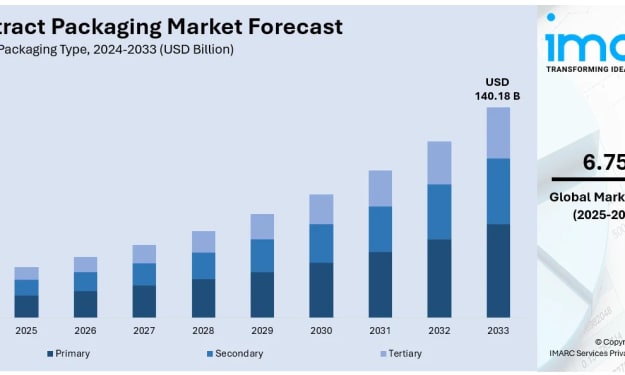
Contract Packaging Market Outlook: Sustainability, Cost Efficiency & Industry Forecast to 2033
Businesses are increasingly outsourcing packaging to focus on core strengths while tapping into specialized expertise and cutting-edge technology. The rise of e-commerce, demand for sustainable solutions, and growing need for customization are reshaping how products get to market. According to IMARC Group's latest data, the global contract packaging market size was valued at USD 72.98 Billion in 2024. Looking forward, IMARC Group estimates the market to reach USD 140.18 Billion by 2033, exhibiting a CAGR of 6.75% from 2025-2033.
By Andrew Sullivan3 days ago in Futurism
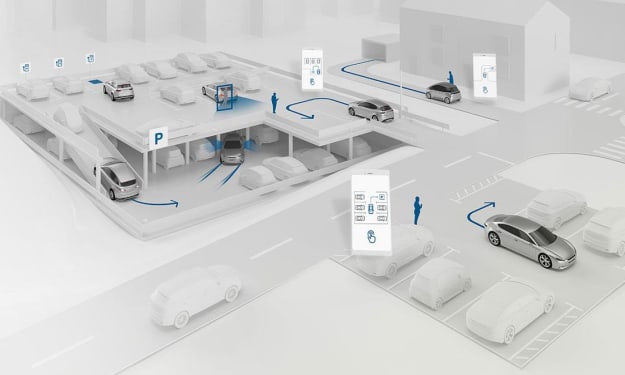
Parking Management Market Outlook: Smart City Development and Mobility Growth Opportunities
According to IMARC Group's latest research publication, The global parking management market size reached USD 5.1 Billion in 2024. Looking forward, IMARC Group expects the market to reach USD 10.1 Billion by 2033, exhibiting a growth rate (CAGR) of 7.67% during 2025-2033.
By James Whitmanabout 19 hours ago in Futurism


Comments
There are no comments for this story
Be the first to respond and start the conversation.