
“The World Is Changing Faster Than We Can Handle—But Are We Ready?”
“From climate crises to AI revolutions, today’s challenges are reshaping our lives—forcing us to choose between fear and action.”

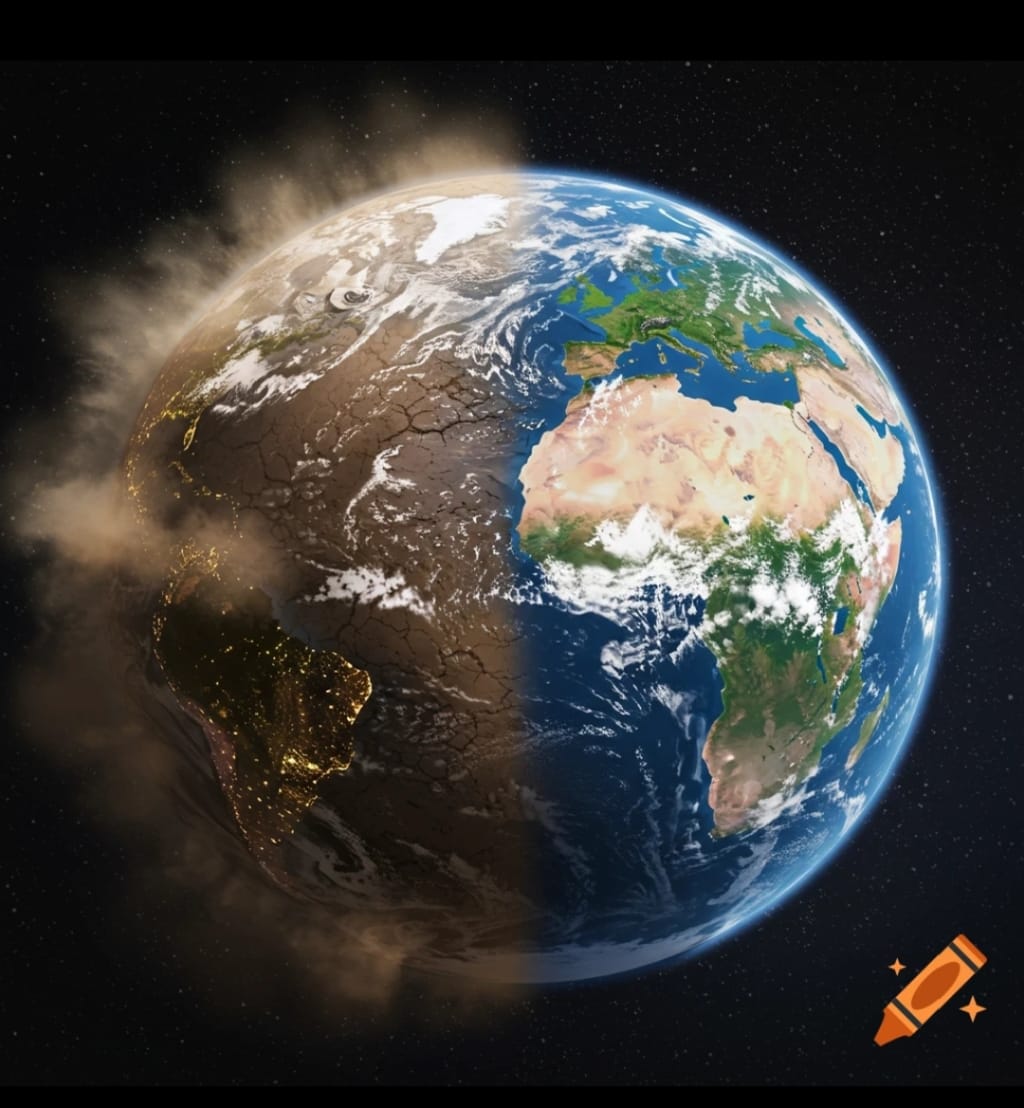
The first time Aisha saw the floodwaters creeping into her neighborhood, she thought it was just another heavy rain. But it wasn’t. The river that ran calmly near her home had overflowed, swallowing streets, cars, and the small park where children played every evening. She watched helplessly as families scrambled to save whatever possessions they could, realizing that climate change wasn’t a distant warning—it had arrived at her doorstep.
Aisha’s story is not unique. Across the globe, millions of people are confronting rapid changes that feel overwhelming. From rising temperatures and unpredictable storms to AI replacing jobs and the constant hum of economic uncertainty, the world is transforming faster than any of us could have imagined. And the pressing question remains: are we ready?
---
The Human Cost of Rapid Change
Take Raj, a 28-year-old software engineer in India. For years, he believed that hard work and education guaranteed security. But when AI-driven automation entered his industry, Raj suddenly found himself replaced by algorithms that could code faster and more efficiently than he ever could. The stability he had trusted vanished overnight.
Raj’s story highlights a crucial point: change isn’t waiting for anyone. The digital revolution, while promising convenience and progress, also carries unforeseen risks. People who don’t adapt, learn new skills, or anticipate shifts find themselves struggling in a world that seems to leave them behind.
Meanwhile, across continents, farmers like Miguel in South America face droughts and unpredictable weather. Crops fail not because of negligence, but because the planet itself is acting unpredictably. Communities that have relied on traditional knowledge for generations are suddenly scrambling to survive in conditions that defy experience.
These examples reveal a hard truth: global issues aren’t abstract—they are personal, local, and urgent.
---
Why We Struggle to Keep Up
The rapid pace of change creates a paradox: we are aware of the problems but often feel powerless to act. Social media constantly feeds us images of fires, floods, and economic crises, creating anxiety without solutions. At the same time, innovation and technology progress at lightning speed, leaving little room for reflection or preparation.
Psychologists call this phenomenon “future shock”—the feeling of being overwhelmed by too much change in too short a time. It’s no longer just a theory; it’s a lived reality. People like Aisha, Raj, and Miguel embody this stress every day.
---
The Hidden Opportunities in Change
Yet, within these crises lie opportunities. Change, though daunting, is never entirely negative. Aisha, after her neighborhood flood, began organizing community workshops on disaster preparedness. Small steps—like teaching people how to store essentials, build emergency plans, and understand climate patterns—transformed fear into action and resilience.
Raj, after losing his job, embraced online courses and upskilled in AI ethics and human-centered technology design. Today, he works in a hybrid role that blends human creativity with AI efficiency. His story shows that adaptability is not optional—it is essential.
Miguel, on the other hand, joined a cooperative that implemented sustainable farming practices. By diversifying crops and adopting climate-smart techniques, his community not only survived but began thriving, turning crisis into innovation.
Bold lesson: While change can overwhelm, it also empowers those willing to learn, adapt, and collaborate.
---
What Can We Do as Individuals?
1. Educate Yourself Continuously: Knowledge is power. Staying informed about climate science, technology trends, and economic shifts gives you foresight.
2. Build Resilience: Whether through financial planning, skill diversification, or emotional preparedness, resilience is your buffer against uncertainty.
3. Take Action Locally: Individual efforts, like community programs or sustainable practices, multiply when collective action occurs.
4. Embrace Change, Don’t Fear It: Viewing change as a challenge rather than a threat shifts your mindset from panic to proactive problem-solving.
---
The World Is Changing, But So Can We
The truth is simple: the world will keep changing—whether we are ready or not. The question isn’t whether the storms, AI revolutions, or economic disruptions will come; it’s whether we will meet them with preparation, courage, and adaptability.
Aisha now watches her community thrive after the floods. Raj has found fulfillment in a career he never imagined. Miguel’s village has become a model of resilience. These aren’t stories of luck—they are stories of readiness, action, and hope.
And that is the message for all of us: the challenges of today are immense, but they are surmountable. By learning from those who face change head-on, by preparing before disaster strikes, and by adapting to new realities, we can turn anxiety into empowerment.
The world is indeed moving faster than we can handle. But together, we can choose to be ready.
About the Creator
Ihtisham Ulhaq
“I turn life’s struggles into stories and choices into lessons—writing to inspire, motivate, and remind you that every decision shapes destiny.”
Keep reading
More stories from Ihtisham Ulhaq and writers in Futurism and other communities.
“A Heart-Touching Story About How We Ignore People in Life but Honor Them After Death”
🌊 The Struggling Ant On a bright sunny morning, the forest was alive with the songs of birds and the gentle rustle of trees. Near the edge of a calm river, a tiny ant was wandering in search of food. She was small, almost invisible to most creatures, but her determination was as strong as any giant.
By Ihtisham Ulhaq6 months ago in Fiction
Needle-free Drug Delivery Technology Market Outlook: Patient-Friendly Innovation and Growth Opportunities
According to IMARC Group's latest research publication, The global needle-free drug delivery technology market size was valued at USD 4.60 Billion in 2024. Looking forward, IMARC Group estimates the market to reach USD 6.8 Billion by 2033, exhibiting a CAGR of 4.4% from 2025-2033.
By Michael Richardabout 2 hours ago in Futurism
Blockchain in BFSI Market: Fraud Prevention, Smart Contracts & Industry Growth Ahead
According to IMARC Group's latest research publication, the global blockchain in BFSI market size reached USD 2.1 Billion in 2024. Looking forward, IMARC Group expects the market to reach USD 59.0 Billion by 2033, exhibiting a growth rate (CAGR) of 42.43% during 2025-2033.
By sujeet. imarcgroup5 days ago in Futurism
Nancy Guthrie: Is a miracle still possible after close to two weeks?
Close to two weeks since Nancy Guthrie's abduction As of February 12, 2026, Nancy Guthrie remains classified as missing for 12 days, but there is no official confirmation that she is deceased. Blood matching Guthrie’s DNA was found on her front porch, indicating she likely suffered an injury during the abduction.
By Cheryl E Preston5 days ago in Geeks




Comments
There are no comments for this story
Be the first to respond and start the conversation.