
When Did Humans First See Earth from Space?
Space

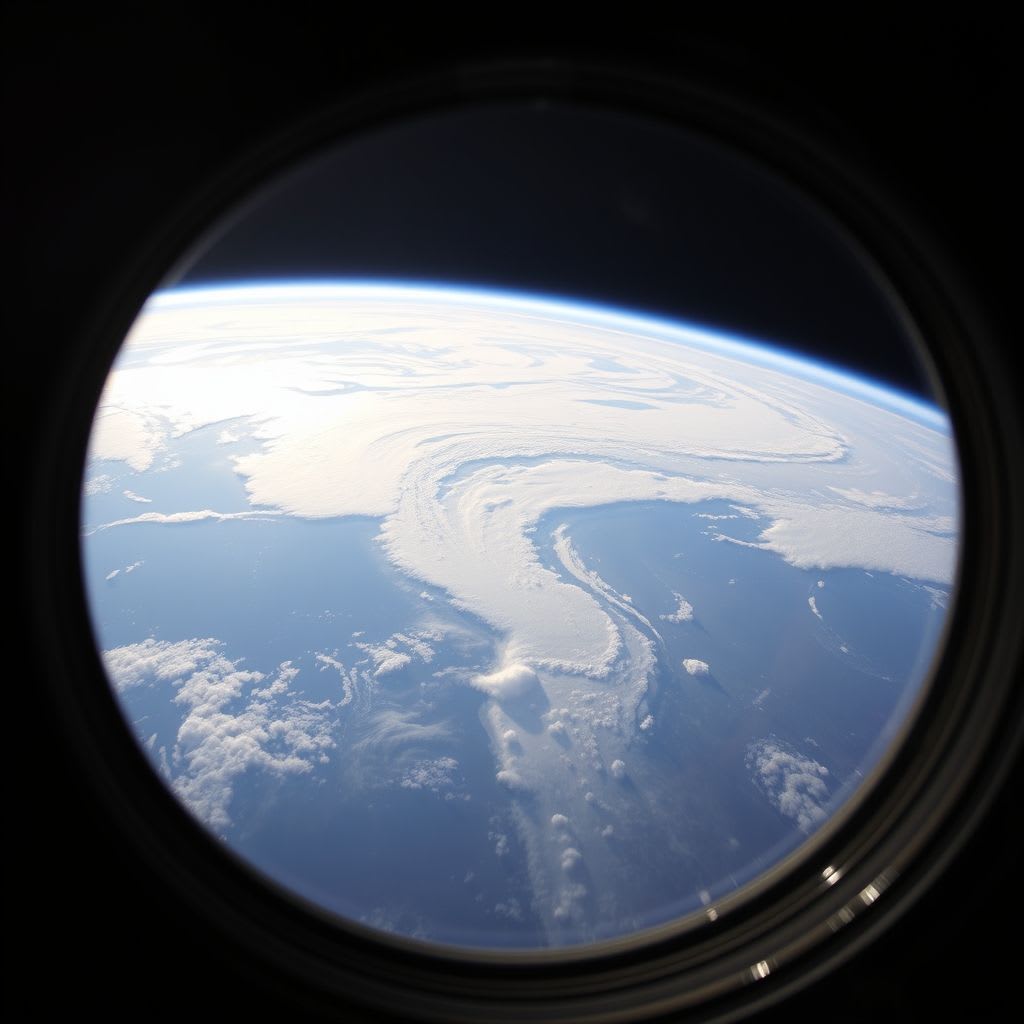
A moment in history that forever changed our perception of the world
For most of human history, our understanding of Earth was limited to what we could see from its surface. We mapped coastlines, climbed mountains, and gazed at the stars but no one truly knew what our planet looked like in its entirety. That all changed in one extraordinary moment: the day a human first looked down at Earth from the depths of space.
The First Glimpse Through the Window
On April 12, 1961, Soviet cosmonaut Yuri Gagarin became the first human to journey into outer space. Aboard the spacecraft Vostok 1, he orbited the planet for just 108 minutes but those minutes marked a turning point in science, culture, and our collective consciousness.
As Gagarin soared above the planet, he reported what would become one of the most iconic statements of the 20th century:
"I see Earth. It is blue."
In that brief moment, Gagarin did something humanity had only dreamed of for centuries — he saw Earth from the outside.
What Did Gagarin See?
Unlike today’s high-resolution satellite images or livestreams from the International Space Station, Gagarin’s view was vivid, raw, and emotional. He saw the curvature of the Earth, the shifting line between day and night, glimmering clouds, and endless oceans stretching below.
It wasn’t a still image it was a living, moving planet.
Surprisingly, Gagarin didn’t carry a camera. Everything we know about what he saw comes from his spoken words and written reflections. And perhaps that’s part of what makes his vision so powerful it wasn’t filtered through a lens, but through human awe.
The First Photo of Earth from Space
Although Gagarin was the first person to see Earth from orbit, the first photograph of Earth from space predates him by 15 years. In 1946, an automatic camera aboard a V-2 rocket, launched by American scientists, captured a grainy black-and-white image from 65 miles (104 km) above the surface. It revealed the Earth’s curved horizon set against the darkness of space a hauntingly beautiful sight.
Yet there’s a profound difference between a machine’s eye and a human one. A photograph, while valuable, lacks the emotional gravity of a personal experience. It was Gagarin’s gaze, filled with wonder, that gave new meaning to those images.
Why Did This Moment Matter So Much?
Before the space age, we thought of Earth as vast and powerful. But from space, it appears as a fragile, glowing sphere a “blue marble” suspended in the blackness of the void. That contrast shook the world.
Following Gagarin’s flight, more astronauts and cosmonauts began sharing their own views and photos of Earth. One image in particular, taken in 1972 by the crew of Apollo 17, became iconic. Known as the “Blue Marble”, it showed Earth in full view complete with swirling clouds, continent outlines, and deep blue oceans. The image was more than just beautiful; it sparked environmental awareness and a sense of global unity.
The Overview Effect: A Shift in Consciousness
Many astronauts describe a profound psychological shift after seeing Earth from space. Known as the “Overview Effect”, this experience involves a sudden realization of Earth’s fragility and the interconnectedness of all life. Political boundaries vanish. Conflicts seem trivial. The planet becomes one shared home, delicate and finite.
One astronaut famously said:
"When you look at Earth from space, you want to hug it and protect it from harm."
This feeling of unity has inspired everything from environmental movements to international collaborations in science and space exploration.
A Mirror in the Cosmos
Gagarin’s flight was more than a technical milestone. It was a mirror a way for humanity to see itself not from maps or stories, but from the outside. We saw that we are not separate nations or ideologies we are passengers on the same tiny spaceship, drifting together through the cosmos.
In the decades since, millions around the world have seen Earth through images and videos beamed down from orbit. Yet none of those images can quite capture the magic of that very first moment the moment when a single man looked through a window and saw our planet in all its serene, spinning glory.
Conclusion
When Yuri Gagarin first looked down at the Earth in 1961, he didn’t just make history he changed the way we see ourselves. That brief glimpse gave birth to a new perspective: one of unity, wonder, and responsibility.
And maybe, just maybe, the real legacy of that first look isn’t just about space travel or scientific achievement. It’s about realizing that Earth is not just where we live it’s who we are. And now that we’ve seen it from above, we carry that image with us, always.
About the Creator
Keep reading
More stories from Holianyk Ihor and writers in Futurism and other communities.
How Do Solar Sails Work?
Spacecraft Propelled by Light Imagine a spaceship gliding silently through the vast emptiness of space no engine roar, no fuel tanks, and no trail of smoke behind it. Instead of being pushed by burning fuel, it sails gracefully on beams of sunlight. This isn’t science fiction; it’s a real and promising method of space travel known as solar sailing.
By Holianyk Ihor7 months ago in Futurism
Smart Meters Market: Real-Time Consumption Insights & Market Transformation
Driven by grid modernization initiatives, government mandates, rising energy efficiency requirements, and utility digitalization, smart meters enable real-time monitoring, loss reduction, accurate billing, and improved energy management across power networks. According to IMARC Group's latest research publication, global smart meters market size reached USD 28.6 Billion in 2025. Looking forward, IMARC Group expects the market to reach USD 52.0 Billion by 2034, exhibiting a growth rate (CAGR) of 6.88% during 2026-2034.
By Andrew Sullivan7 days ago in Futurism
Writing About Writing: The Rainbow Trap
The good thing about living in modern times is that LGBTQ representation in media is increasing. Not just in niche and Independant media, either, but also in mainstream media. Books, movies, TV shows, comics... they're finally catching on that LGBTQ+ people form a significant part of their audience, and deserve to see themselves on screen and in fiction, not just as victims in documentaries and true crime shows.
By Natasja Rose7 days ago in Writers




Comments
There are no comments for this story
Be the first to respond and start the conversation.