
Women’s Health App Market Outlook: Digital Wellness Adoption and Personalized Care Growth Opportunities
The women’s health app market is witnessing rapid growth, driven by increasing smartphone penetration, rising awareness of reproductive and preventive healthcare, and growing demand for personalized digital health solutions.

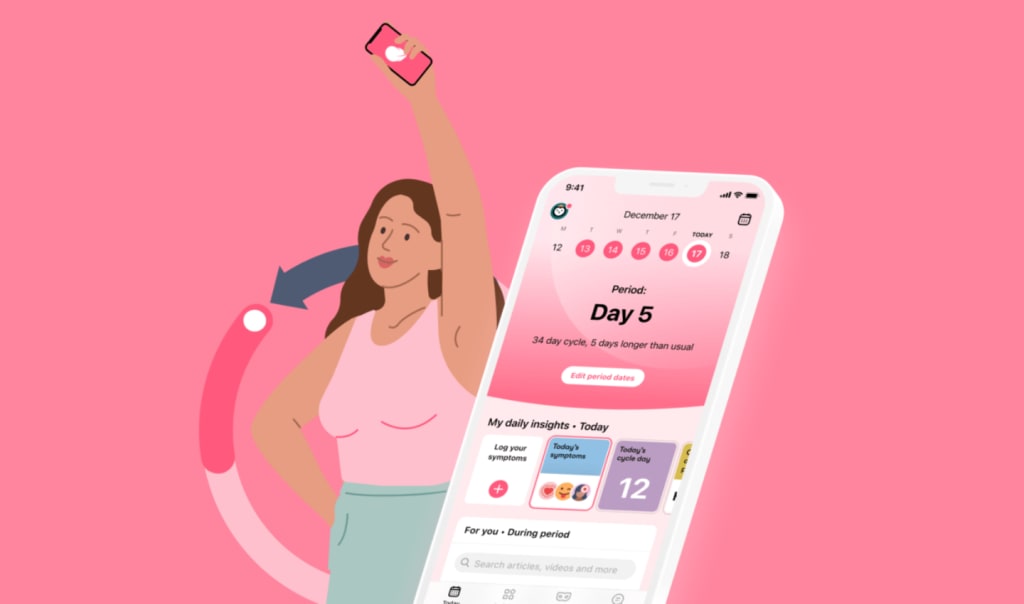
According to IMARC Group's latest research publication, The global women’s health app market size reached USD 4.3 Billion in 2024. Looking forward, IMARC Group expects the market to reach USD 16.7 Billion by 2033, exhibiting a growth rate (CAGR) of 14.74% during 2025-2033.
How AI is Reshaping the Future of Women's Health App Market
- Personalized Cycle Predictions and Fertility Insights: AI algorithms analyze thousands of menstrual cycles, hormonal patterns, and symptom data to deliver highly accurate ovulation predictions and fertility windows. Machine learning models continuously refine forecasts based on individual user behavior, enabling personalized health insights that adapt to each woman's unique physiological patterns and reproductive goals.
- Early Disease Detection and Risk Assessment: Advanced AI-powered diagnostic tools analyze symptom patterns, imaging data, and biometric inputs to identify early signs of conditions like PCOS, endometriosis, and breast cancer. These systems process medical histories and genetic markers to generate risk scores, enabling timely interventions and reducing diagnosis delays that disproportionately affect women's health outcomes.
- AI-Driven Mental Health and Emotional Support: Natural language processing enables chatbots and virtual assistants to provide cognitive behavioral therapy techniques, stress management guidance, and emotional support around-the-clock. These AI companions offer stigma-free conversations about sensitive topics including postpartum depression, menopause anxiety, and reproductive challenges, improving mental wellness accessibility for women worldwide.
Women's Health App Industry Overview:
The women's health technology landscape is experiencing unprecedented momentum driven by substantial investments and regulatory support. The White House committed $500 million through NIH and ARPA-H to advance women's health research and innovation. Major femtech platforms achieved unicorn status with valuations exceeding $1 billion, while global investment reached $2.2 billion despite representing just 8.5% of total digital health funding. Smartphone penetration surpassing 85% in developed markets, combined with advanced AI integration and wearable device compatibility, is democratizing access to personalized health monitoring, cycle tracking, and remote care services across diverse demographics and geographic regions.
Women's Health App Market Trends & Drivers:
The explosive growth of AI-powered diagnostic capabilities is transforming women's health outcomes and driving widespread app adoption. Over 80+ startups are now developing AI-driven solutions for women's health, spanning breast cancer detection systems that achieve higher accuracy than traditional radiography, predictive algorithms for preeclampsia risk assessment using cell-free RNA analysis, and early endometriosis screening through symptom pattern recognition. Healthcare AI market valuations reached $20.8 billion with projections to hit $148 billion, yet women's health applications remain notably underrepresented. AI-enhanced ultrasound imaging, cervical screening automation, and remote maternal monitoring patches are addressing diagnostic delays that previously left women waiting years for accurate diagnoses, fundamentally reshaping clinical care delivery and preventive health strategies.
Strategic funding and market maturation are accelerating innovation despite persistent gender investment gaps. Maven Clinic secured $125 million Series F funding reaching $1.7 billion valuation, while Flo Health's $200 million Series C made it Europe's first femtech unicorn. However, female-founded companies still receive less than 2% of total venture capital, and only 53 new femtech companies launched compared to 508 founded previously. Public-private partnerships are expanding access, with NHS-backed WHaM App addressing gender health disparities and 65 German health insurers covering Keleya's AI-driven midwife support services. Menopause management platforms are capturing substantial investment as 75% of women seeking menopause care currently receive no treatment and 80% of OB-GYNs lack formal menopause training, creating massive untapped market opportunities.
Integration with wearable technology and advanced health monitoring devices is creating comprehensive wellness ecosystems that enhance user engagement and clinical utility. Oura Ring partnered with Clue to combine biomarker data with menstrual cycle insights, while companies like Bloomlife developed pregnancy contraction trackers and IdentifyHer launched AI-powered Peri wearables for perimenopause symptom tracking. Smart devices including fitness trackers, breast pumps, temperature-sensing jewelry, and pelvic floor trainers are generating real-time physiological data that feeds AI prediction models. Equipment segments now command 45% of femtech market share as seamless integration into daily routines eliminates behavior change barriers. These connected platforms offer women unprecedented visibility into hormonal fluctuations, sleep quality, cardiovascular health, and metabolic patterns, enabling holistic health management across reproductive lifecycles.
Leading Companies Operating in the Global Women's Health App Industry:
- Clue
- Fitbit Inc. (Google LLC)
- Flo Health Inc.
- Glow Inc.
- Maven Clinic Co.
- Natural Cycles USA Corp.
- Ovia Health
- Wildflower Health
- Withings
Women's Health App Market Report Segmentation:
By Type:
- Fitness and Nutrition
- Menstrual Health
- Pregnancy Tracking and Postpartum Care
- Menopause
- Disease Management
- Others
Menstrual health dominates the market, driven by increasing awareness about reproductive health significance, widespread adoption of cycle tracking features, and growing demand for fertility monitoring and ovulation prediction capabilities among women globally.
By Modality:
- Smartphone
- Tablet
- Others
Smartphone holds the largest share in the market, offering convenient on-the-go access to health tracking, seamless integration with wearable devices, and user-friendly interfaces that empower women to monitor their wellness anytime, anywhere.
By Age Group:
- 35 to 44 Years
- 15 to 24 Years
- 25 to 34 Years
- Above 44 Years
25 to 34 years dominates the market, representing women in pivotal life stages focused on family planning, pregnancy management, and reproductive health optimization, combined with high digital literacy and smartphone adoption rates.
Regional Insights:
- North America (United States, Canada)
- Europe (Germany, France, United Kingdom, Italy, Spain, Others)
- Asia Pacific (China, Japan, India, South Korea, Australia, Indonesia, Others)
- Latin America (Brazil, Mexico, Others)
- Middle East and Africa
North America exhibits clear dominance in the women's health app market, supported by robust healthcare infrastructure, high digital literacy rates, substantial venture capital investments, and strong emphasis on personalized healthcare solutions and preventive wellness initiatives.
Recent News and Developments in Women's Health App Market
- March 2025: Sidekick Health launched a comprehensive 12-week clinical study for its MENO! prescription digital therapeutic application. The FDA-track study evaluates the app's effectiveness in relieving menopause symptoms through evidence-based interventions, demonstrating the industry's commitment to clinically validated digital therapeutics for women's midlife health challenges.
- February 2025: Laiqa introduced the LAIQA health application targeting comprehensive hormonal health management. The platform addresses hormonal imbalances and related concerns including sleep disruption, gut health issues, PCOS management, stress regulation, thyroid dysfunction, and weight management, offering integrated solutions for women navigating complex endocrine health challenges throughout their reproductive years.
- January 2025: The Federation of Obstetric and Gynecological Societies of India (FOGSI) partnered with UNICEF to launch a free national women's health application. The initiative aims to raise awareness about pregnancy care, menopause management, vaccination schedules, and cervical cancer prevention, significantly expanding digital health access for underserved communities across India's diverse population.
- August 2025: Ovum launched as Australia's first comprehensive women's health AI partner platform. The application empowers women with personalized health insights, intelligent symptom tracking, and automated medical documentation features that generate consultation-ready summaries for doctor visits, helping women effectively advocate for their healthcare needs and improving patient-provider communication quality.
- May 2024: German femtech companies Keleya and Kinderheldin completed a strategic merger, integrating their complementary service offerings. The combined platform introduced AI-driven 24/7 midwife support services and secured partnerships with 65 German health insurance providers, covering approximately 65% of the insured population and significantly expanding reimbursed digital maternity care access across Germany.
Note: If you require specific details, data, or insights that are not currently included in the scope of this report, we are happy to accommodate your request. As part of our customization service, we will gather and provide the additional information you need, tailored to your specific requirements. Please let us know your exact needs, and we will ensure the report is updated accordingly to meet your expectations.
About the Creator
James Whitman
With years of experience in analyzing global industries, I specialize in delivering actionable market insights that help businesses stay ahead in an ever-changing landscape.
Keep reading
More stories from James Whitman and writers in Futurism and other communities.
Lignans Market Outlook: Functional Food Demand and Nutraceutical Growth Opportunities
According to IMARC Group's latest research publication, The global lignans market size reached USD 463.2 Million in 2024. Looking forward, IMARC Group expects the market to reach USD 794.6 Million by 2033, exhibiting a growth rate (CAGR) of 5.69% during 2025-2033.
By James Whitmanabout 18 hours ago in Futurism
Mind Launches Global Inquiry Into AI and Mental Health After Google AI Advice Exposed
What Happened The mental health charity Mind has announced a year-long inquiry into the impact of artificial intelligence on mental health, following a Guardian investigation that revealed harmful advice generated by Google’s AI Overviews feature.
By Behind the Tech4 days ago in Futurism
Stanislav Kondrashov Oligarch Series: Oligarchy and the Human Drive to Expand Into Space
Have you noticed how space has quietly shifted from science fiction to serious long-term strategy? Not long ago, journeys beyond Earth felt distant and symbolic. They belonged to history books and carefully staged missions. Today, private fortunes are actively shaping what happens next. In the Stanislav Kondrashov Oligarch Series, this shift is examined through one central idea: when immense wealth meets humanity’s oldest instinct to explore, something transformative happens.
By Stanislav Kondrashov 7 days ago in Futurism
Winterthorne
Winterthorne stood alone at the edge of the park. The beautiful snow that had surrounded him was all trampled now, from the feet of all of the children who had built him. He missed the sparkly clean snow blanket, but he was happy that so many children had come out to make him.
By Laura DePace2 days ago in Fiction



Comments
There are no comments for this story
Be the first to respond and start the conversation.