
9 Ways Attorney-Client Privilege Gets Waived Without You Realizing
Understanding the Subtle Ways You Could Lose Legal Protection and How to Prevent It

Have you ever assumed that everything you say to your lawyer is automatically protected only to later wonder if that protection could quietly disappear?
Attorney-client privilege is one of the most important legal protections available in the United States. It allows people to speak openly with their lawyers without fear that those conversations will later be used against them. But what many individuals and business owners do not realize is that this protection can be lost in everyday situations often without any warning.
This article explains ways attorney-client privilege can be waived without you realizing it, why those waivers happen, and how to reduce the risk. Let’s dive in.
What is Attorney-Client Privilege and How Does It Work?
Attorney-client privilege protects confidential communications between a client and an attorney when those communications are made for the purpose of seeking or providing legal advice.
For the privilege to apply, three elements usually must be present:
- The communication involves a licensed attorney
- The communication is intended to be confidential
- The purpose is to obtain or provide legal advice
If any of these elements are missing or later compromised the privilege may no longer apply.
Importantly, the privilege belongs to the client, not the lawyer. That means the client can waive it, even unintentionally.
1. Sharing Legal Communications With Third Parties
One of the most common ways privilege is waived is by sharing attorney communications with people outside the legal relationship.
This includes:
- Friends or family members
- Business partners or investors
- Employees who do not need legal access
- Consultants or advisors who are not attorneys
Once a third party is included, courts may determine that confidentiality was no longer intended.
Why this matters:
Even a single forwarded email or copied message can be enough to eliminate privilege entirely for that communication.
Practical guidance:
Before sharing anything that includes legal advice, ask yourself whether the recipient is truly necessary for legal representation. If not, do not share it.
2. Using Work Email or Shared Devices
Many people use work email, company messaging tools, or shared devices to communicate with their attorneys. This can be risky.
Employers often have access to:
- Company email servers
- Internal messaging platforms
- Work-issued laptops and phones
If an employer can legally monitor or access those systems, courts may decide the communication was not confidential.
Key point:
If confidentiality cannot reasonably be expected, privilege may not apply.
Best practice:
Use personal email accounts and private devices when communicating with your attorney especially about sensitive matters.
3. Discussing Legal Advice in Public or Semi-Public Settings
Privilege depends heavily on the expectation of privacy. Conversations held:
- In public places
- On speakerphone
- In shared offices
- On unsecured video calls
may be overheard or intercepted.
Even if no one actually listens in, the risk of being overheard can be enough to defeat privilege.
Tip:
Always assume that location and technology matter. If privacy is uncertain, postpone the discussion or move to a secure environment.
4. Mixing Legal Advice With Business or Personal Matters
Not every conversation with a lawyer is automatically privileged.
When legal advice is mixed with:
- Business strategy
- Financial planning
- Operational decisions
courts may separate the legal portion from the non-legal portion—or exclude the communication entirely from protection.
Why this happens:
Attorney-client privilege protects legal advice, not general consulting or business discussions.
How to reduce risk:
Keep legal questions clearly focused. If you need business advice, treat it as separate from legal communications.
5. Voluntarily Talking About Legal Advice
Privilege can be waived when a client voluntarily discloses the substance of legal advice, even informally.
This includes:
- Casual conversations
- Social media posts
- Statements to investigators
- Public interviews or comments
Once disclosed, the information may no longer be protected.
Important note:
Even partial disclosure can lead to a broader waiver, allowing opposing parties to request related communications.
6. Using Legal Advice as a Defense or Argument
When a client relies on legal advice to justify actions such as saying, “My lawyer told me this was legal”, they may unintentionally waive privilege.
This is known as an “at-issue” waiver.
By placing legal advice at the center of a claim or defense, courts may allow opposing parties to examine that advice fully.
Practical takeaway:
Never rely on legal advice publicly or in litigation without discussing the privilege implications with your attorney first.
7. Accidental Disclosure During Discovery
During lawsuits, parties exchange documents through discovery. Privileged materials sometimes get included by mistake.
While some rules allow limited “clawback” protections, courts often look at:
- Whether reasonable precautions were taken
- How quickly the mistake was addressed
- Repeated or careless disclosure may still result in waiver.
Recommendation:
Work closely with counsel to review documents before production and implement clear document-handling procedures.
8. Communications That Fall Under the Crime-Fraud Exception
Attorney-client privilege does not apply to communications made to further a crime or fraud.
If a court finds that legal advice was sought to:
- Conceal illegal activity
- Commit fraud
- Evade law enforcement
the communication may never have been privileged at all.
Clarification:
This exception is narrow but serious. Legitimate legal defense is protected. Planning wrongdoing is not.
9. Not Understanding How Privilege Actually Works
Many waivers happen simply because people assume privilege is automatic and indestructible.
In reality, privilege depends on:
- How communications are handled
- Who is included
- What the purpose is
Without basic awareness, even well-intentioned clients can undermine their own protection.
Bottom line:
Privilege requires active care, not passive assumption.
What Are the Exceptions to Attorney-Client Privilege?
Attorney-client privilege is a critical protection, but it is not absolute. Certain legal exceptions mean that some communications are never protected, even if they involve a lawyer and were intended to be confidential. Understanding these exceptions helps clients avoid false assumptions about what is and is not covered.
The Crime-Fraud Exception
Attorney-client privilege does not protect communications made to further a crime or fraud. If legal advice is sought to plan, conceal, or continue illegal activity, courts may order disclosure of those communications.
Example:
A client asks an attorney how to hide assets from investigators or falsify financial records. Even though the conversation involves a lawyer, it is not privileged because it relates to ongoing or future wrongdoing.
Presence of Unnecessary Third Parties
Privilege generally applies only when communications are between the client and the attorney. If non-essential third parties are present, the communication may lose protection.
Example:
A client discusses legal strategy with their attorney while a friend, family member, or unrelated employee is in the room. Because confidentiality was compromised, the communication may not be privileged.
Joint Client or Common Interest Limitations
When two or more clients share the same attorney for a common legal purpose, privilege may apply but only up to a point. If those clients later become adverse to each other, prior communications may be discoverable between them.
Example:
Business partners consult the same lawyer during company formation. If a dispute later arises between the partners, earlier shared communications may not be protected between those parties.
Court-Ordered or Statutory Disclosures
In limited circumstances, laws or court orders may require disclosure of information that would otherwise be privileged. These situations are narrow but legally enforceable.
Example:
Certain regulatory investigations or national security matters may compel disclosure under specific legal authority.
Communications That Are Not Legal Advice
Attorney-client privilege protects legal advice—not general business, financial, or personal discussions.
Example:
A lawyer gives input on marketing strategy or operational decisions unrelated to legal analysis. Those communications may fall outside privilege protections.
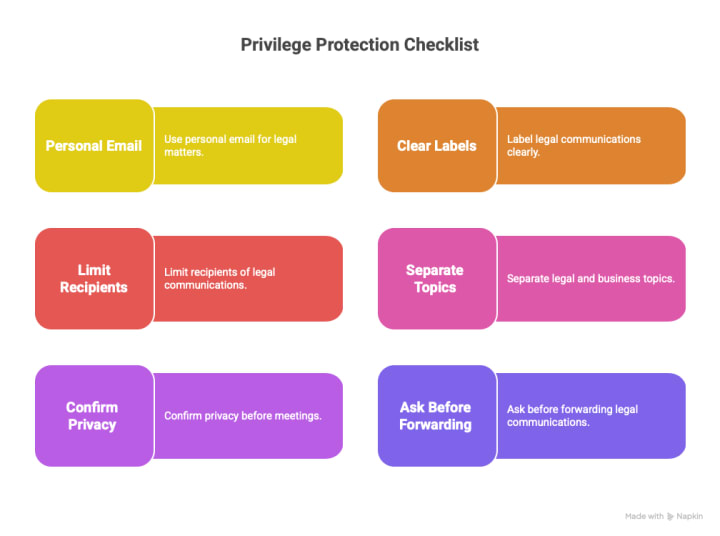
Why Waiving Attorney-Client Privilege Has Serious Legal Consequences
Waiving privilege can have serious consequences, including:
- Evidence being used against you
- Loss of strategic advantage
- Expanded discovery requests
- Increased legal exposure
In criminal matters especially, misunderstanding privilege can worsen outcomes and increase risk. Questions about the penalty for breaking attorney-client privilege often arise after damage has already been done.
This is why working closely with a qualified attorney and following their guidance carefully is essential.
For those dealing with criminal charges or investigations, guidance from a criminal defense attorney can help protect communications and avoid costly mistakes.
Final Thoughts
Attorney-client privilege is a powerful protection but only when it is handled with care. Everyday actions, taken without much thought, can quietly weaken or eliminate it.
If you are facing a legal issue, managing a business, or simply want to be sure your communications remain protected, a proactive conversation with legal counsel can make a meaningful difference.
About the Creator
Angelina Dave
Angelina Dave is a passionate writer and advocate focused on themes of equality, social justice, humanity, and the fight against racism.
Keep reading
More stories from Angelina Dave and writers in FYI and other communities.
Friday the 13th has ties to the Bible and Christianity
Friday the 13th: The origin The origin of Friday the 13th is not really known. Stories about bad luck on this date come from different cultures. In 2026, the 13th of three different months falls on a Friday. They are February, March, and November.
By Cheryl E Prestonabout 21 hours ago in FYI




Comments
There are no comments for this story
Be the first to respond and start the conversation.